


Winter Home Guide – How to Keep Bedroom Warm in Winter
- by Daniel Pawlik
Remember how in Grandma's bedroom, in winter, there were two blankets on one bed, and sheepskin on the floor, so you wouldn't have to stand barefoot on the icy boards? And remember how the window had double curtains – one thin, the other thick, velvet – because every gap meant heat loss? Grandma knew what she was doing – she was building a haven, not just a bedroom. As Marek Grechuta sang, "The world is your oyster" – but in winter, that world can be so cold you want to stay in bed forever.
Pillovely understands that a bedroom isn't just a place to sleep —it's a space for regeneration, rest, and silence. That's why a winter bedroom isn't an aesthetic whim, but a health necessity. Because when you sleep well, you live well.
In many Polish homes and apartments, the bedroom is the coldest room. It often has a smaller radiator than the living room, because "we're under the covers at night anyway." It's often north-facing, with no access to sunlight. It often has the largest window in proportion to its surface area—and a window is always a place where heat escapes.
A cold bedroom isn't just uncomfortable —it also makes it harder to fall asleep, sleeps more lightly, and wakes up more often. The optimal sleeping temperature is 16-19 degrees Celsius—but that assumes you're warmly covered. If the temperature drops below that, the body expends energy on heating rather than regeneration.
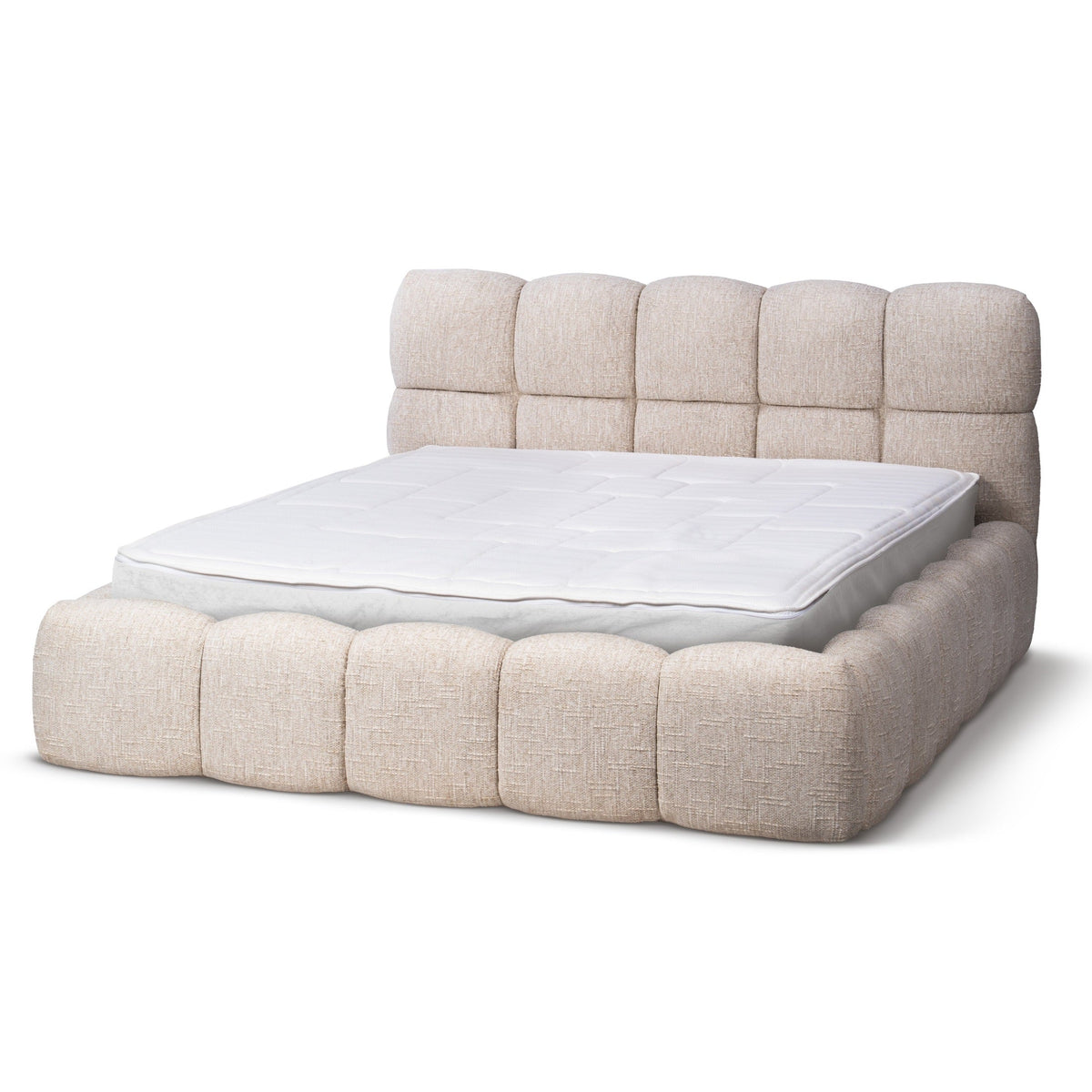
The Mevy Upholstered Bed with Storage with a high headboard is a piece of furniture that insulates itself – the upholstery retains heat, and the high headboard protects against drafts.
Warm fabrics are the foundation of winter coziness. They are largely responsible for thermal comfort and the interior's atmosphere.
In winter, cotton bedding isn't enough . You need something thicker, more substantial, and cozy.
The best materials for winter:
Flannel – soft, fluffy, retains warmth
Cotton satin – smooth, but thicker than regular cotton
Microfiber – synthetic, but very warm
Jersey – stretchy, pleasant to the touch
As Antoine de Saint-Exupéry wrote: " What is important is not seen with the eyes " - but you feel the warm bedding with your whole body.

One blanket isn't enough. In winter, you need at least two – one under the duvet (for bottom insulation), the other on top of the duvet (for extra warmth).
Warmest materials :
Wool – natural, breathable, retains heat even when wet
Cashmere – expensive, but incredibly soft and warm
Fleece – synthetic, but effective and cheap
Acrylic – light, easy to wash, warm
The Agi 3-Seater Universal Corner Sofa with Sleeping Function
is a piece of furniture that also needs winter textiles – blankets, pillows, anything that creates a layer of warmth.
The more pillows , the warmer. Why? Because they create a barrier between you and the cold wall. Because you can wrap yourself in them. Because they add layers.
In winter, it is worth having at least six pillows on a double bed – two for sleeping, four decorative (which actually serve an insulating function).
A cold floor is the worst way to start the day. A rug by your bed isn't a luxury—it's a necessity.
The best rugs for winter:
Made of imitation fur – soft, warm, pleasant
Woolen – natural, durable
With long pile – fluffy, retains heat

Colors have the power to influence perceived temperature. This isn't a placebo – studies confirm that warm colors actually make us feel warmer.
Winter bedroom palette:
White and creamy beiges – a neutral base
Navy blue – deep, calming, warmer than blue
Grays – from light gray to graphite
Warm browns – chocolate, coffee, caramel
Velvety burgundy as an accent
The Mandala Chest of Drawers 106x80 in eucalyptus or sand beige is a piece of furniture that fits into the winter color palette – warm, natural, calm.
In winter, the days are short —it's already dark by 4 p.m. The lighting in the bedroom must compensate.
Layers of light:
Main light – ceiling, dimmable (for reading before bed)
Night lamps – on both sides of the bed, warm color 2700K
Candles – real or electric, for atmosphere
Light garlands – a subtle accent, not the main source
In winter, avoid cold white light – only warm shades that create a cozy feeling.
Thick curtains aren't just aesthetically pleasing—they also provide thermal insulation . They can reduce heat loss through windows by up to 25%.
What to choose:
Velour – thick, soft, elegant
Thick cotton – natural, durable
Lined curtains – double layer = double insulation
Blackout curtains – in addition to keeping out light, they also keep out heat
Anawa Bedside Table 50x48 in natural oak is a piece of furniture that harmonizes with warm textiles - wood always brings warmth.
Without replacing the radiator:
Thermal insulation foils for windows (transparent, invisible)
A roller under the door stops drafts
Carpet even under the bed (insulation from the cold floor)
Heavy, floor-length curtains
Additional blanket between the mattress and the sheet (insulation from the bottom)
With a small investment:
Fan heater only for warming up the room in the morning
Heating pad (safer than a hot water bottle)
Heating mat under the mattress
You're part of the generation that remembers cold bedrooms at your grandparents' house —frost seeping in through the leaky windows, a duvet weighing as much as a small child, and you could only see your partner in the morning. Today, conditions are better—but you still freeze. Maybe it's because the house is too big to heat? Maybe it's because you live in a prefab building? Maybe you're just sensitive to the cold?
Pillovely understands that warmth isn't a luxury —it's a basic need. That's why a winter bedroom isn't a whim, but self-care. As Kora sang, "You only have yourself"—so warm yourself up, literally and figuratively.
A winter bedroom is all about layers—textiles, light, warmth. You don't need a renovation to create a haven on cold days. Smart choices are enough—flannel sheets, wool blankets, thick curtains, warm colors. Pillovely provides the foundation—furniture that retains warmth, a space that envelops. You add the rest—rugs, pillows, candles, anything that makes you want to stay in bed forever. Because home isn't just four walls—it's a place where you never get cold.
Loveseat - What Is It, Who Is It For and How to Choose the Right One?
A loveseat is one of those pieces of furniture that can completely change how a room works. It is smaller than a classic sofa, more generous than a single armchair and often easier to place in compact interiors. A loveseat can create a cosy sitting area in a small living room, soften a bedroom corner, complete a reading nook or work as an additional seat next to a larger sofa. Its strength lies in proportion: it gives you the feeling of a sofa without taking over the whole room.
Read moreabout Loveseat - What Is It, Who Is It For and How to Choose the Right One?
EU vs UK Bed Sizes – Will UK Bedding Fit a European Bed?
European beds are 200 cm long, UK beds 191 or 198 cm. A simple EU vs UK bed size table in cm – and what it means for your mattress and fitted sheets.
Read moreabout EU vs UK Bed Sizes – Will UK Bedding Fit a European Bed?
Autumn colors at home – shades that bring peace and warmth
Do you remember autumn from your childhood, when the leaves changed color like a kaleidoscope, and your mom would pull out the pumpkin-colored sweater she'd worn since college? Or those evenings in front of the TV while a storm raged outside, and the lamplight in the house gave everything a warm, amber hue? Those were the days when no one talked about "color palettes" or "color stories"—colors simply existed, as natural as breathing. Today, when we can choose from 50 shades of gray (and no, I'm not talking about THAT book), we sometimes lose track of what truly makes a home feel cozy. At Pillovely, we believe that autumn colors aren't a trend—they're a return to what makes us feel safe. Because "You are someone"—someone who deserves a space filled with colors that snuggle like a grandma's blanket.
Read moreabout Autumn colors at home – shades that bring peace and warmth




Share:
Pill Reading Corner: The Highway Warrior - Joe Dever
Dark Wood Interior Design – how to bring the elegance of walnut and oak into your home and introduce dark furniture into the living room