


- by Daniel Pawlik
How to put Christmas lights on the wall – safety tips and the ultimate wow effect. Create Home Alone magic without the Clark Griswold chaos
- by Daniel Pawlik
There's a moment, at the end of November, when the world holds its breath. We wait for that one signal. No, not the first Coca-Cola ad. We wait for the moment when the neighbor across the street finally lights up his lights. Then we know – it's begun. Christmas.
Holiday lights are more than just decoration. They are pure, concentrated magic. They are a tool with which we paint our homes, sending a message into the darkness: "Here is warmth, here is joy, here is home."
We grew up with two polar opposites in our vision of Christmas lights. On the one hand, we remember the magical, elegant, and warm McCallister house from Home Alone —the epitome of class and affluence in the '90s. On the other, we hold dear (and somewhat identify with) Clark Griswold from Hello, Santa! , whose ambitious plan to illuminate 25,000 light bulbs ended in... well, a spectacular disaster and a city-wide blackout.
Today, in our own homes, we balance somewhere in between. We crave Kevin's magic, but we also feel Griswold's zeal. We want it to be beautiful. We want it to be "rich." We simply want more – more shine, more mood, more home warmth .
But how do you achieve that coveted "Wow Effect" without causing a fire, short circuit, or nervous breakdown? How do you combine nostalgia behind simple 1980s Christmas tree lights with modern LED technology? How can we create a space that reflects our inner selves while also being simply safe?
This guide is your roadmap. Step by step, we'll guide you through Operation Holiday Lights—from auditing last year's cardboard, through safe assembly, to creating an arrangement that will make you gasp with delight. Fasten your seatbelts. Let's get started.
Clark Griswold had a brilliant vision, but terrible execution. His mistakes are our lesson. Before the first light bulb goes on, we must briefly become safety engineers. Because nothing ruins the holidays like a visit from the fire department.
Don't just drag a tangled string of lights out of the basement and plug it straight into a wall outlet. That's asking for trouble.
Untangling: This is a test of patience. Do it slowly, with some good music (we recommend "Last Christmas" on loop—you'll finish just as the song starts to annoy you).
Cable inspection: This is the most important point. Carefully run your fingers along the entire length of each wire. You're looking for:
Abrasions and cracks in the insulation: Is the copper wire visible? If so, THROW AWAY. No discussion.
Overbites: Mice love isolation.
Fragility: Old cables (especially those from the 1990s) tend to bend. If the insulation is hard and brittle, THROW AWAY.
Inspect plugs and power supplies: Check that the housings are not cracked and that none of the pins are loose.
Light bulb test: Place the lights on the floor (away from the carpet!) and plug them in for 15 minutes.
Do they all glow?
Are any flickering in a disturbing manner?
Is the cable or power supply getting HOT? (Slightly warm is OK, but hot is a red flag.)
LED vs. traditional: Old incandescent lights are beautiful and nostalgic , but they use 90% more electricity and can reach high temperatures (fire hazard, especially on a dry Christmas tree). If you have a sentimental old set, use it in one controlled location. For the rest of your decorations, choose LEDs – they're safe, energy-efficient, and come in a million varieties.

This isn't a manufacturer suggestion. It's a rule.
Indoor lights: They have low resistance to moisture and temperature changes. The insulation will quickly corrode in frost, and water will penetrate the electronics.
Outdoor lights: Must have a minimum IP44 rating . This rating guarantees they are resistant to splashes (rain, snow) and small solid objects (dust). The power supply must also be suitable for outdoor use.
Using indoor lights on your balcony is like climbing Giewont in slippers. It might work, but it'll probably end badly.
Clark Griswold made a cardinal mistake: he connected everything to one outlet through a million power strips.
Don't overload your circuit: Each outlet in your home has a limited capacity (usually around 2300-3000W). Before you plug in 50 sets of lights, count their wattage. Old incandescent lights (100 bulbs) can use 50-70W. The same LED set can use 5-7W. The difference is huge.
No more daisy chaining: Never connect an extension cord to another extension cord and then to a power strip. This can lead to overheating and a fire.
Use fused power strips: If you need to connect multiple sets, use a good power strip with a switch and fuse.
Outdoor extension cords: Must be designed for outdoor use (thick rubber insulation, IP44 rated) and have protective covers on the sockets.
Timers: Your best friend. They not only save energy but also improve safety. Set your lights to turn off when you go to bed or leave the house.
A stable ladder: Make sure it's level. If you're working high, ask someone to hold the ladder for you. You'll feel like you're on a movie set, but with complete safety.
No nails or staples! Never, ever fasten cables with a stapler or nail them. Damage to the insulation guarantees a short circuit.
Use dedicated clips: There are hundreds of cheap plastic clips on the market for gutters, window frames, and fences. Self-adhesive mounting hooks are ideal for indoor use (they're easy to remove after the holidays).
Cables on the road: Cables running across the floor or sidewalk? Protect them with special drive-on mats (steps) or hide them so no one will trip over them and they won't lie in a puddle.
Safety mastered. Time for magic. The interior is our sanctuary of comfort . It's where we recharge, watch Love Actually , and pretend we're not eating another gingerbread cookie. The lighting is there to help us do just that.
Forget about cool white (unless you're making Frozen for kids). Cool light (above 4000K) is stimulating, but also tiring and creates an "office" atmosphere.
Choose warm white (approx. 2700K) . This light has a yellowish tint, similar to candlelight and fireplace light. It has a soothing, relaxing effect, and instantly creates a sense of peace and balance . This is the essence of hygge .
Instead of using a single twinkling Christmas tree and overhead light, create many small points of light. This creates depth and coziness.
Tie curtain rods: Delicate fairy lights on a curtain rod create a beautiful, soft glow over the window.
Illuminate your furniture: This is the key to personalization interior. Highlight the pieces of furniture that are important to you.
Dried product (TV corner): Holiday movie marathons are a tradition. But watching TV in complete darkness strains the eyes. Create soft background lighting (also known as ambient light ). A long, low cabinet is the ideal base. The Rose 154x56 TV stand, with its elegant, calm lines (e.g., in Cashmere), will be the perfect backdrop. Place an LED strip or a warm-toned garland behind or below it. The result? A cinematic atmosphere and a treat for the eyes.
A Product with Soul (Christmas Village): Where to display your nutcracker collection, ceramic nativity scene, or sentimental figurine? You need a stage. The Rose 104x83 chest of drawers is the perfect piece for such a display. Spread artificial snow on its top, add decorations, and entwine the whole thing with battery-powered lights. You'll create a magical, nostalgic atmosphere. corner.
Fill the void: Have a large glass vase sitting empty? A lantern? Place a rolled-up set of battery-powered lights inside. Instant wow factor.
There are no rules here. It's your "I" expression . But there are a few tricks:
From the center out: Start hanging lights from the trunk, wrapping each large branch around from the center to the tip and back again. This creates incredible depth.
How many lights? The old rule is: at least 100 lights for every 30 cm of tree height. For a 2-meter tree, you need... 600-700 lights. Yes. We said we wanted more .
We want our home to look like a safe haven from afar. Like the McCallister home – warm and inviting.
Focus on the entrance: This is the most important point. Wrap the front door frame in a garland of pine needles and weave lights into it. A wreath on the door is also a must, with battery-powered lights.
Accentuate the architecture: Use simple lines of light (LED tubes, string lights) to highlight roof edges, window frames, and pillars. This creates an elegant, architectural effect.
Curtains (Icicles): A '90s classic that's making a comeback. Perfect for balcony railings or under gutters.
Garden Magic: Don't have a large tree? No problem. Wrap small shrubs and patio pots in lights. Even a small arborvitae, entwined with light, creates a wonderful atmosphere.

This is the climax. Christmas Eve dinner. A moment when nothing brings generations together like ... a shared table. The lighting here must be masterful.
Rule #1: Turn off any overhead, harsh lights.
Rule #2: Play with warmth.
Candles: An absolute must. Long, in candlesticks, they give off a soft, shimmering light that makes everyone look beautiful.
Table garland: Create a centerpiece (fir branches, pine cones, orange slices) and weave a thin wire garland into it (battery-powered—no one wants to trip over the wire on their way to get the borscht). The light will reflect off the tableware and glassware.
Dried fruit (feast base): All this magic requires a solid foundation. The Christmas Eve table must accommodate 12 dishes, tableware for the entire family, and all those decorations. The Gorky 140-180x75 table is the perfect base. Its simple, classic shape doesn't compete with the decorations, and its solid construction guarantees it will bear the weight of the holidays. This is where all your nostalgic moments will unfold. story.
Installing holiday lights is an annual ritual that can be either a nightmare (a la Griswold) or pure magic (a la Kevin). The key is balance: thorough preparation and safety on the one hand, and the creative courage to express yourself on the other .
Don't be afraid of lights. They're the simplest tool to turn your apartment into a HOME. A place that emanates love for warmth and your personal sanctuary.
So this year... want more . Stay safe, but have a blast. Let your home shine.
Visit pillovely.com to find the perfect, sturdy furniture that will become a calm, elegant backdrop for your most spectacular Christmas illumination.
Loveseat - What Is It, Who Is It For and How to Choose the Right One?
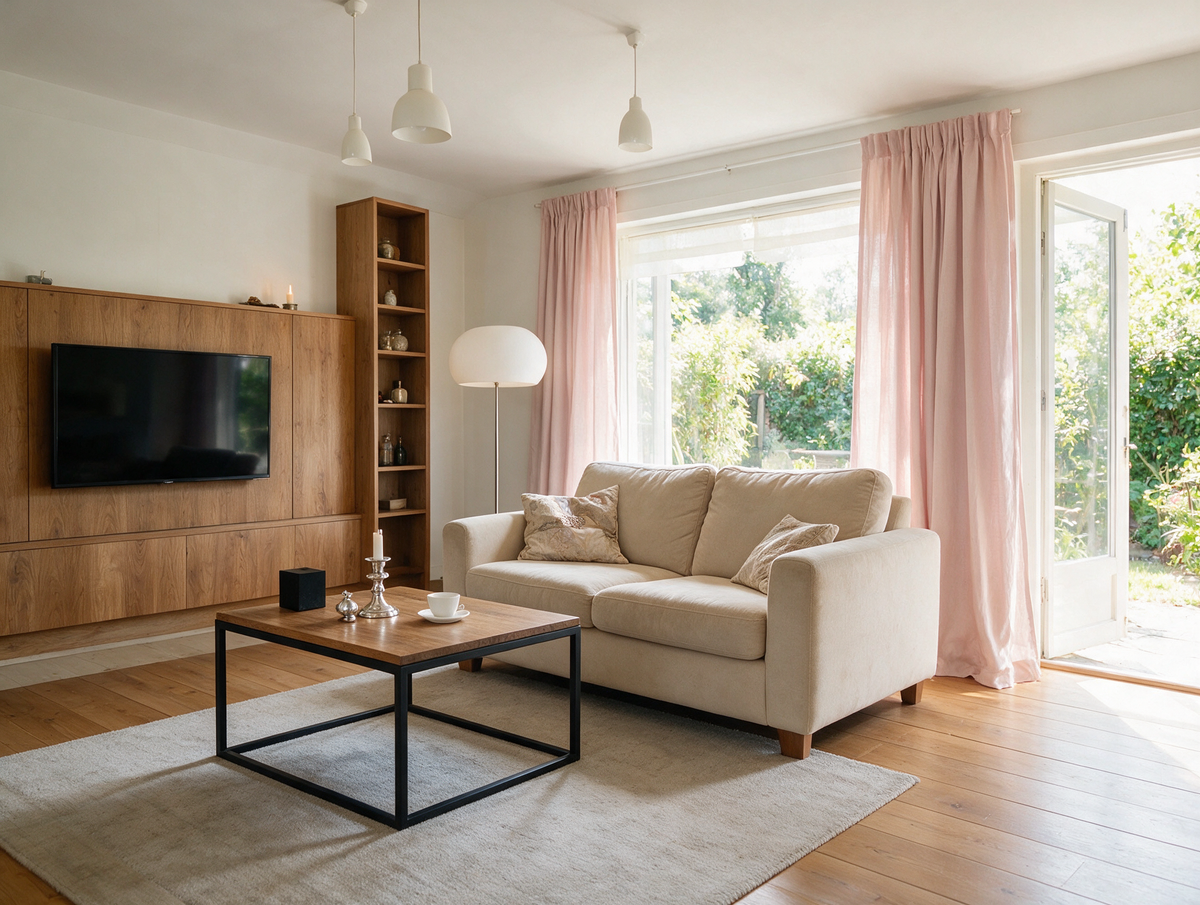
A loveseat is one of those pieces of furniture that can completely change how a room works. It is smaller than a classic sofa, more generous than a single armchair and often easier to place in compact interiors. A loveseat can create a cosy sitting area in a small living room, soften a bedroom corner, complete a reading nook or work as an additional seat next to a larger sofa. Its strength lies in proportion: it gives you the feeling of a sofa without taking over the whole room.
Read moreabout Loveseat - What Is It, Who Is It For and How to Choose the Right One?
EU vs UK Bed Sizes – Will UK Bedding Fit a European Bed?
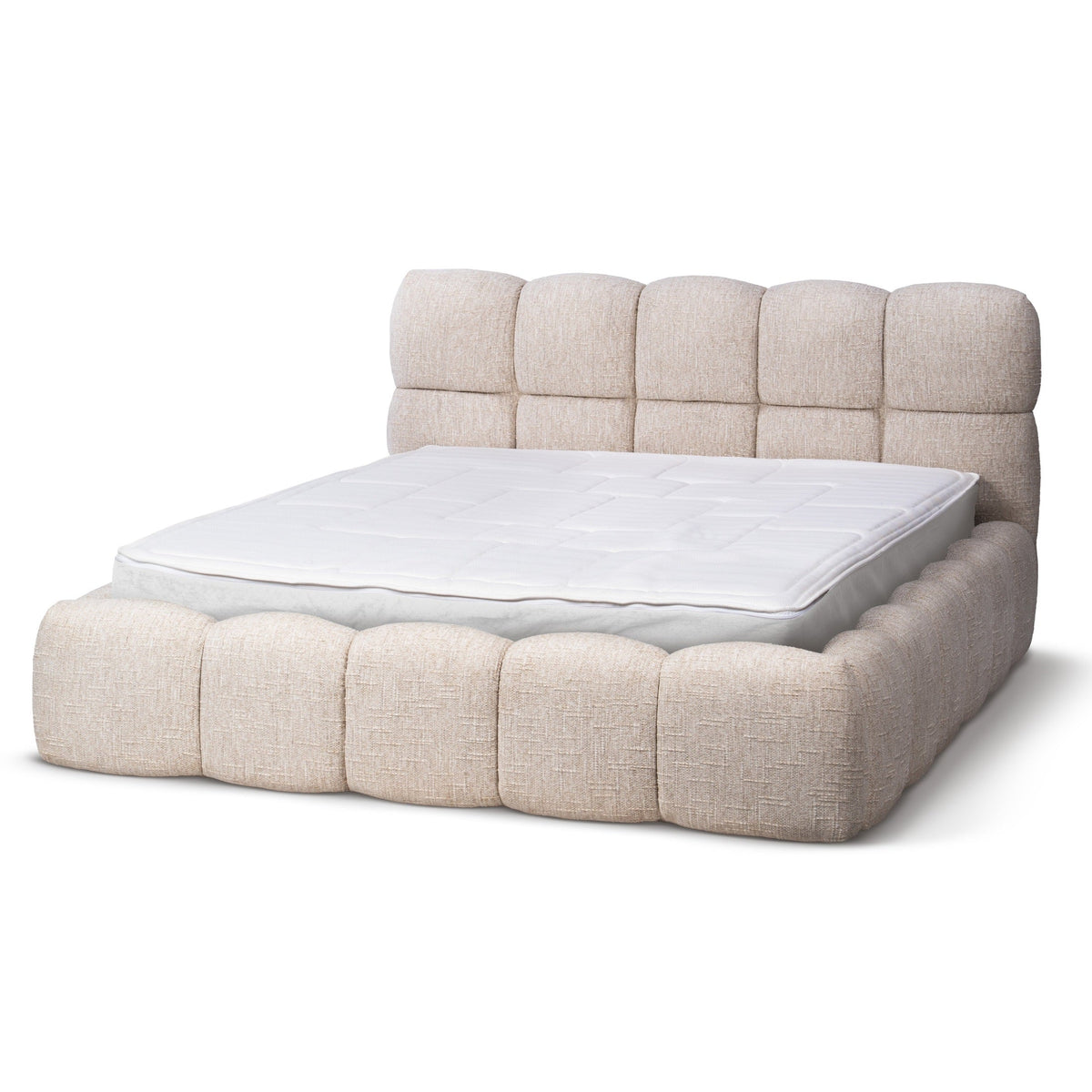
European beds are 200 cm long, UK beds 191 or 198 cm. A simple EU vs UK bed size table in cm – and what it means for your mattress and fitted sheets.
Read moreabout EU vs UK Bed Sizes – Will UK Bedding Fit a European Bed?
Autumn colors at home – shades that bring peace and warmth
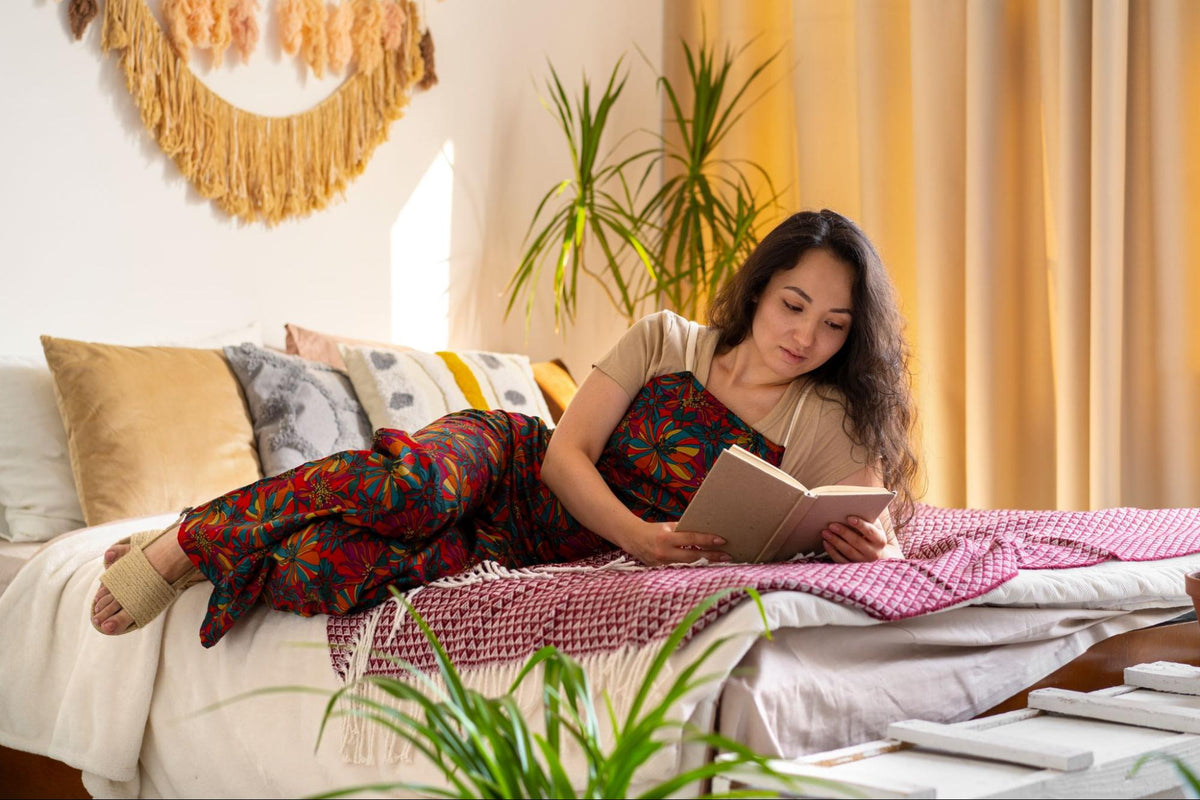
Do you remember autumn from your childhood, when the leaves changed color like a kaleidoscope, and your mom would pull out the pumpkin-colored sweater she'd worn since college? Or those evenings in front of the TV while a storm raged outside, and the lamplight in the house gave everything a warm, amber hue? Those were the days when no one talked about "color palettes" or "color stories"—colors simply existed, as natural as breathing. Today, when we can choose from 50 shades of gray (and no, I'm not talking about THAT book), we sometimes lose track of what truly makes a home feel cozy. At Pillovely, we believe that autumn colors aren't a trend—they're a return to what makes us feel safe. Because "You are someone"—someone who deserves a space filled with colors that snuggle like a grandma's blanket.
Read moreabout Autumn colors at home – shades that bring peace and warmth



Share:
Pill Reading Corner: Greg Pak - Planet Hulk and World War Hulk
Home office inspiration – create a workspace with character inspired by pop culture