


- by Daniel Pawlik
Sofa Bed – How to Choose the Best One for Everyday Use and Guest Rooms
- by Daniel Pawlik
There's a particular kind of furniture that has to earn its keep twice. A dining table is just a table; a wardrobe is just a wardrobe. A sofa bed, on the other hand, has to look good in the day and feel right at night – the workhorse of small flats, second living rooms, and the spare-bedroom-that-doesn't-quite-exist.
If you've ever stayed on a bad sofa bed, you know exactly why this guide matters. The metal bar that finds your spine at 3 a.m. The slow-motion struggle with a mechanism that takes three people and a small prayer to open. The mattress that's somehow both too soft and too thin at the same time. A well-made sofa bed avoids all of this – but only if you know what to look for.
Below, we walk through how the mechanisms work, which types suit everyday sleeping versus occasional guests, what to check before you buy, and whether a sofa bed can genuinely replace a regular bed in a studio.
A sofa bed is a sofa designed to convert into a sleeping surface – sometimes daily, sometimes once a month, sometimes for a friend who needs to crash. The mechanism separates a decent sofa bed from a frustrating one, and there are four common variations worth knowing.
Click-clack (folding back). The back of the sofa folds flat to become part of the sleeping surface. Quick, intuitive, and visible – you push and you click. Best for occasional use; the mattress is essentially the seat cushion.
Pull out the sofa bed. A folded mattress on a slatted frame lives hidden inside the sofa base. You lift the front of the seat and pull forward; the mattress unfolds as you go. This is the gold standard for everyday sleeping because the mattress is a proper, dedicated one – usually 14–16 cm thick – rather than the seat itself.
Fold-out (scissor mechanism). The seat pulls forward and unfolds into a flat bed. The mattress is hinged in two or three sections – a middle ground between click-clack and pull-out.
Corner sofa bed with storage. A corner unit that opens into a bed, often with a storage compartment underneath for bedding, pillows, and spare duvets.
In every case, look for a mechanism you can operate solo. If you need a second pair of hands every time the bed comes out, you'll quietly stop using it.

Not every sofa bed is built for the same job. The right type depends on how often someone actually sleeps on it.
For occasional guests (a few weekends a year):
a click-clack convertible does the job at an affordable price,
a daybed with a trundle works in a small spare room,
a chair bed or single sleeper suits a study that doubles as a guest room.
For regular use (weekly guests, a teenager's room, or a flatshare):
a pull out sofa bed with a proper mattress is the standout choice,
a corner sofa bed offers seating, sleeping, and storage in one piece,
look for slatted bases and mattresses with proper support layers.
For everyday sleeping (a studio, an Airbnb, a partner on night shifts):
a sofa bed for everyday use needs a high-density foam or sprung mattress at least 14 cm thick,
a sturdy steel mechanism rather than aluminium,
removable, washable covers so the sofa survives daily life.
A useful distinction: a sleeper sofa with a proper folded mattress inside (sometimes called "Italian pull-out") is usually more comfortable for everyday sleeping than a click-clack, even at a similar price. The difference shows up in your back the morning after.
If you'd like to explore models built for the heavier end of that spectrum, the sofa beds at Pillovely tend to land in the everyday-use category – built for sleep first, sofa second.
Choosing a sofa bed isn't very different from choosing a regular sofa, except that two things matter more than usual: the mattress and the open-bed dimensions.
Size in two states. Measure your room twice – once for the sofa, once for the bed when it's open. A common mistake is assuming the bed will tuck back against a wall when extended; in many cases it won't, because the mechanism needs clearance. Leave at least 50–70 cm in front of the sofa for the bed to unfold into.
Mattress thickness and material. This is where most sofa beds either earn or lose their reputation. Look for:
a mattress at least 14 cm thick (16 cm is better),
high-resilience foam, pocket springs, or a hybrid of the two,
a slatted base rather than a solid platform – it lets the mattress breathe and keeps it cooler.
Frame. Solid hardwood (beech, oak, birch) lasts decades; particleboard rarely survives five years of opening and closing. Ask what the frame is made from before buying.
Fabric. For everyday use, choose performance weaves or velvet with easy-clean treatment. Removable, washable covers are worth the small premium – they're the reason a sofa bed can keep looking good for years.
Style. Modern sofa beds don't look like sofa beds. The mechanism is usually invisible until you open it, which means you can choose a model purely on aesthetics – modular, mid-century, curved, tufted, whatever fits the room. Browse silhouettes that suit this in the Pillovely sofas collection.
Mini checklist before buying:
Does the bed fit your space open?
Is the mattress at least 14 cm thick?
Can you operate the mechanism solo?
Are the covers removable?
Will the sofa look right when it's a sofa, not a bed?
For larger living rooms or open-plan spaces, a corner sofa bed at Pillovely gives you generous seating by day and a properly sized double bed at night.
The honest answer: yes, but only if you choose carefully. A sofa bed for small spaces has to do two equally important jobs, and most fail at one of them.
What to look for if you're using a sofa bed as your main bed in a studio:
A double sofa bed (140 cm wide minimum, ideally 160 cm) with a dedicated, fold-out mattress,
A pull-out mechanism rather than click-clack – your spine deserves the proper mattress,
Storage under the seat for bedding (a duvet rolled up daily ages faster than one stored flat),
A frame designed for daily mechanism use – check the warranty for "daily use approved" rather than "occasional",
A small sofa bed in the 180–200 cm length range fits most studios without dominating the room.
What about a single sofa bed for a studio? It works for solo living, but if you're hosting overnight guests on the same piece, a small double (also called 4ft / 120 cm) is the better middle ground.
A practical note on the morning ritual: the daily fold-down only works if it's quick. If your sofa bed takes more than 60 seconds to make and remake, you'll start sleeping on the unmade version – and a permanently extended sofa bed slowly turns into clutter on legs. Look for models that fold up with bedding still inside.

How long does a good sofa bed last?
A well-made sofa bed with a hardwood frame and steel mechanism lasts 10–15 years of regular use. The mattress typically lasts 7–10 years and can usually be replaced separately.
Is a sofa bed comfortable for nightly sleeping?
Yes, if you choose a model designed for everyday use. Look for a proper folded mattress (14+ cm), high-resilience foam or pocket springs, and a slatted base. A click-clack works for a while; a pull out sofa bed lasts longer.
What's the difference between a sofa bed and a sleeper sofa?
The terms are largely interchangeable. "Sleeper sofa" is more common in the US; "sofa bed" in the UK and across Europe. Both describe a sofa that converts to a bed.
Can a small sofa bed fit a double mattress?
Yes – compact double sofa beds typically have a 200 × 140 cm sleeping surface inside a sofa around 200 × 100 cm closed. Smart engineering rather than magic.
How do I clean a sofa bed mattress?
Vacuum it weekly with an upholstery attachment, air it monthly, and address spills immediately. A mattress protector inside the sofa is the best investment you can make.
A sofa bed is one of the few pieces of furniture that genuinely changes how you can use a room. Done well, it lets you host friends without a spare bedroom, share a studio without sleeping on a foldout for years, or have a beautifully designed sofa that quietly handles overnight stays. If you're looking for sofa beds that take both jobs seriously, the Pillovely collection is a sensible place to start exploring.
Sofas and corner sofas with a sleep function from our range:
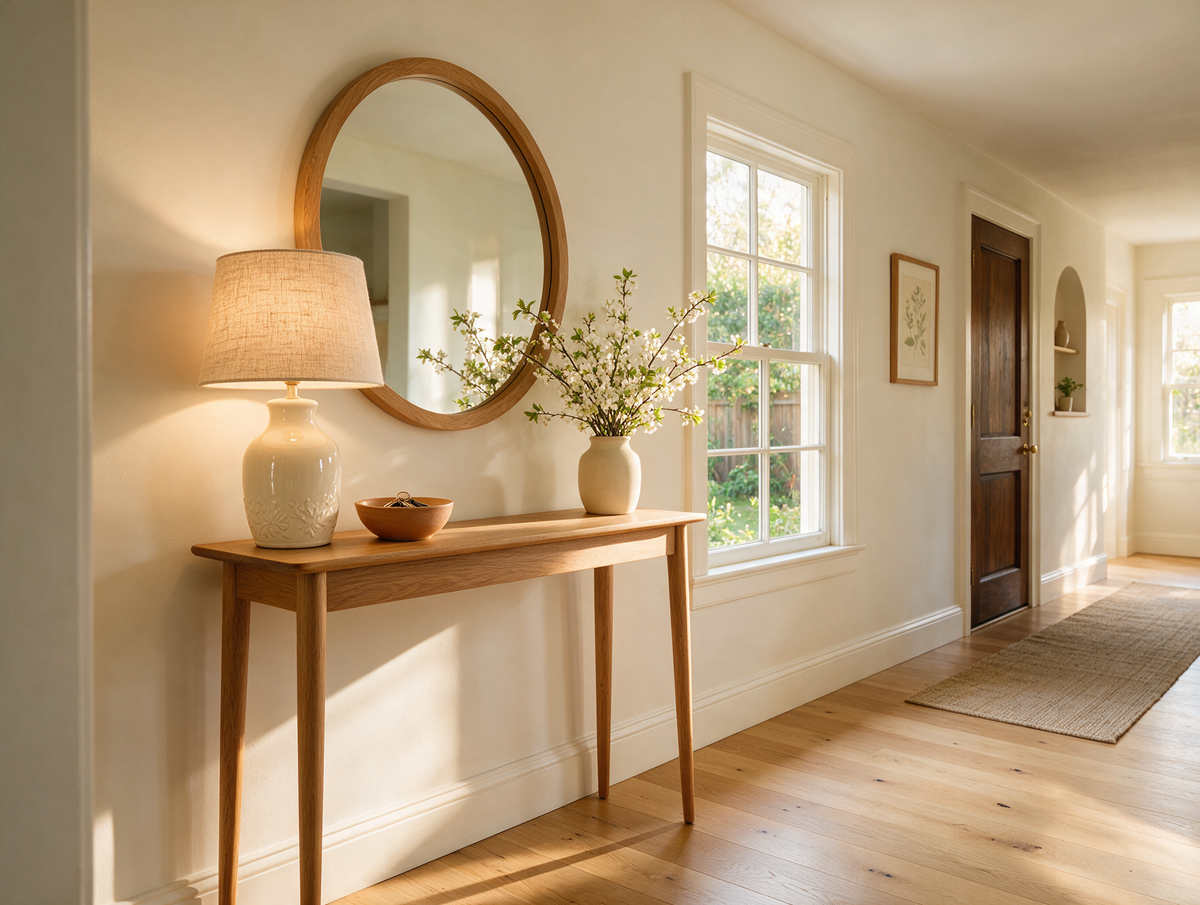
Console Table Ideas – Where to Use One and How to Style It
Do you remember coming home from school and dropping everything on the little table by the front door? Keys in the china dish, letters propped against the lamp, a vase of whatever was flowering in the garden and the old telephone with its curly cord. It was the first thing you saw when you walked in, and somehow it always said: you are home.
Read moreabout Console Table Ideas – Where to Use One and How to Style It
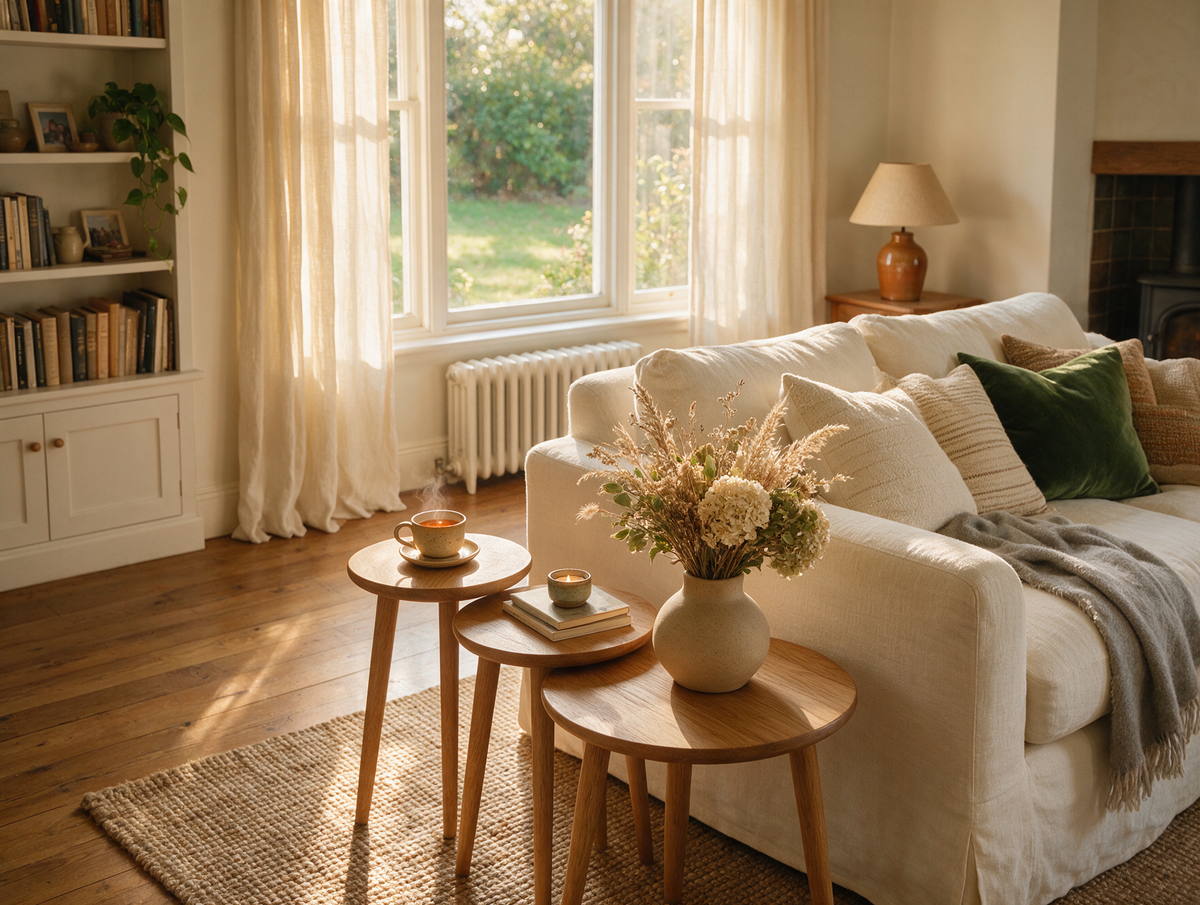
Nest of Tables – What Are They, Who Are They For and How to Style Them
Do you remember Sunday visits to your nan's, when the nest of tables came out from beside the armchair? Three little tables, each tucked neatly under the next, were pulled apart and handed round – one for the teapot, one for the biscuit tin and one for Grandad's crossword – and then slid back together the moment everyone went home.
Read moreabout Nest of Tables – What Are They, Who Are They For and How to Style Them
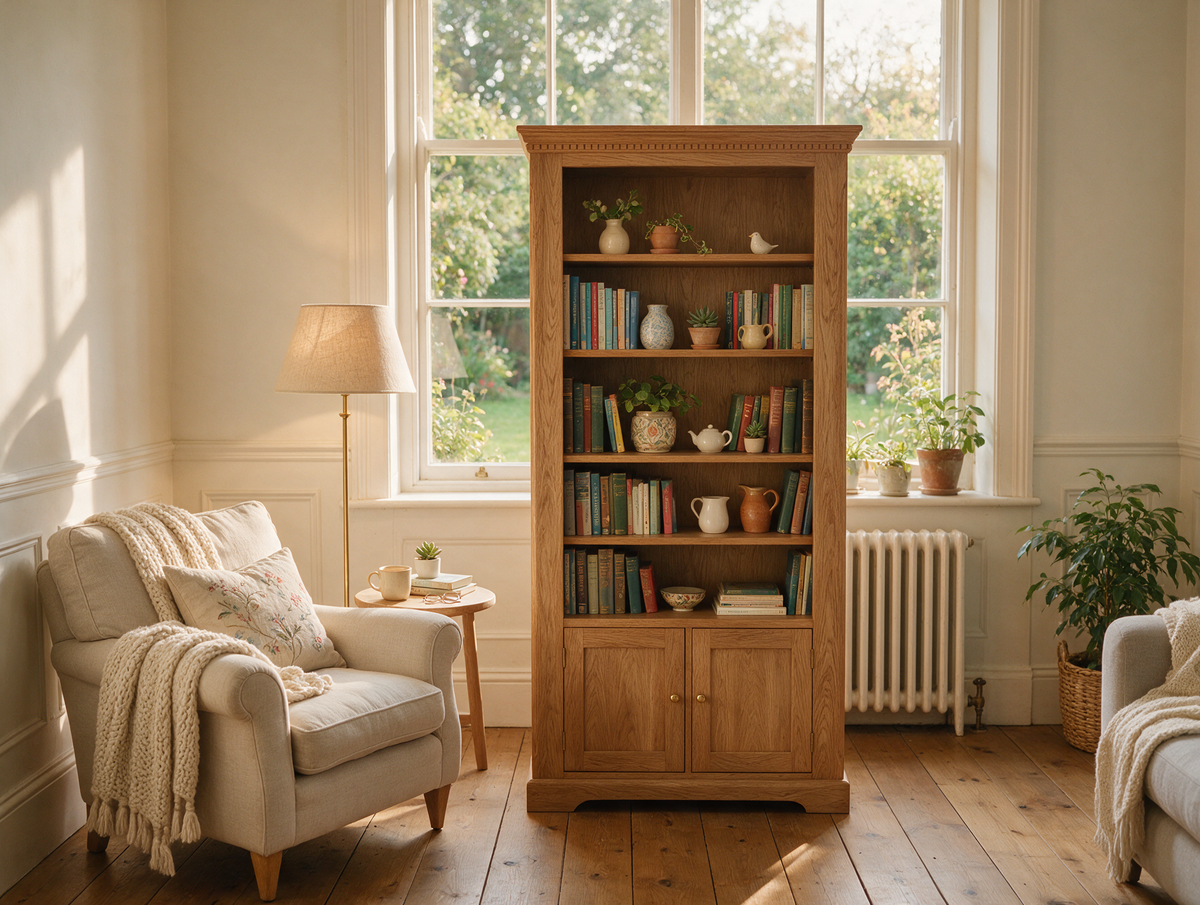
Bookcase Ideas – How to Choose and Style a Bookshelf for Your Living Room
Do you remember the bookcase in your grandparents' front room? Rows of faded paperbacks, a set of encyclopaedias nobody ever finished, holiday souvenirs, a framed school photo and that one heavy atlas you pulled out on rainy afternoons. It was never styled for anyone – and yet it told the whole story of the family.
Read moreabout Bookcase Ideas – How to Choose and Style a Bookshelf for Your Living Room



Share:
Colour Drenching Living Room – The Interior Trend Transforming Modern Homes
Grey Sofa Living Room – Stylish Ideas to Transform Any Interior