


- by Daniel Pawlik
Living room decor - Ideas, styles and tips for a stylish and cozy home
- by Daniel Pawlik
A living room is more than just a room. It's where the evening begins, where friends gather, where your favorite TV show plays, and where Sundays can simply be Sundays. No wonder many people pay special attention to their living room – after all, we often spend the best hours of the day here. However, when furnishing a living room, many questions quickly arise: Where do you start? Which furniture is really necessary? And how do you create that special atmosphere that makes a house a home?
In this guide, we will show you step-by-step how to furnish your living room, combining style, comfort, and personality – whether you are planning a small space or a spacious living room.
Before you start buying furniture, it's worth taking a quiet moment for planning. Furnishing a living room doesn't start at the furniture store, but on a piece of paper. First, ask yourself the most important question: How do you actually want to use your space?
A living room can fulfill many functions:
cozy retreat for the family
reception room for guests
mini home office
movie corner with home cinema feel
children's playroom
Priorities change depending on lifestyle and family situation. A small preliminary assessment saves a lot of money and frustration later on.
Proven tips for furnishing a living room to get started:
Sketch the floor plan – accurately measure the room and draw it to scale.
Observe lighting conditions – where does the sun shine in the morning and evening?
Identify fixed points – doors, windows, sockets, and radiators determine furniture placement.
Plan walkways – at least 60 cm distance between sofa, table, and furniture ensures freedom of movement.
Note personal preferences – which styles, colors, and materials appeal to you?
When furnishing a living room, one should not think of trends first, but of needs. A fashionable sofa that no one likes to sit on is a bad investment – a comfortable, thoughtfully chosen piece of furniture, on the other hand, will accompany you for years. You can find more inspiration on typical beginner mistakes in furnishing in our separate guide.

Once the planning is done, it's time for the exciting question: What furniture does a living room really need? The answer depends on the style, but some classics form the backbone of almost every living room.
The most important furniture pieces at a glance:
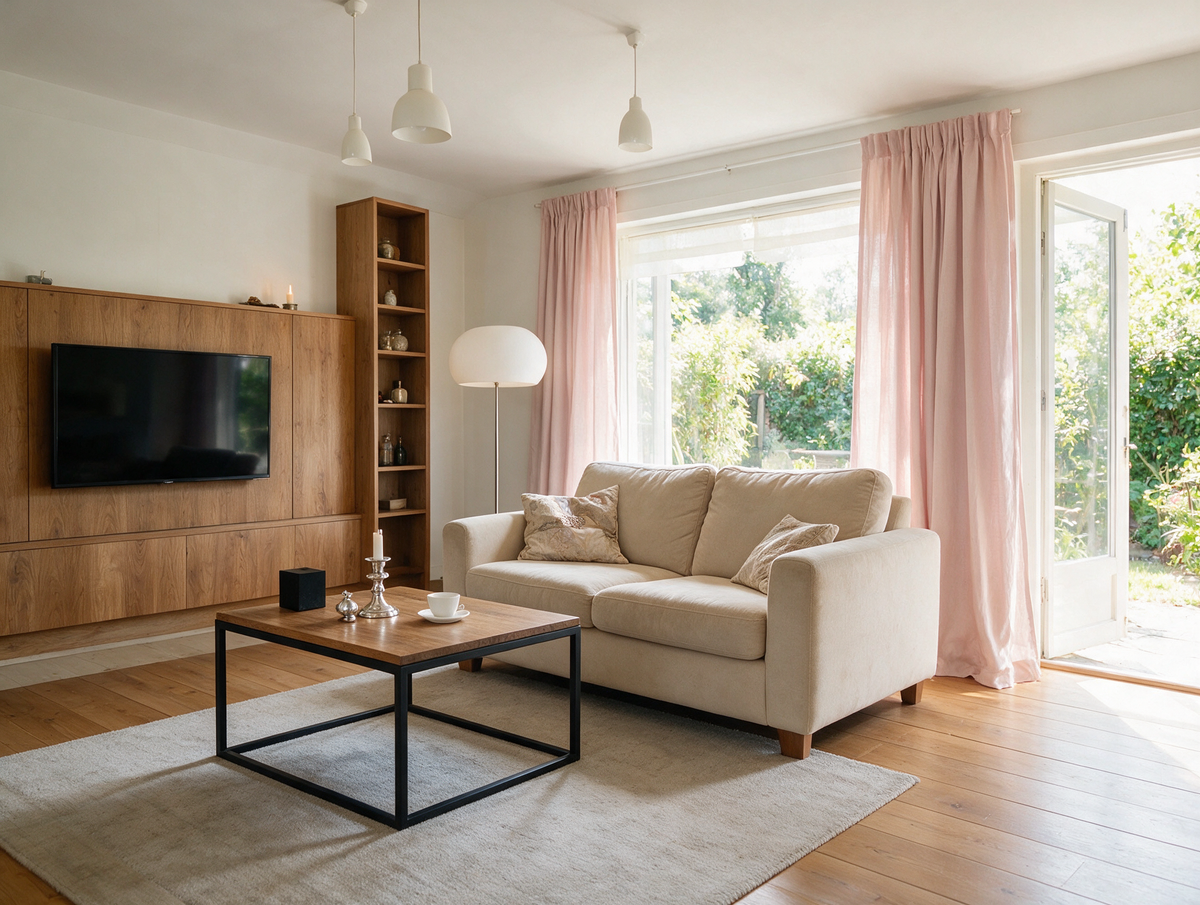
The sofa – the heart of every living room. It sets the mood of the room and should above all be comfortable. In our Sofas category, you will find various models for every taste.
The corner sofa – ideal for families or larger rooms. It offers plenty of seating and simultaneously creates a cozy island. Feel free to browse our corner sofas.
The coffee table – functional and style-defining. A well-chosen coffee table visually connects the seating area and provides space for books, drinks, and small souvenirs.
Armchair or reading chair – a second seating option that makes the room more interesting and offers a quiet retreat.
Sideboard or lowboard – creates storage space without overloading the room and often holds the TV.
Lighting – multiple light sources instead of a single ceiling lamp. A floor lamp, a table lamp, and perhaps a string of lights create depth and warmth.
If you want to furnish your living room in a modern style, combine clean lines with warm materials. Smooth surfaces meet soft textiles, modern design meets natural fabrics like linen, wool, and wood. This mix brings the tension into the room that makes it lively.
A proven trick from our experience: Choose a central statement piece of furniture – for example, a sofa in a special color – and keep the rest calm. This way, the room looks harmonious and not overloaded.
A short furniture checklist:
comfortable seating as the main piece
a practical coffee table of appropriate size
sufficient storage space (sideboard, shelves, baskets)
at least two light sources
a soft rug for warmth and acoustics
Material also plays a big role. A sofa with boucle upholstery looks completely different from a model made of smooth leather, and a solid wood coffee table conveys a different atmosphere than one made of metal and glass. Choose consciously what feels like home to you.
Colors shape the mood of a room more than anything else. Furnishing a living room, therefore, always means finding a color language that suits you. There are no fixed rules – but proven principles that the eye likes.
Three popular color concepts for the living room:
The natural concept – beige, cream, sage, warm wood. Calm, timeless, and especially cozy.
The warm concept – terracotta, mustard, rust brown, earth tones. Inviting, lively, and full of character.
The modern concept – anthracite, white, black with metallic accents. Clear, elegant, and minimalist.
A helpful anchor in color planning is the 60-30-10 rule:
60% of a dominant color (wall color, large furniture)
30% of a secondary color (curtains, rug, armchair)
10% of an accent color (cushions, vases, pictures)
This creates a balanced overall picture without visual clutter. If you want to decorate your living room without committing to a color right away, start with a neutral base and only add color through accessories. This approach keeps the room flexible in the long term and can be easily changed according to the season or mood.
Practical tips for color selection:
Test colors on a large area of the wall – small sample cards often deceive.
Observe colors at different times of the day – daylight changes every shade.
Get inspiration from nature – earth tones almost always look harmonious.
Combine matte and glossy for more depth.
Consider the cardinal direction of your room – north-facing rooms can benefit from warmer tones.
Colors are also a matter of memory. Perhaps a warm mustard tone reminds you of your grandparents' living room, or a dark petrol evokes images of a favorite record from your student days. These connections are precisely what make a home personal – a bit like a soundtrack to your own life that accompanies every room. You can find more inspiration in our other living room furnishing ideas regarding colors and styles.
Furnishing a small living room is a special task – but not an obstacle. On the contrary: A small space often creates the coziest atmosphere because everything is closer together and the room automatically has a familiar feel. Many remember this feeling from their first apartment, where an old sofa, a record player, and a string of lights were enough to be happy.
Proven strategies for small spaces:
Multifunctional furniture like sofa beds, coffee tables with storage, or ottomans with internal compartments
Legged furniture keeps the floor clear and appears airier
Light wall colors visually enlarge the room
Mirrors double the light and create depth
Vertical storage up to the ceiling instead of wide shelves
Uniform flooring makes the area appear larger
When furnishing a small living room, reduction is your best friend. Fewer pieces of furniture, chosen thoughtfully, appear more spacious than many small items that clutter the room. A compact two-seater sofa, a slim coffee table, and an armchair with delicate legs are often enough for a complete living room.
A quick checklist for small rooms:
use a maximum of three main colors
choose furniture with visible legs
move storage space upwards
use bright, warm light sources
keep the center of the room clear
Decorating also follows its own rules. A few, carefully selected pieces make a stronger impact than a cluttered surface. A vase, a picture frame, a few books – often that's all it takes to show personality. If you want to decorate your living room without creating clutter, focus on calm groupings instead of many individual objects.
One last thought: Even the smallest living room can tell a big story. An inherited armchair, a record on the wall, or a photo from your last vacation turn four walls into a real home. It's not about size – it's about the feeling of arriving.

What is the best way to start furnishing a living room?
Start with a floor plan and consider how you actually want to use the room. Only then should you choose furniture and plan colors. This sequence saves time and money.
What furniture is indispensable in the living room?
A comfortable sofa, a coffee table, storage in the form of a sideboard or shelf, and multiple light sources form the base. Additions like armchairs or rugs make the room more personal.
Which colors are particularly suitable for the living room?
Bright, warm tones like beige, cream, or greige create a cozy and friendly atmosphere. Accents in mustard, sage, or terracotta bring warmth and character without overwhelming the room.
How do you make a small living room appear larger?
Light walls, mirrors, floating furniture, and uniform flooring create visual spaciousness. Avoid bulky furniture and instead work with delicate, multifunctional pieces.
How do you create a cozy atmosphere in the living room?
Multiple warm light sources, soft textiles, a fluffy rug, and personal mementos transform any room into a comfortable home. The mix of function and feeling is important.
How many living room furnishing ideas should I implement at once?
It's better to consistently implement two to three clear ideas than to mix too many styles. This keeps the room harmonious and expressive.
How often should you redecorate your living room?
A complete redesign is usually not necessary. Even small changes – new cushions, a different rug, or an additional lamp – refresh the room and adapt it to current life phases.
If you want to redecorate your living room, you will find a carefully curated selection of sofas, corner sofas, coffee tables and other furniture that combines function, warmth, and timeless design at Pillovely. Take your time to be inspired – your new favorite room is already waiting to become a part of your very own story.
If you liked this text, be sure to check out our other inspirations:
60s Interior Design Style – Rediscover iconic retro design and stylish living ideas
Loveseat - What Is It, Who Is It For and How to Choose the Right One?
A loveseat is one of those pieces of furniture that can completely change how a room works. It is smaller than a classic sofa, more generous than a single armchair and often easier to place in compact interiors. A loveseat can create a cosy sitting area in a small living room, soften a bedroom corner, complete a reading nook or work as an additional seat next to a larger sofa. Its strength lies in proportion: it gives you the feeling of a sofa without taking over the whole room.
Read moreabout Loveseat - What Is It, Who Is It For and How to Choose the Right One?
EU vs UK Bed Sizes – Will UK Bedding Fit a European Bed?
European beds are 200 cm long, UK beds 191 or 198 cm. A simple EU vs UK bed size table in cm – and what it means for your mattress and fitted sheets.
Read moreabout EU vs UK Bed Sizes – Will UK Bedding Fit a European Bed?
Autumn colors at home – shades that bring peace and warmth
Do you remember autumn from your childhood, when the leaves changed color like a kaleidoscope, and your mom would pull out the pumpkin-colored sweater she'd worn since college? Or those evenings in front of the TV while a storm raged outside, and the lamplight in the house gave everything a warm, amber hue? Those were the days when no one talked about "color palettes" or "color stories"—colors simply existed, as natural as breathing. Today, when we can choose from 50 shades of gray (and no, I'm not talking about THAT book), we sometimes lose track of what truly makes a home feel cozy. At Pillovely, we believe that autumn colors aren't a trend—they're a return to what makes us feel safe. Because "You are someone"—someone who deserves a space filled with colors that snuggle like a grandma's blanket.
Read moreabout Autumn colors at home – shades that bring peace and warmth



Share:
60s Interior Design Style – Rediscover Iconic Retro Design and Stylish Home Ideas
Sofa bed – which one is the best and what to look for when buying?