


- by Daniel Pawlik
Velvet sofa – advantages, disadvantages, and everyday care tips
- by Daniel Pawlik
There's something about velvet that makes it hard to ignore – the way light changes on its surface with every touch evokes associations with elegant 70s interiors and evenings spent in a living room that looked straight out of a movie. No wonder a velvet sofa has been one of the most frequently chosen upholstered furniture pieces for the living room for several seasons.
However, before you decide on this material, it's worth knowing what to expect from it on a daily basis – not just in the first week after unpacking, but also after a year or two of use. In this guide, we examine what exactly velvet is, its real advantages and disadvantages, and how to care for it to maintain its characteristic luster for years.
Velvet is a fabric with a dense, short pile, which, thanks to its specific structure, is woven to reflect light in a characteristic, "wavy" way – depending on the viewing angle and the direction in which the fibers are brushed, the same color can look slightly different. It is this play of light and shadow that makes velvet furniture look exceptionally deep and noble, even in subdued, neutral shades.
You will find several variants of this fabric on the market. Polyester velvet is the most commonly chosen version for upholstered furniture – it is abrasion-resistant, easier to care for, and definitely more affordable than its natural counterparts. Cotton velvet has a softer, "velvety" texture, but it is also more delicate and requires more careful handling. Less common silk velvet is a premium solution, valued for its unique sheen, but rarely used in everyday furniture due to its delicacy and high price.
The popularity of velvet in furniture making is also a result of a strong return to styling referring to the aesthetics of past decades – soft, rounded furniture shapes combined with deep, saturated fabric perfectly fit into the nostalgic, yet modern interior design trend that dominates living rooms today.

The biggest advantage of velvet is undoubtedly its appearance – the deep color, delicate texture, and characteristic sheen make a velvet sofa a natural focal point of the living room, even without additional decorations. Velvet is also pleasant to the touch – soft, warm, inviting you to sit on it and stay longer.
Modern upholstery velvets, especially polyester ones, are surprisingly durable and abrasion-resistant today – a good quality fabric of this type can successfully withstand daily use, including intense contact with household members or pets. Many models are also available in hydrophobic versions, additionally protected against liquid absorption, which greatly facilitates dealing with minor spills.
However, velvet also has its weaker sides. It is susceptible to marks from touch and pressure – areas where someone has sat may temporarily appear darker or lighter than the rest of the surface, although in most cases this disappears after gently "brushing" the fibers. The same dense structure that gives an impressive sheen also favors the accumulation of dust and pet hair, which means more frequent vacuuming than with smooth fabrics. It is also worth remembering that cheaper, low-quality velvets can "wear out" over time in areas of greatest use, so when choosing, it is worth paying attention to the density and grammage of the fabric.
In summary: a velvet sofa will work great in homes where aesthetics and tactile pleasure are appreciated, and household members are ready for a bit more frequent care than with simpler materials.
The basis of velvet sofa care is regularity – weekly vacuuming with a soft nozzle prevents dust from settling deep into the fibers and maintains the fabric's characteristic sheen. It is also worth occasionally brushing the surface with a soft brush in one direction to even out the pile and restore the furniture to its original appearance.
When removing stains, quick action is crucial. First, gently blot fresh dirt with a clean, dry cloth, pressing it against the stain instead of rubbing – rubbing pushes the dirt deeper into the fabric and can leave a permanent mark. For cleaning most velvet stains, a gentle solution of water with a small amount of dye-free liquid soap, applied with a soft brush in a circular motion from the edges of the stain to the center, is sufficient. After cleaning, the fabric should be thoroughly dried and, while still slightly damp, gently brushed the fibers in one direction so that it dries evenly and without streaks.
Before using any cleaning agent, it's worth checking the manufacturer's label – a "W" symbol means the fabric tolerates water cleaning, "S" requires solvent-based agents, and "WS" allows for both options. Always test the chosen agent on a small, invisible part of the upholstery before applying it to a visible stain.
If there are pets in the home, it's worth considering hydrophobic or "pet-friendly" velvets – their surface is additionally protected against absorbing hair and liquids, which significantly facilitates daily furniture maintenance.
Velvet has an advantage over many other fabrics in that even subdued, classic colors gain depth and character on it thanks to the play of light on the surface. Among the most frequently chosen shades today, deep bottle green and emerald lead the way, referring to the elegant aesthetic of the 70s, as well as warm, earthy colors – terracotta, rust, or mustard yellow, which combine well with wooden accessories and natural materials.
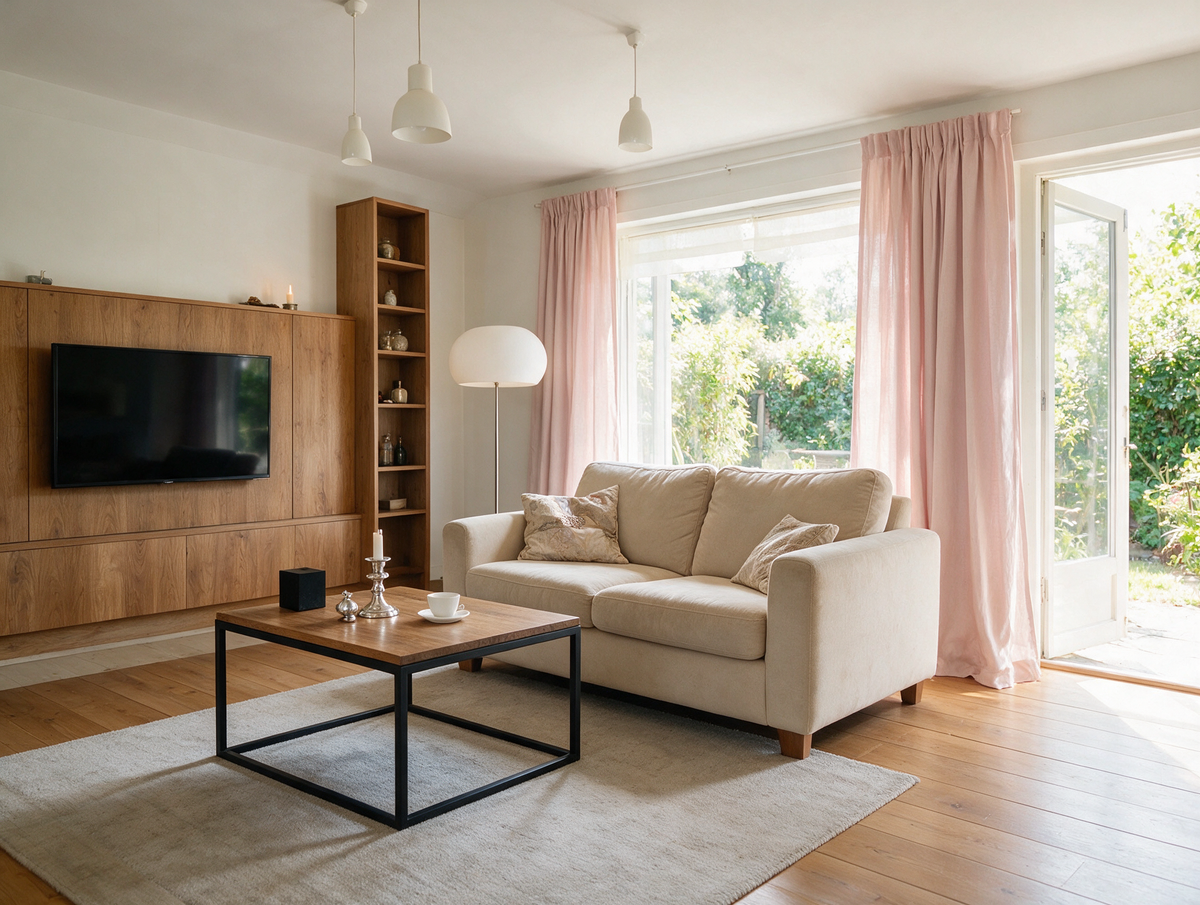
Equally popular remain subdued neutral shades – beiges, sandy grays, or delicate pink – which will work well in minimalist, bright interiors and are easier to combine with frequently changed accessories. Deep navy and black, on the other hand, are choices for those who want the sofa to become a distinctive, dominant element of the living room.
When choosing the color of velvet, it is also worth considering the size of the room. In smaller living rooms, lighter, subdued shades that optically enlarge the space will work better, while in larger, well-lit interiors, you can boldly opt for deep, saturated colors that will give the room character and coziness.

A velvet sofa is a choice for those who value aesthetics, depth of color, and tactile pleasure – in exchange for a bit more regular care than with simpler fabrics. A well-chosen model, with appropriate grammage and possible hydrophobic protection, will easily withstand daily use for many years, retaining its characteristic luster.
If you are looking for a velvet sofa tailored to your living room, visit Pillovely's homepage and check out our sofa category and corner sofa category – you will find models in velvet fabrics, in shades matched to today's most popular interior design styles.
If you liked this text, be sure to check out our other inspirations:
How to clean a sofa? Home remedies for removing stains from different fabrics
Loveseat - What Is It, Who Is It For and How to Choose the Right One?
A loveseat is one of those pieces of furniture that can completely change how a room works. It is smaller than a classic sofa, more generous than a single armchair and often easier to place in compact interiors. A loveseat can create a cosy sitting area in a small living room, soften a bedroom corner, complete a reading nook or work as an additional seat next to a larger sofa. Its strength lies in proportion: it gives you the feeling of a sofa without taking over the whole room.
Read moreabout Loveseat - What Is It, Who Is It For and How to Choose the Right One?
EU vs UK Bed Sizes – Will UK Bedding Fit a European Bed?
European beds are 200 cm long, UK beds 191 or 198 cm. A simple EU vs UK bed size table in cm – and what it means for your mattress and fitted sheets.
Read moreabout EU vs UK Bed Sizes – Will UK Bedding Fit a European Bed?
Autumn colors at home – shades that bring peace and warmth
Do you remember autumn from your childhood, when the leaves changed color like a kaleidoscope, and your mom would pull out the pumpkin-colored sweater she'd worn since college? Or those evenings in front of the TV while a storm raged outside, and the lamplight in the house gave everything a warm, amber hue? Those were the days when no one talked about "color palettes" or "color stories"—colors simply existed, as natural as breathing. Today, when we can choose from 50 shades of gray (and no, I'm not talking about THAT book), we sometimes lose track of what truly makes a home feel cozy. At Pillovely, we believe that autumn colors aren't a trend—they're a return to what makes us feel safe. Because "You are someone"—someone who deserves a space filled with colors that snuggle like a grandma's blanket.
Read moreabout Autumn colors at home – shades that bring peace and warmth



Share:
Pilla's Reading Corner: Robert Kirkman, Cory Walker, Ryan Ottley - "Invincible Cycle"
Extendable dining table – how to choose the perfect model and which mechanism will work best?