


- by Daniel Pawlik
Continental bed - what is it, how does it differ from an upholstered bed, and who is it best for?
- by Daniel Pawlik
You enter a hotel room, sit on the edge of the bed, and immediately feel the difference — the furniture is taller, sturdier, and the mattress beneath you responds differently than the one at home. It's a feeling many people then try to recreate in their own bedrooms. Most often, the answer to this search is a continental bed — a structure that for years was primarily associated with hotels, but is now increasingly finding its way into ordinary homes and apartments.
In this article, we explain exactly what a continental bed is, where its name comes from, how it differs from a popular upholstered bed, what sizes are available, and its real advantages and disadvantages.
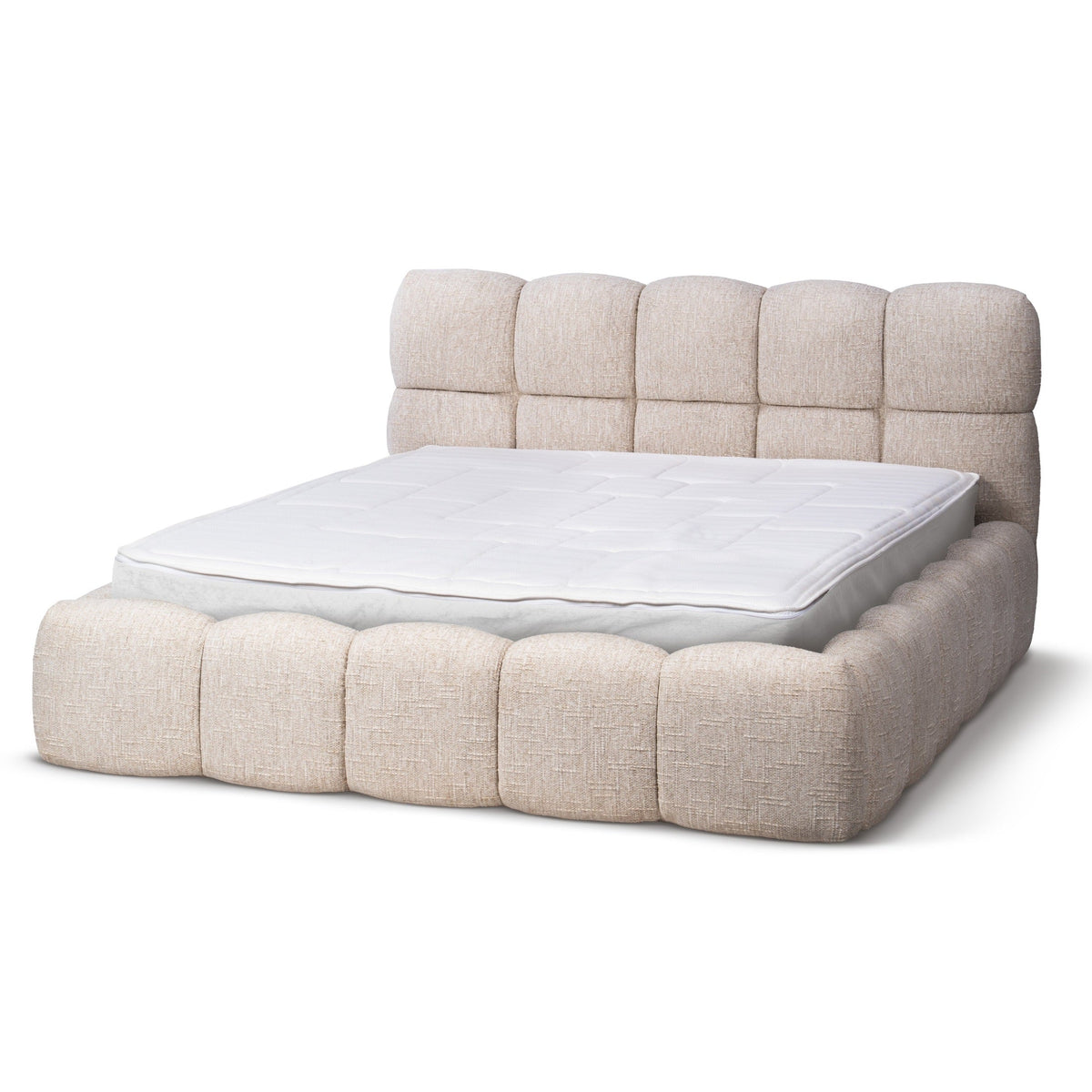
A continental bed, also known by its English name boxspring, is a structure consisting of two main elements: a sturdy base (the so-called boxspring) and a mattress placed directly on its surface. Unlike classic beds, where the mattress rests on a slatted frame, in the continental version, the base itself acts as an additional cushioning layer — it often contains its own spring system or other padding material, which, together with the mattress, creates a multi-layered whole.
The name "continental" refers to the European style of this type of bed, in contrast to the Anglo-Saxon tradition, where the boxspring was initially used mainly in hospitality. It was hotels that widely popularized this type of construction — the comfort of sleep on a high, multi-layered bed became one of the elements that guests remembered from their stay and wanted to have in their own home.
A typical continental bed consists of three layers: a base (boxspring), a main mattress, and a thin top layer — a topper, which further enhances comfort and can be easily replaced when worn out, without having to replace the entire mattress. This construction makes a continental bed usually higher than traditional models — often reaching 60–70 cm in height, measured from the floor to the top surface of the mattress.

Although both types of beds may look similar at first glance — especially when both versions have an upholstered, high headboard — the differences in construction translate into real, distinct sensations during sleep.
An upholstered bed relies on a frame with flexible slats, on which a single mattress rests. This construction provides good ventilation and a light, natural "springiness" under body weight. It's a proven, popular solution and usually slightly cheaper than the continental version.
A continental bed differs in that beneath the mattress there is an additional padded or spring-loaded base, instead of a simple frame. This extra layer of cushioning makes the whole unit react to movement differently — more softly and evenly, with less "sagging" in one spot. For many, this is the difference that most resembles the comfort found in good hotels.
There's also a practical difference — a continental bed, due to its height, makes getting out of bed easier, which is especially appreciated by older people or those with knee and hip joint ailments. An upholstered bed, being lower, is often preferred for smaller, more intimate bedrooms, where an overly tall structure might disrupt the room's proportions.
Which to choose? If maximum sleep comfort and a hotel-like bedroom ambiance are priorities — a continental bed will be a better choice. If you're looking for a proven solution, a slightly lower price, and a classic furniture height — the upholstered version will work well.
It's also worth considering the style of the entire bedroom. A continental bed, due to its massiveness and height, pairs well with elegant, understated interiors with a hotel character. An upholstered bed, on the other hand, offers more stylistic freedom — its lower, lighter form suits both minimalist and more decorative arrangements, with a distinctive headboard as the main focal point of the room.
Continental beds are available in a similar range of sizes to traditional models — from single versions to large double beds. The most common widths are 90×200 cm, 140×200 cm, 160×200 cm, and 180×200 cm, although manufacturers also offer non-standard variants, including 200×200 cm for those who value maximum space.
When choosing the size, it's worth remembering that due to its multi-layered construction, a continental bed takes up a bit more space in the bedroom than might seem from the mattress width alone — the boxspring base itself usually has slightly larger external dimensions. Therefore, before purchasing, it's worth checking the exact external dimensions of a specific model, not just the size of the mattress that rests on it.
As with other types of beds, the choice of width should be adapted to the number of people sleeping and the bedroom's square footage. For one person, 90–140 cm in width will suffice; for a couple, 160 cm is a comfortable standard, and for larger bedrooms and a higher budget, it's worth considering 180 cm or more — especially if the couple values plenty of space to turn freely at night.
The greatest advantages of a continental bed primarily include exceptional sleep comfort, resulting from its multi-layered construction — the additional cushioning of the base relieves pressure points better than a single mattress on a classic frame. The height of the bed is another asset — it makes getting in and out easier, which is particularly appreciated by older people. Additionally, thanks to the possibility of replacing only the topper, it's easier to refresh sleeping comfort without replacing the entire bed every few years.
Among the disadvantages, it's worth mentioning the higher price — the multi-layered construction and more solid materials result in a higher purchase cost than a classic upholstered bed. A continental bed also takes up more space due to its height and wider base, which should be considered when planning the bedroom layout, especially if the room has a low ceiling. It's also worth remembering that transporting and moving such a bed into an apartment — especially in older tenements with narrow staircases — may require more thorough planning than with lighter constructions.
In summary, a continental bed is best suited for people who value hotel-like sleep comfort, have enough space in their bedroom, and are willing to invest a little more in a piece of furniture they will use for many years. It's also a good choice for couples with different firmness preferences — the multi-layered construction facilitates the use of zoned solutions, tailored individually to each person.

A continental bed is an investment in sleep quality that translates into real comfort every night — from the first touch of the mattress to the ease of getting up in the morning. If you're looking for a piece of furniture that combines an elegant, hotel-like character with real back support, it's worth considering this solution.
Visit Pillovely's homepage and check out our continental bed category — you'll find models in various sizes, fabrics, and headboard heights, suited to your bedroom's character.
If you liked this text, be sure to check out our other inspirations:
Bed with storage – how to choose and how much space does it offer?
Loveseat - What Is It, Who Is It For and How to Choose the Right One?
A loveseat is one of those pieces of furniture that can completely change how a room works. It is smaller than a classic sofa, more generous than a single armchair and often easier to place in compact interiors. A loveseat can create a cosy sitting area in a small living room, soften a bedroom corner, complete a reading nook or work as an additional seat next to a larger sofa. Its strength lies in proportion: it gives you the feeling of a sofa without taking over the whole room.
Read moreabout Loveseat - What Is It, Who Is It For and How to Choose the Right One?
EU vs UK Bed Sizes – Will UK Bedding Fit a European Bed?
European beds are 200 cm long, UK beds 191 or 198 cm. A simple EU vs UK bed size table in cm – and what it means for your mattress and fitted sheets.
Read moreabout EU vs UK Bed Sizes – Will UK Bedding Fit a European Bed?
Autumn colors at home – shades that bring peace and warmth
Do you remember autumn from your childhood, when the leaves changed color like a kaleidoscope, and your mom would pull out the pumpkin-colored sweater she'd worn since college? Or those evenings in front of the TV while a storm raged outside, and the lamplight in the house gave everything a warm, amber hue? Those were the days when no one talked about "color palettes" or "color stories"—colors simply existed, as natural as breathing. Today, when we can choose from 50 shades of gray (and no, I'm not talking about THAT book), we sometimes lose track of what truly makes a home feel cozy. At Pillovely, we believe that autumn colors aren't a trend—they're a return to what makes us feel safe. Because "You are someone"—someone who deserves a space filled with colors that snuggle like a grandma's blanket.
Read moreabout Autumn colors at home – shades that bring peace and warmth





Share:
Pilla's Reading Nook: Tadeusz Baranowski - "Professor Nerwosolka's Mezzanine"
Double bed – what sizes to choose and what to look for when buying?