


- by Damian Jerzy Zadora
Combining old and new – the vintage and retro trend with a modern twist
- by Damian Jerzy Zadora
Do you remember that moment from your childhood when your family moved into a new apartment, and Grandma's old chest of drawers was supposed to stand next to a modern IKEA sofa? Mom was torn – would it look good, or should the old furniture be left in the old house? Dad shrugged, but in the end, the chest of drawers found its place in the new living room, and over time you realized that precisely this combination gives a home soul, history, and character.
What was once a design dilemma is now one of the strongest design trends. The combination of vintage and modern is not a fad – it's a philosophy of life that shows that beauty has no expiration date, and history and the future can coexist. At Pillovely , we call this approach "Love for the warmth of home" – the ability to create spaces that tell the stories of all generations at once.
But how do you do it right? How do you make a vintage wardrobe look not like a random guest in a modern living room, but like an integral part of a well-thought-out interior? How can you combine different decades, styles, and design aesthetics to create something beautiful, cohesive, and – most importantly – authentic?
Just thirty years ago, apartments were furnished according to style – either modern, classic, or provincial. A mixture of these styles was considered a sign of poor taste, inconsistency, or even poverty, forcing one to make do with what was available.
The first revolution came in the 1990s when designers began to deliberately combine vintage accents with modern architecture. Philippe Starck placed designer chairs next to antique chests of drawers, and Kelly Wearstler combined Art Deco with Californian minimalism. These were bold experiments that showed that different eras can indeed harmonize.
The turn of the 21st century brought a democratization of this trend. Younger generations, who grew up in a global culture of remixes and mashups, began to naturally mix different styles in their own homes. The first generation to grow up with the Internet learned that it was possible to draw inspiration from all eras at once.
Eclecticism is no longer a coincidence but an art. Skillfully combining vintage and modern requires knowledge, a sense of proportion, and above all, the understanding that a home should tell a story about the people who live in it, and not about a specific era.
Pop culture has always been the most influential teacher of design. "Mad Men" showed us what the 1960s could look like in a contemporary setting – not as an idealized museum, but as living interiors of people who live in the present but appreciate the aesthetics of the past.
"The Marvelous Mrs. Maisel" went a step further, showing how glamorous vintage can be without being costume-y. Midge Maisel's interiors are a perfect blend of 1950s charm and something that could exist today. It's an example of how timeless vintage can be.
Instagram changed everything. Suddenly, everyone could see thousands of examples of successful style mixes, draw inspiration from designs from all over the world, and learn from the best. #vintagemodern , #eclecticdesign , and #grandmillennial were the hashtags that defined a new aesthetic.
TikTok triggered another wave – young people show how they find vintage treasures at flea markets, how they renovate them, and integrate them into modern interiors. This generation has no qualms about mixing eras, as they grew up in a culture where everything is possible at once.
Contemporary series like "Emily in Paris" or "Bridgerton" (in a modern version) show us another development – vintage not as nostalgia for the past, but as a source of inspiration for the future.

Why do we need so much vintage in our interiors right now? Psychologists speak of anticipatory nostalgia – we long for a past that we ourselves have not experienced, but which seems more authentic to us than the present.
In a world of rapid change, social media, and constant updates, vintage furniture gives us a sense of continuity, stability, and rootedness. It's not an escape from modernity – it's a way to embrace it. When we combine Grandma's chest of drawers with a modern sofa, we create more than just an interior – we build a bridge between our origins and our future.
Personalization is up to you, you design it yourself – and this personalization is diverse today. We choose not only between different modern styles, but between all styles that have ever existed. This offers enormous freedom, but also responsibility.
How can vintage meet modern look like a thoughtful composition and not like a random collection? There are proven methods.
The 70/30 Rule : About 70% of the interior should represent a dominant style (usually modern), while 30% can be vintage or eclectic. This ensures visual uniformity, but also allows for striking accents.
Recurring Elements – colors, materials, proportions. If your vintage chest of drawers has brass handles, replicate the brass in a modern lamp. If an old armchair has suede upholstery, use suede in the new cushions.
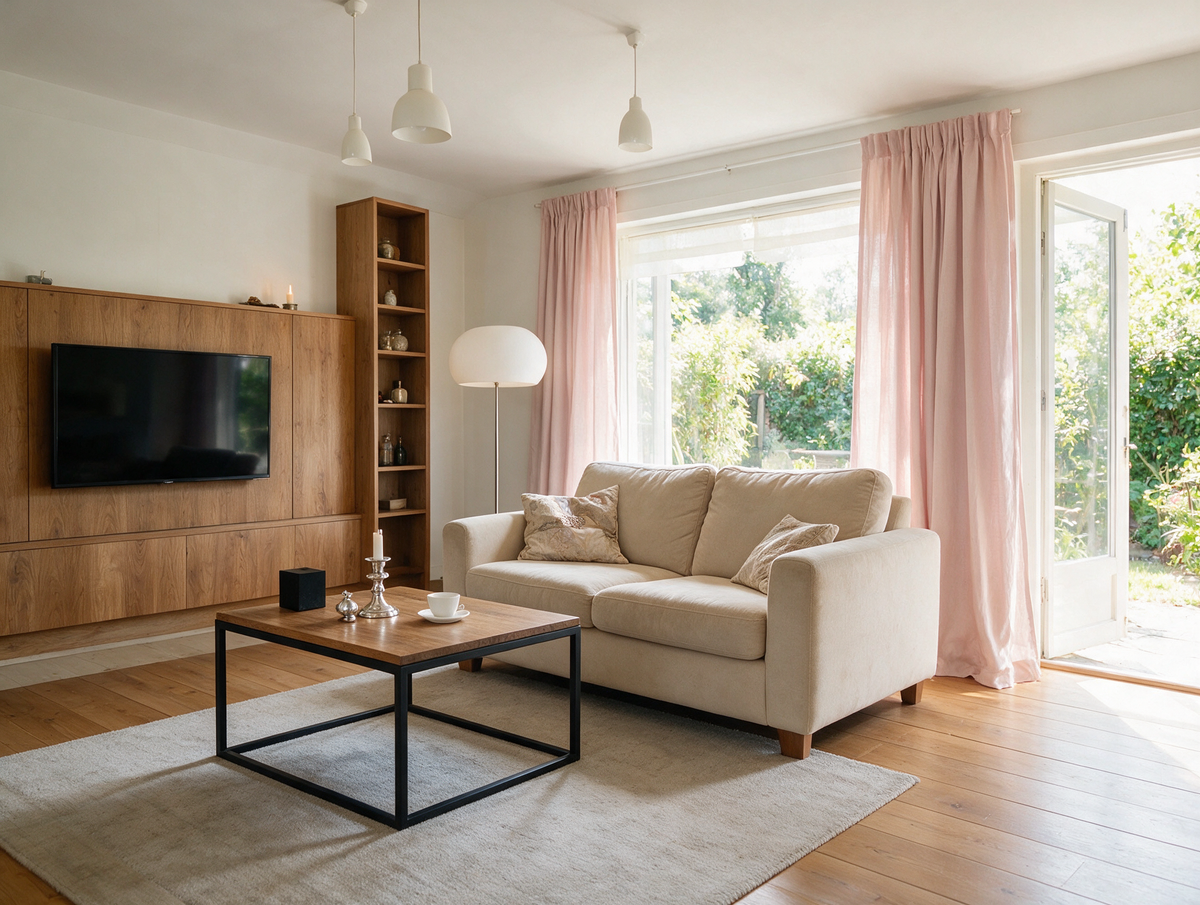
Contrast, but no Conflict – contrasting but not conflicting combinations look best. A minimalist Scandinavian sofa harmonizes wonderfully with an ornate 1970s chest of drawers, as one element provides a fresh feel, while the other adds character.
History, but no Museum Piece – vintage accents should feel like living furnishings, not museum pieces. This means that while they may show signs of wear, they should be functional and suitable for everyday use.

Each vintage decade has its own distinctive design language, which interacts with modernity in different ways.
The 1950s and 1960s are all about clear lines, bright colors, and optimistic shapes. These elements harmonize wonderfully with contemporary minimalism – they share the philosophy of simplicity, but at the same time add warmth and playfulness. A vintage lamp from the 1960s in a modern living room looks like a smile in a serious conversation.
The 1970s were an era of earth tones, natural materials, and organic forms. They harmonize perfectly with contemporary eco-design and biophilic interiors. Macrame, rattan, ceramics – these elements not only look beautiful but are also philosophically aligned with today's environmental concerns.
The 80s are a challenge – bold colors, geometric patterns, sometimes overwhelming opulence. But precisely for this reason, they can set fascinating accents in minimalist interiors. A single statement piece from the 80s can enliven even the most neutral room.
Art Deco (1920s-1930s) is all about timeless elegance – geometric patterns, luxurious materials, and refined proportions. Art Deco elements are easiest to integrate into modern design due to their universal class.
Layering Textiles – a modern sofa can get a vintage look with an antique rug, an old blanket from Grandma's house, or vintage cushions. This is the easiest way to integrate nostalgia without a large investment.
Mixing Lights – Modern LED spotlights can illuminate vintage lamp stands, creating the perfect balance between functionality and atmosphere. Layering lights is an art in which vintage can play an important role.
Artworks as a Bridge – Vintage posters, photographs, and paintings can be the perfect link between different eras in a single interior. They don't take up much space but dramatically change the character of the room.
Functional Vintage Style – not everything vintage has to be decorative. A vintage coffee table can serve just as well as a modern one, but adds character. An old typewriter can serve as decoration for the desk in the home office.
Statement Pieces – a large, striking vintage piece (like an antique armchair or an ornate mirror) can set the tone for an entire room, even if the rest is modern.

Tips for Ecology in Furniture Restoration – it's not just about environmental responsibility, but also about creative possibilities. Restoring antique furniture creates unique pieces that perfectly complement your space and aesthetic.
Transforming old furniture has become an art form. An old chest of drawers can get a new coat of paint or new hardware, or even be adapted to modern needs (e.g., storing a laptop in an old desk). It's a process that respects history while adapting it to contemporary life.
Professional Restoration vs. DIY Adaptation – Some pieces deserve professional care, especially if they have genuine historical or sentimental value. However, many vintage finds can also be styled yourself – and that's part of the fun. Whether you're sanding, painting, or upholstering, you're creating a personal connection to the piece.
The Patina Dilemma – Should you retain the original patina or completely refresh it? It depends on the piece, your space, and your philosophy. Sometimes a worn look adds authenticity, sometimes a fresh finish helps a vintage piece harmonize better with contemporary pieces.
Baby Boomers often own authentic vintage furniture – inherited from their parents or grandparents. The challenge for them is often integrating these emotionally significant items into their modern lifestyle. These pieces carry their own stories, memories, and emotional value.
Generation X grew up with vintage pieces in their families but also enjoys combining different eras. They value authenticity and functionality. For them, vintage often represents quality from the past in an increasingly disposable world.
Millennials popularized the vintage trend through social media. They are often treasure hunters, thrift store explorers, and Instagram stylists. For them, vintage is a way to create a unique, personal space on a limited budget. They celebrate imperfection, eclecticism, and the storytelling of objects.
Generation Z approaches vintage differently – they don't necessarily miss the "good old days" (which they never experienced), but they appreciate the aesthetic, uniqueness, and sustainability. For them, vintage can be ironic, playful, and experimental.
Each generation brings a different perspective to the mix of vintage and modern, and each of these perspectives has its value. A home can reflect the tastes of different generations if designed thoughtfully.

The "Amusement Park" Effect – when an interior looks like a perfect reproduction of a specific decade and not like a contemporary living space. Real life is not a museum piece.
Clutter Disguised as Eclecticism – mixing eras doesn't mean mixing everything. Moderation is still necessary, selection is still necessary, and visual space is still necessary.
Ignoring Proportions – an antique piece of furniture may be beautiful, but if it's the wrong size for your space, it won't work, no matter how perfectly restored.
Forgetting Functionality – vintage charm shouldn't detract from your living experience. A beautiful antique armchair is worthless if it's too uncomfortable to actually use.
The Paralysis of Perfectionism – waiting for the perfect antique piece instead of enjoying the process of gradually building an eclectic space. Eclecticism should be a life experience, not an unfinished project.
Grandma's Elegance – Young people love traditional elements with a fresh touch. Think floral patterns, embroidery, and traditional silhouettes paired with contemporary furnishings and a modern lifestyle.
Brutalism Meets Vintage – a surprising trend that combines raw concrete architecture with soft vintage textiles and warm wooden elements. The contrast creates drama and tension.
Sustainable Luxury – vintage furniture as an environmentally friendly alternative to fast fashion furniture. High-quality vintage pieces often last longer than modern mass-produced goods.
Digital Integration – antique furniture gets a modern upgrade. Old radio cabinets with modern sound systems, antique desks with modern technology, traditional lamps with smart bulbs.
The Return of Color – after years of neutral minimalism, people are increasingly embracing vintage colors – burnt orange, olive green, and mustard yellow. These colors add warmth and personality to modern spaces.

The trend of combining vintage with modern is not a fleeting fashion – it represents a fundamental shift in our way of thinking about home design. In an increasingly globalized world, people increasingly need personal, unique spaces that tell their individual stories.
Technology will play a greater role in helping people visualise how vintage furniture will look in their spaces. Augmented reality apps, 3D modelling, and online styling services will make it easier to experiment before committing.
Sustainability awareness will continue to grow , making antique and repurposed furniture even more appealing. Environmental consciousness and aesthetic preferences are increasingly aligning.
Appreciation for craftsmanship – In a world of mass production, handcrafted and historically made furniture offers an authenticity and quality that is harder to find today.
You are someone. You are valuable. And your home should reflect all of your personality – your history, your dreams, your influences, your evolution. By combining vintage and modern, you are honouring the past while embracing the future.
Perhaps you inherited your grandmother’s dresser but live in a modern flat. Perhaps you fell in love with a mid-century chair at a flea market, but your overall style is Scandinavian minimalism. Perhaps you value traditional craftsmanship but crave contemporary functionality.
All these seemingly contradictory desires can beautifully coexist in a thoughtfully curated space. Loving the warmth of home doesn't mean choosing between old and new – it means creating a space where both feel comfortable, and all parts of your story have their place.

If you’ve never mixed styles before, start small. Add one vintage element to a predominantly modern room. See how it changes the energy and what feelings it evokes in you. This could be an antique mirror, a vintage lamp, or a refurbished armchair.
Live with it for a few weeks . Pay attention to how it impacts your daily routine, your mood, and your relationship with the space. Does it feel natural? Does it bring you joy? Does it make the space feel more like you?
Gradually add more vintage pieces, but continue to evaluate them. Each addition should enhance, not disrupt, the overall harmony. Remember, the goal is to create a space that feels authentic to you, not to impress others with your design prowess.
Trust your instincts more than rules. Rules are helpful guidelines, but ultimately your home should reflect your personal aesthetic and lifestyle needs. If something feels good in your space, it probably is, regardless of what design books say.
Ultimately, the trend of combining vintage with modern is more than just an aesthetic choice – it’s a life philosophy that embraces complexity, values history, and celebrates individuality. At Pillovely , we believe that the most beautiful homes are those that tell rich, layered stories, where every element has meaning and purpose.
Your home can be a gallery of your influences, a museum of your memories, and a laboratory for future experiments. Antique furniture is not a relic of the past – it is a living element that continues to serve, beautify, and inspire. Contemporary pieces are not soulless objects – they are tools of modern life, expressions of current needs and desires.
By combining old and new, you create something completely unique – a space that could not exist at any other time, in any other place, or in any other home. This is true personalisation, true authenticity, a sincere expression of individual taste and lifestyle.
Pillovely is a place where you can find the perfect balance between respecting the past and enjoying the benefits of the future.
Loveseat - What Is It, Who Is It For and How to Choose the Right One?
A loveseat is one of those pieces of furniture that can completely change how a room works. It is smaller than a classic sofa, more generous than a single armchair and often easier to place in compact interiors. A loveseat can create a cosy sitting area in a small living room, soften a bedroom corner, complete a reading nook or work as an additional seat next to a larger sofa. Its strength lies in proportion: it gives you the feeling of a sofa without taking over the whole room.
Read moreabout Loveseat - What Is It, Who Is It For and How to Choose the Right One?
EU vs UK Bed Sizes – Will UK Bedding Fit a European Bed?
European beds are 200 cm long, UK beds 191 or 198 cm. A simple EU vs UK bed size table in cm – and what it means for your mattress and fitted sheets.
Read moreabout EU vs UK Bed Sizes – Will UK Bedding Fit a European Bed?
Autumn colors at home – shades that bring peace and warmth
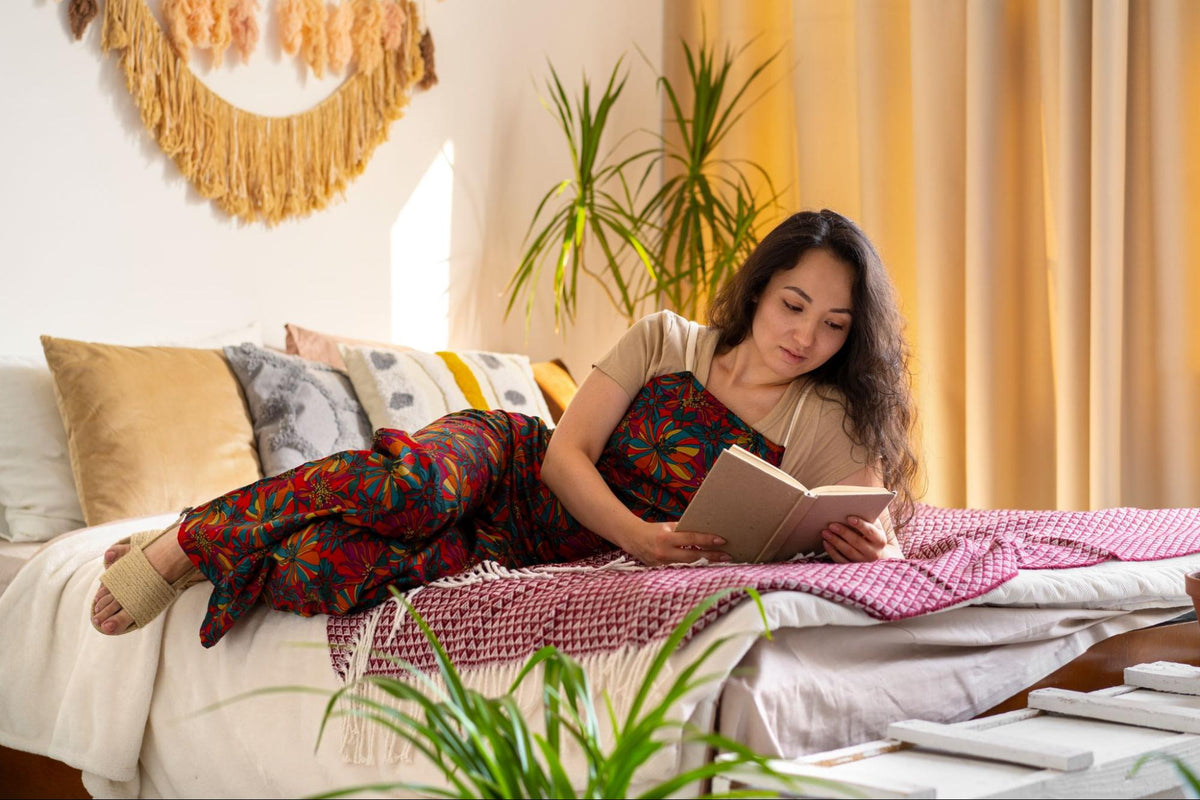
Do you remember autumn from your childhood, when the leaves changed color like a kaleidoscope, and your mom would pull out the pumpkin-colored sweater she'd worn since college? Or those evenings in front of the TV while a storm raged outside, and the lamplight in the house gave everything a warm, amber hue? Those were the days when no one talked about "color palettes" or "color stories"—colors simply existed, as natural as breathing. Today, when we can choose from 50 shades of gray (and no, I'm not talking about THAT book), we sometimes lose track of what truly makes a home feel cozy. At Pillovely, we believe that autumn colors aren't a trend—they're a return to what makes us feel safe. Because "You are someone"—someone who deserves a space filled with colors that snuggle like a grandma's blanket.
Read moreabout Autumn colors at home – shades that bring peace and warmth



Share:
Stress-free renovation - Planning space and workflow
The Art of Slowing Down – How Autumn Encourages Slow Living at Home