


- by Daniel Pawlik
Designing a Dark Hallway – Ideas to brighten a narrow and small hallway
- by Daniel Pawlik
The hallway is the first thing visitors see in your home – and the first thing you notice when you unlock the door. Nevertheless, it is often neglected when furnishing. Especially those with a dark, narrow, or small hallway quickly resign: too little space, too little light, too few possibilities.
Yet, every hallway holds more potential than one might initially think. With the right hallway furniture, clever color choices, and a few optical tricks, even the darkest corridor can be transformed into an inviting reception area. We show you how to achieve this in this guide – step by step, without much effort.
Successful hallway furnishing always considers two directions simultaneously: function and atmosphere. The hallway must accommodate jackets, shoes, and bags – but it should still feel pleasant.
Less is more, especially in the hallway. A narrow shoe cabinet with a seat, a wall-mounted coat rack, and a single mirror – often that's enough to design the hallway attractively without overcrowding the space. Instead of a massive chest of drawers, opt for a floating wall cabinet: it frees up floor space and appears visually lighter.
Our recommendations for hallway furnishing:
Wall-mounted shelves instead of freestanding furniture
Narrow benches with storage underneath
Hooks instead of wardrobes for very small areas
Mirrors as a must – more on that shortly
No other element does as much for designing a small dark hallway as a large mirror. It visually doubles the depth, reflects light, and immediately makes the room feel friendlier. Position it opposite the entrance door or opposite a light source – this way it unfolds its maximum effect.
Round mirrors appear softer and more modern, rectangular ones more classic. Choose a frame that matches the rest of your hallway decor – wood for warmth, metal for a contemporary look.

When designing a narrow dark hallway, one basic rule applies: anything that directs the eye into the depth helps. Anything that stands across or narrows the passage is detrimental.
Tall, narrow furniture and vertical wall design draw the eye upwards – the room appears higher and thus more spacious. Wallpapers or paints with a vertical pattern (stripes, elongated shapes) support this effect. When designing a narrow dark hallway, the ceiling, by the way, is an often-forgotten design element: a white or light ceiling with indirect lighting can work wonders.
Never place furniture directly opposite each other in a narrow hallway – this creates a feeling of confinement. Instead, work unilaterally: wardrobe and cabinet on one side, the opposite wall clear or fitted with a mirror. This creates a clear line of movement when designing a narrow dark hallway, making the space appear fluid.
The flooring also plays an important role. Lengthwise laid floorboards, herringbone pattern tiles, or runners with longitudinal stripes visually extend the hallway. Light floors also reflect more light – which is doubly useful when designing a small dark hallway.
The biggest problem in many hallways: no or little natural light. If you want to brighten a dark hallway, you need to turn several knobs simultaneously – lighting, wall colors, and surfaces.
Good light in the hallway works in layers:
Basic lighting: A ceiling light provides even basic illumination. Choose light bulbs with warm white light (2,700–3,000 K) for a pleasant atmosphere.
Accent lighting: Wall lights or small spotlights highlight individual areas and create depth. Particularly effective for brightening a dark hallway: light that shines upwards or downwards (uplights / downlights).
Indirect lighting: LED strips behind furniture or under floating shelves create a soft glow – this looks cozy and brightens the room without glare.
White is not the only option. When designing a dark hallway, all light, warm tones are recommended:
Cream white and warm white: Classic, timeless, opens up the room
Light beige and sand: Warmer than pure white, very homely
Soft sage green or mint green: Modern, fresh, reflects well
Light grey with a beige undertone (Greige): Elegant and practical at the same time
Dark hallways benefit from matte surfaces on the ceiling and semi-gloss wall paints – the latter reflect more light without mirroring.
Painting is often the most cost-effective and impactful measure when designing a small dark hallway. Here are proven ideas for painting a narrow hallway that really make a difference:
A popular trick: Paint the lower two-thirds of the wall in a medium warm tone, the upper third and the ceiling in white. This division looks structured, makes the ceiling appear higher, and is a real eye-catcher. For designing a narrow dark hallway, this approach is particularly well suited.
Do you have a long, tube-shaped hallway? Then deliberately design the end wall as an eye-catcher – a slightly darker or more contrasting color, a picture, or a wall design draws the eye forward and visually gives the room more depth.
When brightening a dark hallway, some colors are counterproductive:
Pure cool gray without a warm undertone – appears gloomy and even darker
Strong dark blue or anthracite on all walls – overwhelms the room
High-gloss paints on the ceiling – reflect artificial light unpleasantly
Tip: Always buy a small test amount before painting and observe the color at different times of the day – hallways without windows appear different under artificial light than during the day.
For more personality, use wallpaper. Subtle patterns – botanical motifs, geometric structures, fine lines – give a small dark hallway character without overwhelming it. Important: choose patterns that are small and airy, no large, dark ornaments.

Which color makes a dark hallway brighter?
Warm white, cream white, light beige, and delicate pastel shades like sage green or mint green are best suited to brighten a dark hallway. Semi-matte wall paints reflect more light than purely matte surfaces.
How can I visually widen a narrow hallway?
When designing a narrow dark hallway, primarily use mirrors opposite the wall with the coat rack. In addition, light colors, floating furniture, and flooring laid perpendicular to the direction of traffic – this visually widens the space.
Which lighting is suitable for a hallway without windows?
For designing a small dark hallway, a combination of warm white basic lighting (ceiling spotlight or pendant lamp) and indirect light (LED strips, wall lights) is recommended. Motion detectors are practical and energy-saving.
Is professional hallway design planning worthwhile?
For very small or complex floor plans, consultation can be useful. In many cases, significant improvements can be achieved with a few targeted measures – mirrors, light, light color – without much effort.
What furniture fits in a narrow hallway?
Floating shelves, wall-mounted coat racks, narrow benches, and slim shoe cabinets are the best choice for hallway furnishing in small spaces. Freestanding furniture with visible legs looks lighter than massive pieces.
If you want to design your dark hallway, you don't need a renovation or a large budget. Light wall colors, well-thought-out lighting, a large mirror, and the right furniture are enough to fundamentally transform the entrance area.
Remember: The hallway sets the initial tone – it is the overture of your home. It can certainly show who you are.
Discover practical furniture and accessories for your hallway decor at Pillovely.de – from slender coat racks to stylish seating, giving your entrance that certain something.
If you liked this text, be sure to check out our other inspirations:
Sofa Types – What Sofa Shapes Are There and What Is the Difference Between a Sofa and a Couch?
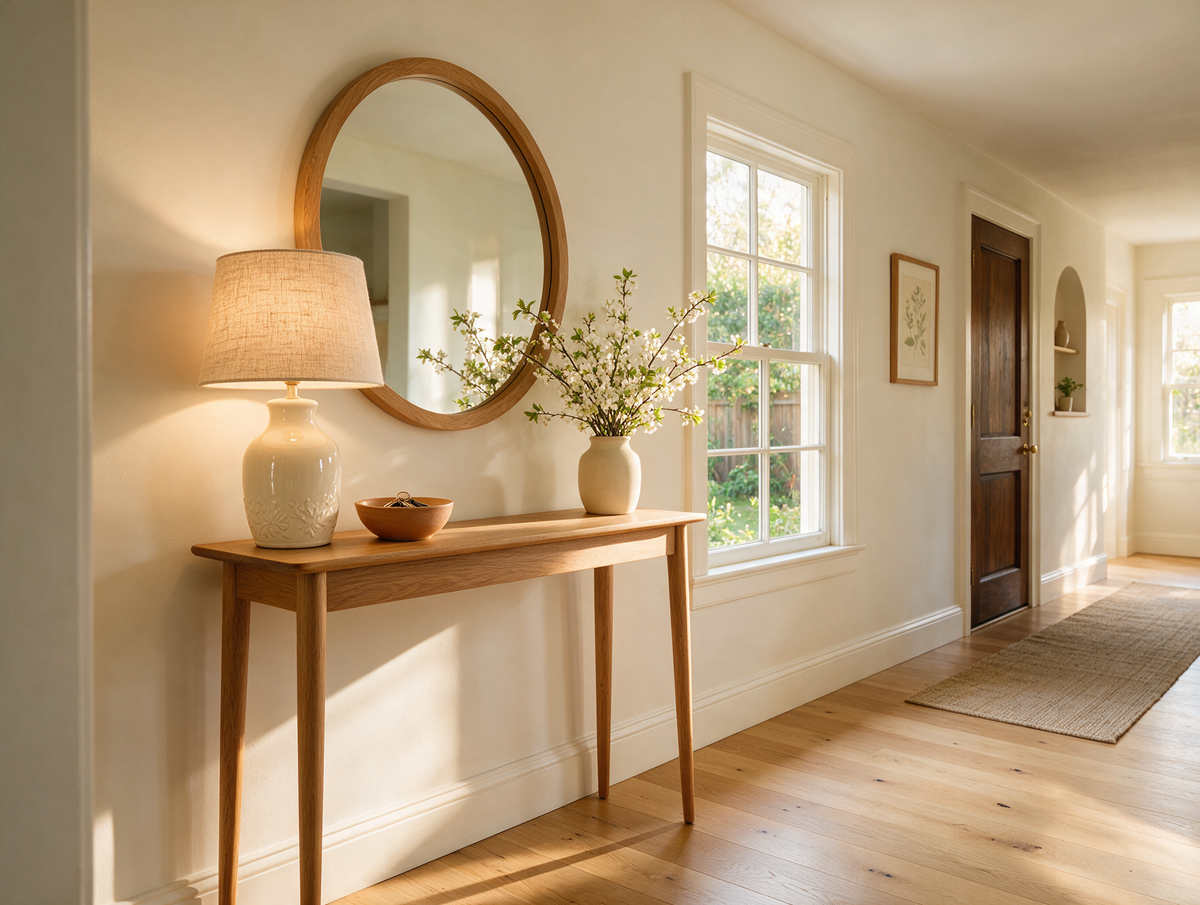
Console Table Ideas – Where to Use One and How to Style It
Do you remember coming home from school and dropping everything on the little table by the front door? Keys in the china dish, letters propped against the lamp, a vase of whatever was flowering in the garden and the old telephone with its curly cord. It was the first thing you saw when you walked in, and somehow it always said: you are home.
Read moreabout Console Table Ideas – Where to Use One and How to Style It
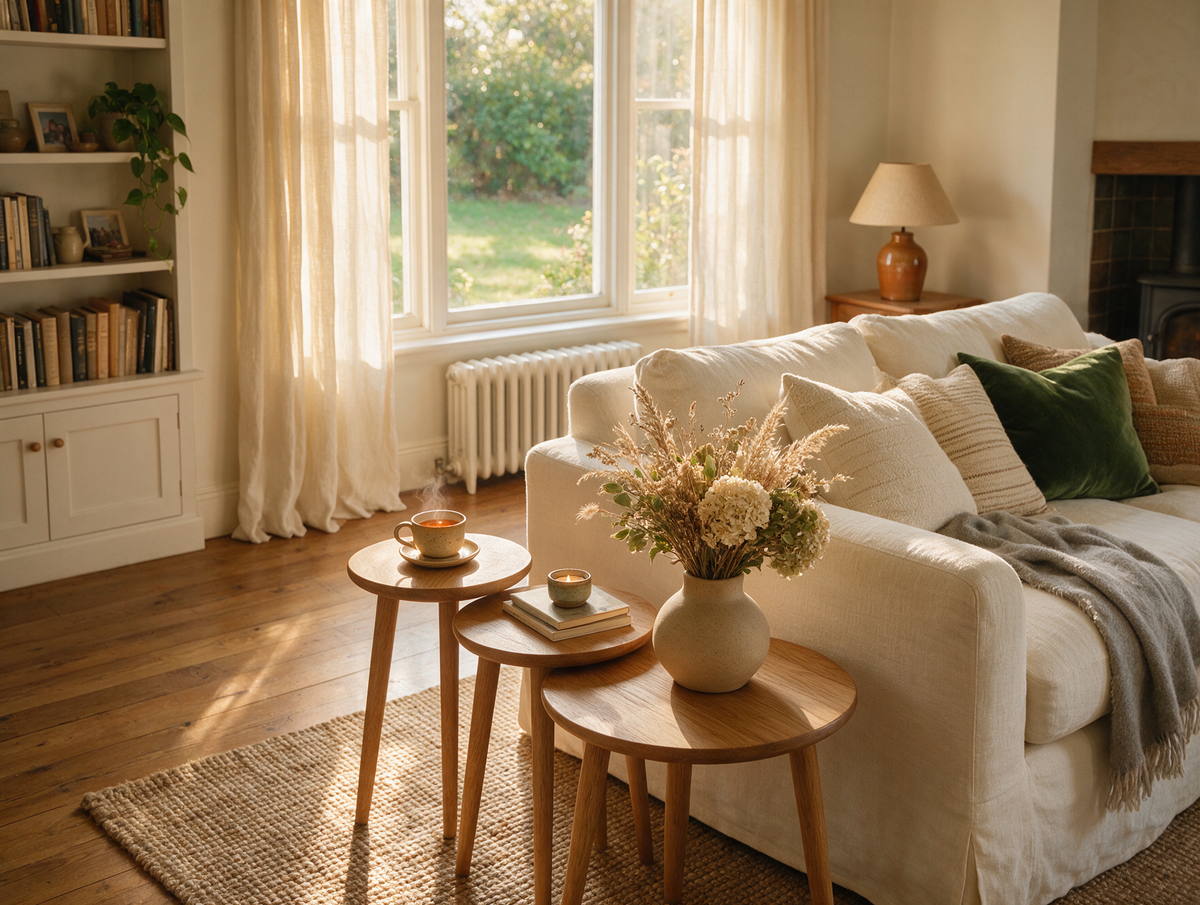
Nest of Tables – What Are They, Who Are They For and How to Style Them
Do you remember Sunday visits to your nan's, when the nest of tables came out from beside the armchair? Three little tables, each tucked neatly under the next, were pulled apart and handed round – one for the teapot, one for the biscuit tin and one for Grandad's crossword – and then slid back together the moment everyone went home.
Read moreabout Nest of Tables – What Are They, Who Are They For and How to Style Them
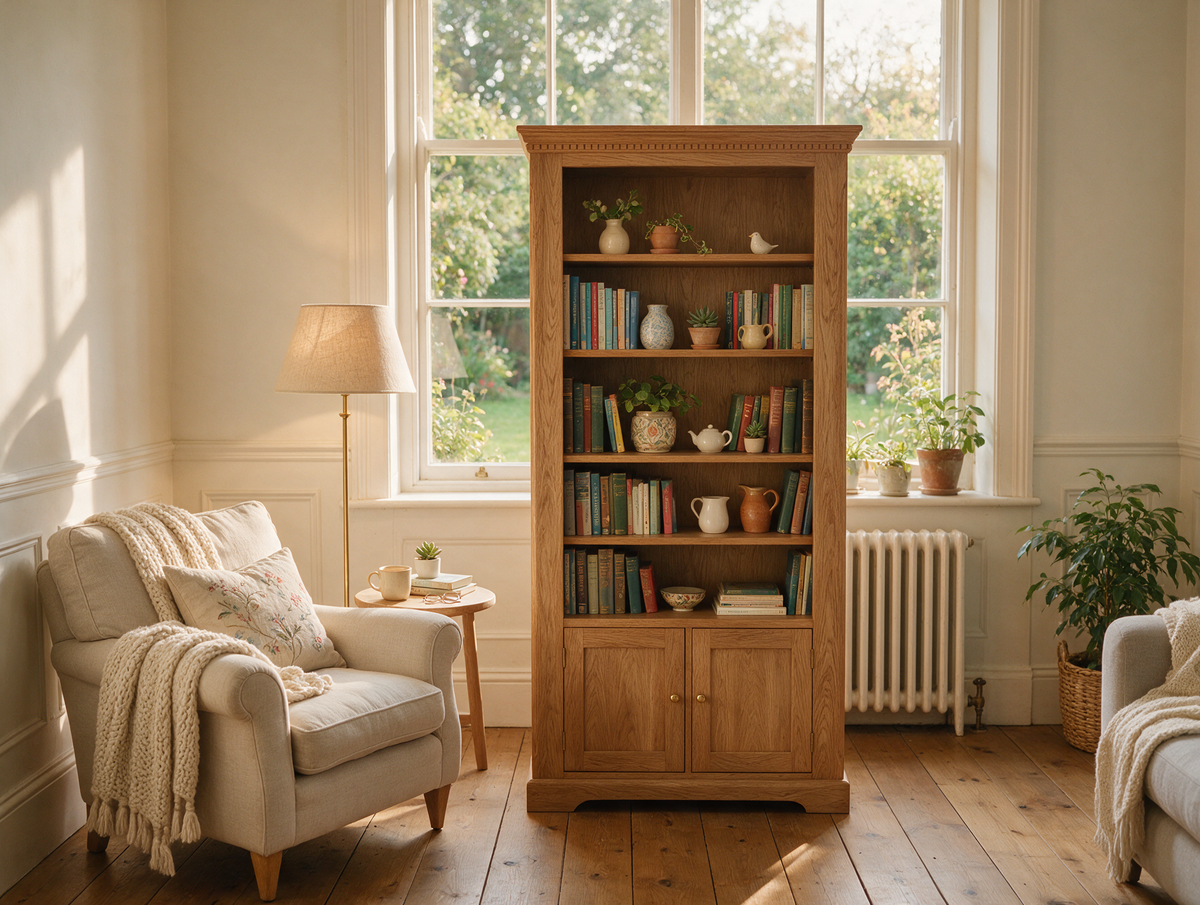
Bookcase Ideas – How to Choose and Style a Bookshelf for Your Living Room
Do you remember the bookcase in your grandparents' front room? Rows of faded paperbacks, a set of encyclopaedias nobody ever finished, holiday souvenirs, a framed school photo and that one heavy atlas you pulled out on rainy afternoons. It was never styled for anyone – and yet it told the whole story of the family.
Read moreabout Bookcase Ideas – How to Choose and Style a Bookshelf for Your Living Room



Share:
Sofa Types - What are the different sofa shapes and what is the difference between a sofa and a couch?
Art Deco House – What is Art Deco and how do you design an Art Deco-style interior?