


Where the wabi-sabi philosophy meets hygge. Natural materials, soothing colors, and a space that breathes harmony between functionality and beauty.
Have you ever wondered what happens when the Japanese philosophy of “less is more” meets the Scandinavian “lagom”—that feeling when everything is just right? Japandi is not just an interior design trend, but a way of life that combines the best of both worlds: the Japanese wisdom of imperfection with the Nordic ability to create warmth in simplicity.
It is a style for those who seek peace in a chaotic world, who believe that true beauty lies in simplicity, and that luxury means having space to breathe, time to reflect, and surrounding oneself with things that truly matter.
At Pillovely, we understand that your home is a place of calm and peace. You are valuable and deserve a space that doesn't overwhelm you with too many stimuli, but allows you to find inner harmony and balance in everyday life.
The Philosophical Roots of Japandi – The Wisdom of Two Worlds
Japandi emerged from the convergence of two profound life philosophies that, despite their geographical distance, share an astonishing amount in common.
Wabi-Sabi – the Japanese art of finding beauty in imperfection, in transience, in the natural traces of time. This philosophy teaches us to appreciate scratches in wood, asymmetry in ceramics, and patina in metal. Everything that bears the marks of life has a unique story to tell.
Hygge – the Danish art of creating coziness and warmth through simple things. Lighting a candle during dinner, spreading a soft blanket on the sofa, enjoying tea from a favorite mug. It is a philosophy that teaches us that happiness lies in small, everyday pleasures.
Lagom – the Swedish approach to life emphasizing moderation, balance, without excess in any direction. Not too much, not too little, but just right.
These three philosophies unite in Japandi, creating a style of interior design that is both minimalist and warm, simple and profound.
Color Palette – Nature in Its Most Peaceful Hues
Japandi colors are primarily the natural palette of the earth, but in its softest and calmest expressions.
Warm beige and off-white tones – the foundation of the color palette – evoke light wood, linen fabrics, and natural light streaming through windows. These are our favorite earth tones in their purest form.
Grey tones like morning mist – from light, silvery nuances to deep, graphite greys. These colors add depth without being obtrusive. They are calming, neutral, and allow other elements to shine.
Moss and bamboo green – a delicate, natural green that adds vibrancy without being overwhelming. This is our characteristic color in a subtle, harmonious variation that perfectly complements the overall color palette.
Warm brown tones – the colors of natural wood, clay, and earth. These shades add warmth and coziness, preventing the interior from appearing cold or sterile.
Black accents – used very sparingly, as elegant details that create contrast and depth for the entire composition.
Natural Materials – Truth in Every Detail
In Japandi, materials are as important as colors. They give the interior its authenticity, connect us with nature, and remind us of our roots.
Wood in various shades – from light birch to oak to dark walnut. It is important that the wood has a visible grain and a natural texture. Each board tells its own story, each grain tells the story of the years the tree grew.
Bamboo – a symbol of Japanese culture and a practical material with amazing properties. It grows quickly, is robust, and captivates with its beautiful, natural grain. Our Bamby modular sofa with sleeping function already references this important Japanese material in its name, combining functionality with a philosophy of sustainability.
Linen and cotton textiles – exclusively natural fibers in natural colors. Linen ages beautifully, cotton is soft and practical. These materials breathe with us.
Ceramics and stone – often in natural, earthy tones. Perhaps rustic Japanese-style ceramics? Or Scandinavian porcelain in simple forms?
Rattan and jute – natural fibers that add texture and warmth to the space without overpowering it.

Furniture – Functional Beauty in Its Purest Form
Japandi-style furniture is a true masterpiece of functional design. Each element has its purpose, each line its justification.
Low-lying furniture with straight lines
Japanese tradition of living close to nature meets Scandinavian love for simplicity. Our offerings include:
The Dalia sofa – minimalist design at an affordable price, perfect for those starting their Japandi adventure. Its clean lines and choice of natural fabric colors make it the ideal embodiment of the "less is more" philosophy.
Lunaria sofa or Kamelia sofa – for larger spaces where minimalism meets comfort. Their modern design with a touch of simplicity perfectly captures the spirit of Japanese wabi-sabi aesthetics while offering Scandinavian comfort for relaxation.
Minimalist storage systems
Cabinets and shelves that do not dominate the space, but subtly serve organization. Everything has its place, but nothing is obviously visible.
Nirvana Collection – the name itself refers to Zen philosophy and the search for inner peace:
-
Nirvana Chest of Drawers 154x77 – perfect for bedrooms or living rooms
-
NirwChest of Drawers 104x119 – a taller version for those who need more space.
-
Nirwana TV cabinet 154x50 – a low, unobtrusive form for a television
Lampy Chest of Drawers 104x83 – a minimalist design with clean lines that perfectly embodies the Japanese concept of "ma" – the appreciation of emptiness and space between objects.
For more discerning customers, the Ballo collection offers modern solutions with subtle, milled details:
-
Ballo Bookshelf 108x121 – open storage system that allows for flexible arrangement
-
Ballo Chest of Drawers 108x75 or Ballo Chest of Drawers 160x75 – depending on space requirements
Armchairs – Places of Contemplation
The Tedi armchair , available in natural colors such as light beige, dark beige, and green, is not just a piece of furniture, but also a place for meditation, reading, and conscious relaxation. Its ergonomic design combines Scandinavian comfort with Japanese simplicity.
The July armchair – a more affordable alternative, available in a wide range of earthy tones: light beige, grey beige, olive green, mint, and old rose. Each of these shades perfectly complements the Japandi color palette.
You design your furniture according to your wishes – Japandi furniture does not have to exactly match the catalog images. It is important that it reflects your lifestyle, your needs, and your idea of functionality.

Space – The Art of Emptiness and Harmony
In Japandi, the space between the furniture is just as important as the furniture itself. It is the Japanese concept of "Ma" – the appreciation of emptiness, silence, and free space.
Don't cram every corner – give the space room to breathe. Every piece of furniture, every object should have its place and its purpose. If something is not needed or does not bring joy, it perhaps has no place in the house.
Open spaces – avoid unnecessary partitions and let light and air flow freely through your home. Japanese and Scandinavian homes are open, spacious, and filled with light. Our modular sofas, such as the Lily sofa bed , allow for flexible room design.
Natural light is the foundation of Japandi. Windows without heavy curtains allow one to observe the changing light throughout the day. Light is a living element of the interior that changes with us.
Order as an expression of respect – it is not about sterile perfection, but about consciously maintaining order. Everything has its place, every place has its function.
Plants – Life in a Minimalist Space
In Japandi, plants are not decoration, but living elements that connect us with nature and remind us of the cycles of life.
Simple, architectural forms – Sansevieria, Zamioculcas, Monstera. Plants with clear, geometric forms that do not create chaos but breathe life into the space.
Bonsai – the Japanese art of shaping miniature trees. It is not just a plant, but a meditative practice that teaches patience and respect for natural processes.
Potted bamboo – fast-growing, it symbolizes life, flexibility, and adaptability. It perfectly matches our Bamby sofa and creates a harmonious overall picture.
Green walls or vertical gardens – perhaps a single wall covered with plants? This is a way to bring a lot of greenery into play without taking up floor space.
Green as an ecological approach to environmental protection – a fundamental value of both Japanese and Scandinavian culture. Plants clean the air, and the air also cleanses our souls.
Japanese Contribution – Wabi-Sabi in Practice
The Japanese part of Japandi is primarily the philosophy of Wabi-Sabi – finding beauty in imperfection, in the natural aging process, in asymmetry.
Ceramics with imperfections – perhaps a bowl with a slightly irregular shape? Or a mug with visible traces of the potter's hand? These "defects" are not flaws, but signs of authenticity.
Wood with natural patina – not everything has to be perfectly polished. Wood with visible knots, natural color, and grain is more beautiful than artificially smoothed wood. Our Ballo and Nirwana collections celebrate the naturalness of the material.
Asymmetry in compositions – not everything has to be perfectly centered. Japanese aesthetics appreciate natural asymmetry, which is more dynamic than rigid symmetry.
Seasonal changes – perhaps a few elements that you adapt depending on the season? In Japan, interiors are in harmony with nature and adapt to the changing seasons.
Scandinavian Contribution – Hygge and Functionality
The Scandinavian aspect of Japandi is the ability to create coziness within minimalism, which may seem contradictory, but is completely natural for Nordic people.
Textiles that provide warmth – perhaps a beautiful, soft blanket on the sofa? Or linen cushion covers? Our sofas with their selection of natural fabrics allow you to create a cozy atmosphere without sacrificing minimalism.
Candles provide warmth – not only physical, but above all emotional. Scandinavians light more candles than anyone else in the world – they know the importance of warm light on long, dark evenings.
Functionality without compromise – every element must not only be beautiful, but above all practical. This is the Scandinavian design approach: beauty through functionality. Our sofa beds, such as the July model and the modular Bamby and Lily models, are perfect examples of this philosophy.
Quality over quantity – a few excellent things are better than many mediocre ones. Scandinavians invest in quality because they know that good things last for years.
A Practical Introduction to Japandi in the Polish Home
You don't have to completely redecorate your home to incorporate the Japandi philosophy. You can start small and gradually change your idea of space.
Start with organizing – not by tidying up, but by considering what you really need. Marie Kondo, the Japanese tidying expert, is right: everything should bring joy or serve a specific purpose. Our Nirvana chest of drawers collection will help you with this.
Focus on natural materials – perhaps with linen cushion covers? Or bamboo kitchen accessories? Small changes can greatly affect the atmosphere of a room.
Pay attention to lighting – avoid harsh, white light. Provide warmer light, perhaps with some candles? Light is one of the most important elements for the right atmosphere.
A single plant is enough – you don't need to create a jungle. A beautiful plant in a simple pot can completely change the atmosphere of a room.
Japandi in different rooms
Each room can have its own interpretation of Japandi, adapted to its function and character.
Japandi bedroom
Minimalist furniture, natural textiles, and warm colors. Our Pillov mattress provides the perfect foundation – a natural mattress that ideally complements the philosophy of low, close-to-the-floor beds, typical of the Japanese lifestyle.
Complement your decor with a 54x57 cm Kviat bedside table in sand beige – its compact design doesn't feel overwhelming. For your morning beauty routine, a 104x78 cm Kviat dressing table is also ideal – minimalist and perfect for the purpose.
The bedroom is a place for rest – it should be calm, peaceful, and harmonious.

Living room
Open, spacious, and with plenty of free space. The heart of the living room can be, depending on the room size, the 2- or 3-seater July sofa.
For families, the 2-seater July sofa with sleeping function is useful – a practical solution for guests that doesn't disturb the minimalist aesthetic.
A harmonizing colored July armchair and a low Nirwana TV cabinet serve as complements, not dominating the wall.
Kitchen
Functional yet cozy. Wooden countertops, minimal decor, perhaps bamboo accessories? A Japandi-style kitchen is organized but not sterile. The Ballo collection chests of drawers offer additional storage for dishes and kitchen utensils.
Bathroom
Like a Japanese spa. Natural materials, warm colors, perhaps wooden accents? The bathroom is a place of purification – not just for the body, but also for the mind.
Solving the problem of lack of time for yourself
Japandi is not just aesthetics, but a philosophy of life that can help solve modern problems, including the lack of time for oneself.
Fewer things mean less cleaning – the fewer items you own, the less time you have to spend tidying up. This is simple math, but it has far-reaching effects on your quality of life. Our storage systems help you maintain this balance.
Functionality means less frustration – when everything has its place and purpose, life becomes easier. You don't waste time looking for things and don't get annoyed by clutter. Modular sofas allow you to quickly and flexibly adapt your space to your needs.
A calm interior provides a calm mind – this is not just a poetic statement. Studies show that a tidy, harmonious interior actually has a positive impact on our well-being and ability to concentrate.
Rituals instead of routine – Japandi encourages conscious experience of everyday activities. Perhaps morning tea in the Tedi armchair becomes a ritual, not just a drink? Perhaps evening tidying in the Nirvana chest of drawers becomes a form of meditation?
Your Japanese ambiance with Pillovely
Pillovely stands for the love of the security of a home – and Japandi shows how this security can arise through simplicity, harmony, and respectful use of natural materials. You are unique. You are valuable. And you deserve a space that reflects your inner harmony.
For all who want more, Japandi is a journey, not a destination. It is a way to live consciously, to build a relationship with space, and to create a home that serves as an oasis of calm in a chaotic world.
Our preferred earthy and natural colors harmonize perfectly with the Japandi philosophy – they stand for nature, authenticity, and harmony. In combination with natural materials and thoughtful functionality, they create a space that is both beautiful and practical.
Treating furniture as historical objects is particularly important in Japandi style – every object in a Japandi interior has its own purpose, its own function, its own story. Nothing is random, everything has meaning.
The stories of people from different eras and generations show that simplicity and functionality are timeless values – from Japanese paper and wooden houses to Scandinavian fishing huts. People have always known that true beauty lies in harmony with nature.
Does minimalism appeal to you, but seem too cool? How do you find the ideal balance between simplicity and coziness? Perhaps you already have some Japandi elements in your home? Maybe you're thinking about the Dalia sofa or the Tedi armchair?
Share your thoughts with our community – let's show together that a philosophy of life can form the basis for a beautiful interior that radiates calm and harmony. Remember: at Pillovely, every piece of furniture is the beginning of a story that you create yourself.
Latest Articles
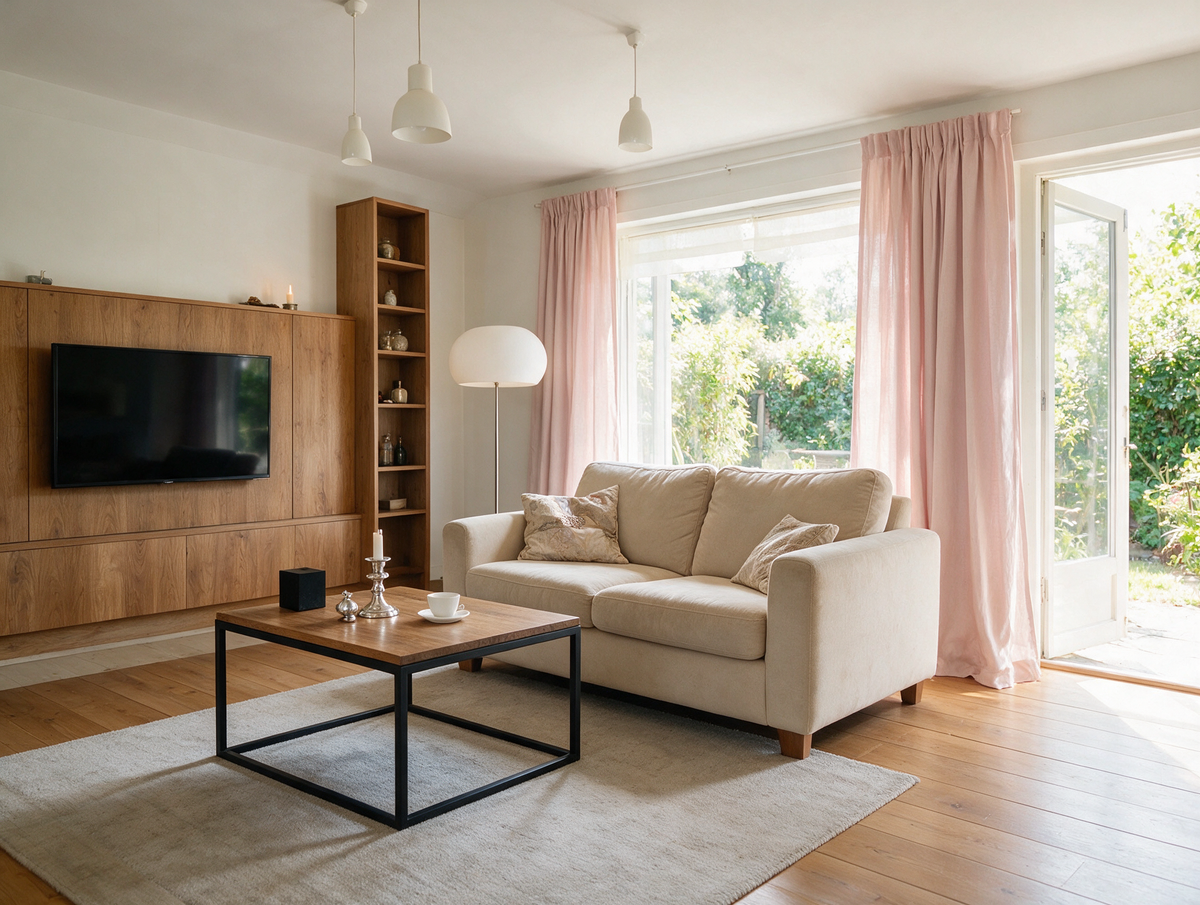
Loveseat - What Is It, Who Is It For and How to Choose the Right One?
A loveseat is one of those pieces of furniture that can completely change how a room works. It is smaller than a classic sofa, more generous than a single armchair and often easier to place in compact interiors. A loveseat can create a cosy sitting area in a small living room, soften a bedroom corner, complete a reading nook or work as an additional seat next to a larger sofa. Its strength lies in proportion: it gives you the feeling of a sofa without taking over the whole room.
Read moreabout Loveseat - What Is It, Who Is It For and How to Choose the Right One?
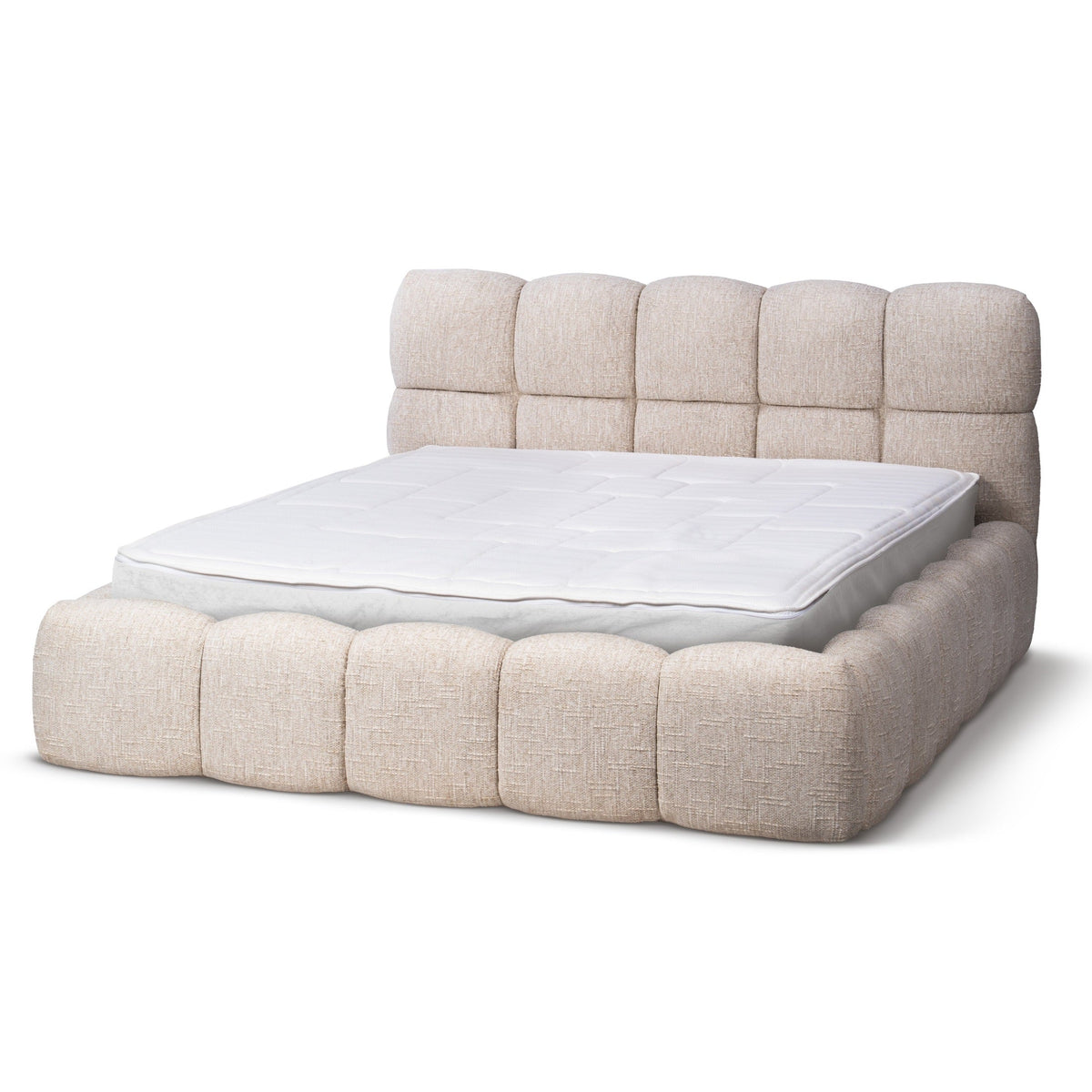
EU vs UK Bed Sizes – Will UK Bedding Fit a European Bed?
European beds are 200 cm long, UK beds 191 or 198 cm. A simple EU vs UK bed size table in cm – and what it means for your mattress and fitted sheets.
Read moreabout EU vs UK Bed Sizes – Will UK Bedding Fit a European Bed?
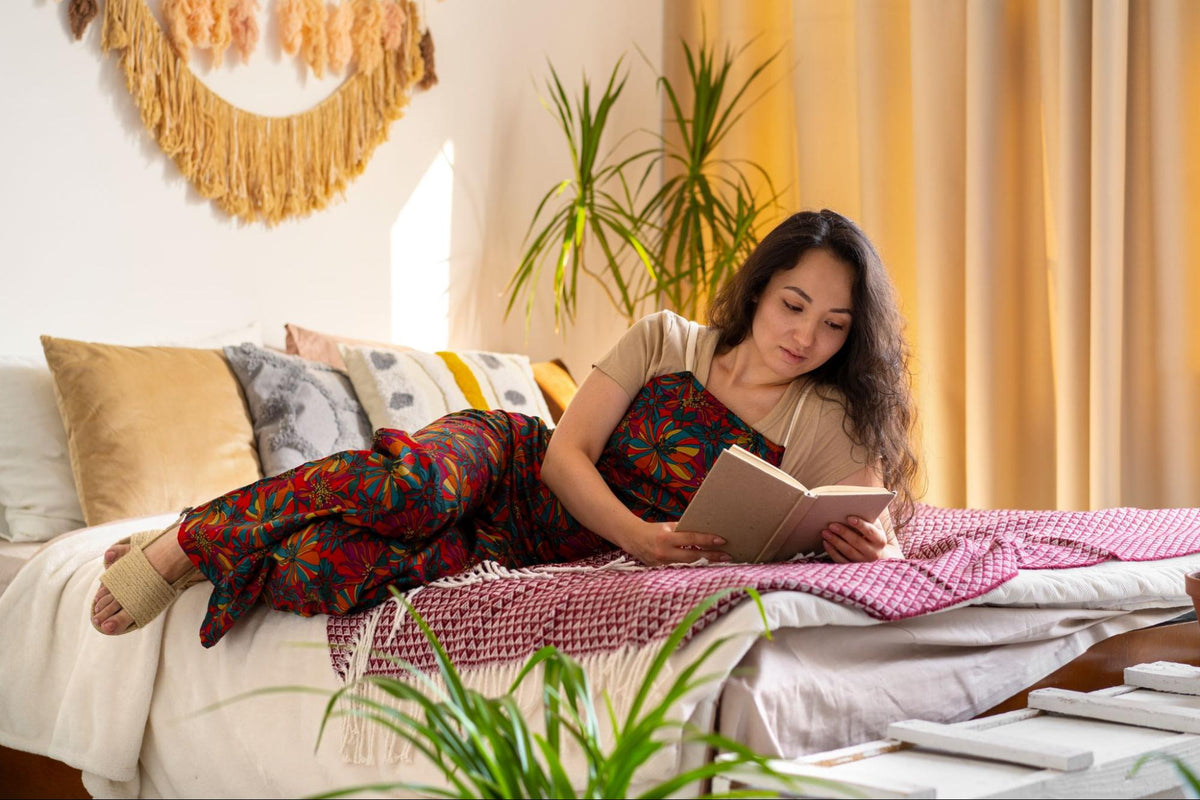
Autumn colors at home – shades that bring peace and warmth
Do you remember autumn from your childhood, when the leaves changed color like a kaleidoscope, and your mom would pull out the pumpkin-colored sweater she'd worn since college? Or those evenings in front of the TV while a storm raged outside, and the lamplight in the house gave everything a warm, amber hue? Those were the days when no one talked about "color palettes" or "color stories"—colors simply existed, as natural as breathing. Today, when we can choose from 50 shades of gray (and no, I'm not talking about THAT book), we sometimes lose track of what truly makes a home feel cozy. At Pillovely, we believe that autumn colors aren't a trend—they're a return to what makes us feel safe. Because "You are someone"—someone who deserves a space filled with colors that snuggle like a grandma's blanket.
Read moreabout Autumn colors at home – shades that bring peace and warmth



Share:
How to prepare your home for winter? Autumn chores that pay off all year long
Christmas Decorations Living Room – American Splendor in a Cozy Apartment Like in "Home Alone"