


- by Daniel Pawlik
Japandi Style – Minimalist Elegance and Natural Furniture for a Harmonious Home
- by Daniel Pawlik
There are moments when a room immediately brings us peace – soft light, warm wood, the scent of fresh linen, and that pleasant silence we remember from childhood. This very feeling is at the heart of the Japandi style, a thoughtful blend of Japanese restraint and Scandinavian coziness. For those who wish to transform their home into an oasis of balance, this aesthetic offers a timeless answer to the hustle and bustle and visual overstimulation.
In this guide, we show you how to stylishly select Japandi furniture, which materials set the tone, and how individual rooms – from the living room to the bedroom – can be designed according to the principles of this furnishing philosophy. It's not about fleeting trends, but about a way of living that combines permanence, functionality, and quiet beauty.
The Japandi interior arose from two traditions that, at first glance, seem far apart but at their core speak the same language. The Japanese Wabi-Sabi philosophy celebrates the imperfect and natural; the Scandinavian Hygge stands for warmth, simplicity, and the celebration of small moments. The Japandi style combines both into a way of living where every object has its place and its story.
Those who wish to implement the Japandi style at home should focus on a few, but expressive, elements. Overcrowded shelves, shiny surfaces, and bright colors have no place here. Instead, earthy tones, matte textures, and thoughtful compositions dominate, giving the room visual breathing space.
Short checklist for getting started with the Japandi style:
Choose a calm color palette of beige, cream, greige, and soft green tones.
Opt for natural materials such as oak, walnut, bamboo, linen, and ceramics.
Reduce decoration consciously – less is indeed more in Japandi interiors.
Pay attention to lighting: warm, indirect light supports the calming effect.
Leave open spaces intentionally empty so that furniture and objects stand out better.
This creates a home that not only looks modern but also evokes those quiet afternoons many of us remember from childhood – without falling into pure nostalgia.

Japandi furniture is characterized by clean lines, low proportions, and visible craftsmanship. Wood is at the center – usually in light or medium tones – combined with textiles in muted colors. Metal details are rare, and if present, they are matte and black. High gloss, chrome, or gaudy patterns do not fit into this concept.
A Japandi chest of drawers , for example, convinces not with opulent embellishments, but with precise handles, straight edges, and honest wood grain. It looks like a piece of furniture you'd want to keep for a lifetime – and that's exactly the idea behind the style. A Japandi dining table , in turn, is often made with a solid top and slender legs, so it appears robust but never bulky. Around it, chairs with woven seats or upholstered models in muted tones are often grouped.
What to look for when buying Japandi furniture:
Material origin: FSC-certified wood is a reliable quality feature.
Workmanship: Visible mortise and tenon or dovetail joints speak for artisanal care.
Proportions: Low, floor-level furniture appears particularly authentic.
Color combination: Two wood tones may complement each other but should not compete.
Tactile quality: Oiled or waxed surfaces feel warmer than lacquered ones.
You can read more about the proper care of solid wood furniture in a separate guide, where we explain step-by-step how to keep your furnishings beautiful for years – because a well-maintained piece of furniture is always a piece of life history.
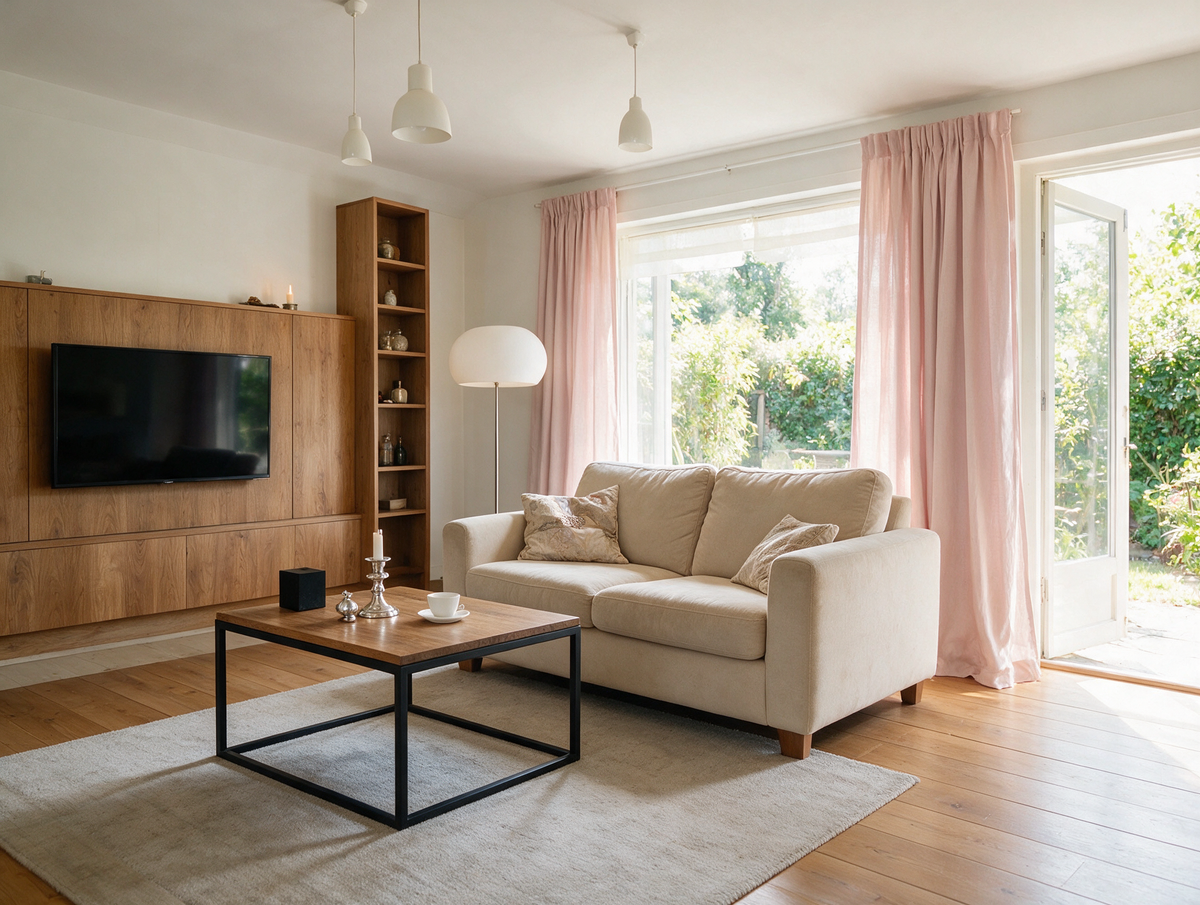
A Japandi living room thrives on the balance between function and atmosphere. The centerpiece is a deep, comfortable sofa in muted colors – sand, olive green, or subdued grey are classic choices. A low coffee table made of oak or walnut complements the composition without visually weighing down the room. Sideboards and shelves should be sparsely decorated: a few books, a hand-thrown vase, perhaps a small sculpture – that's quite enough.
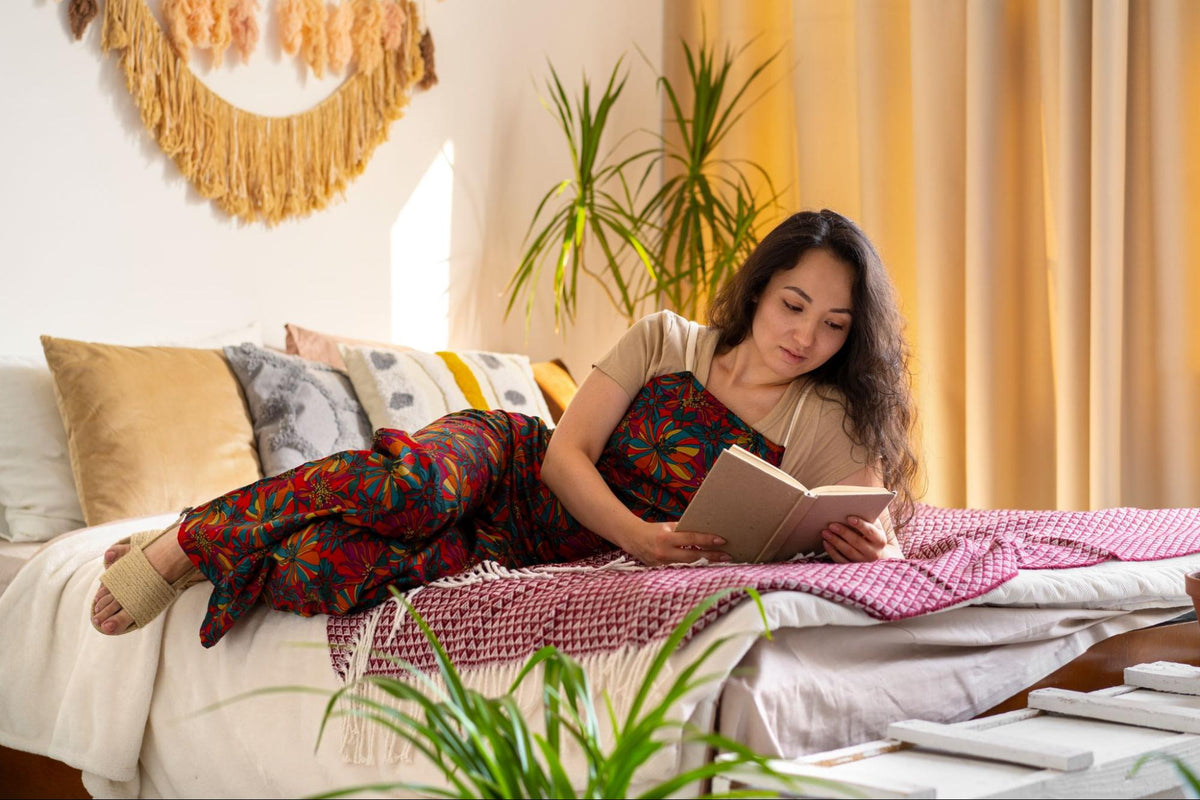
Especially in smaller living rooms, the Japandi style feels liberating because it uses emptiness as a design element. Instead of filling every niche, surfaces are left open. This creates a sense of calm that becomes a true oasis in everyday life. Those who enjoy background music or reading a book in the evening know the value of such quiet corners.
The Japandi bedroom follows the same principles but places an even stronger focus on retreat and regeneration. A low bed, soft linen bedding, and subdued lighting create an atmosphere where one can truly relax. Avoid cluttered bedside tables and open clothes rails – instead, closed cabinets with clean fronts are a better choice. A simple natural fiber rug completes the picture.
Practical tips for small rooms in Japandi style:
Opt for multifunctional furniture with integrated storage.
Choose light wood tones to visually enlarge the room.
Use textiles in a uniform color family.
Leave at least one wall completely free of decoration.
Combine a maximum of three materials to avoid visual clutter.
If you are looking for a suitable selection, you will find carefully curated pieces that harmonize beautifully in the pillovely.de range.
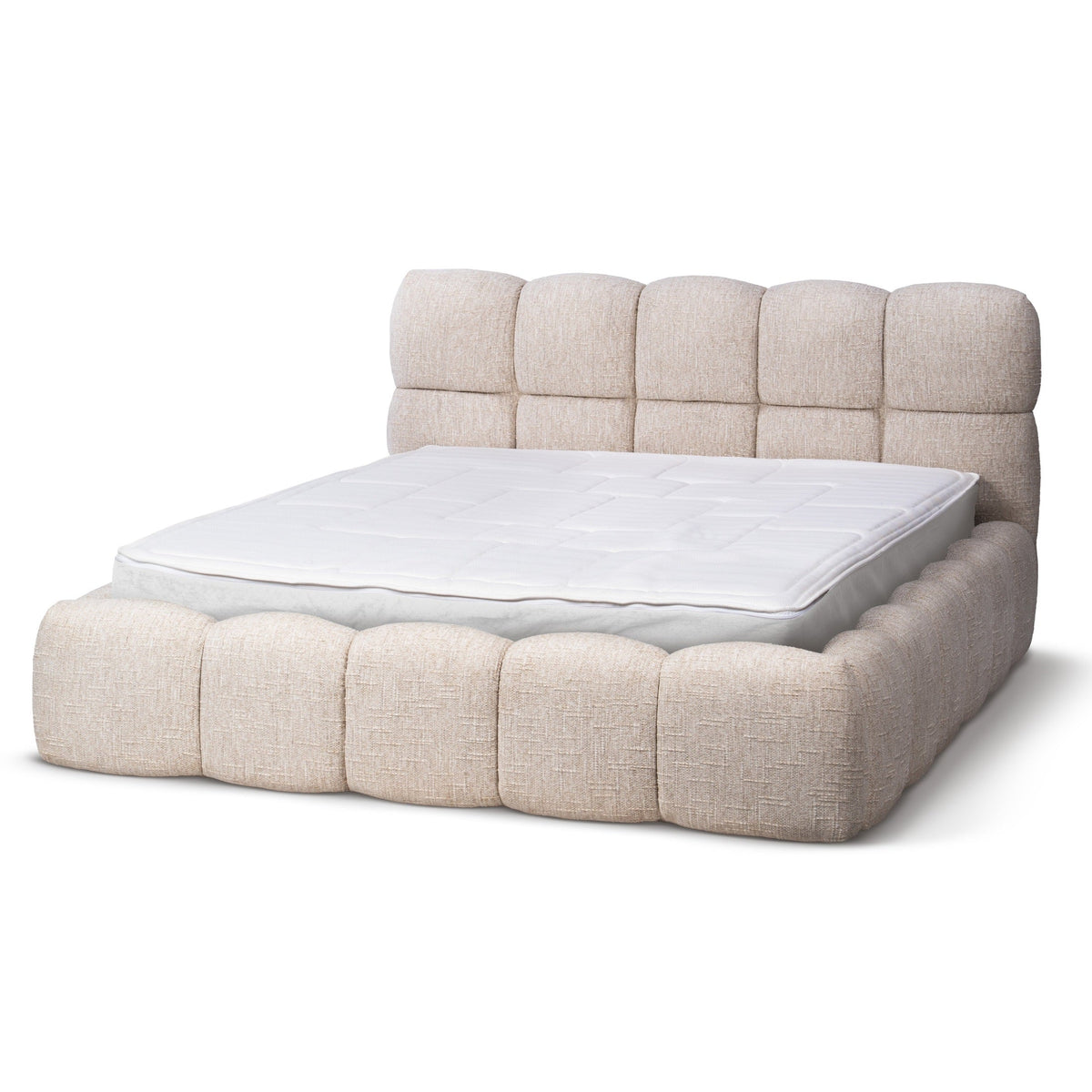
Ultimately, details determine the overall impression. A Japandi bed with a low frame changes the feel of a room more than one might think – it opens up the view and makes the ceiling appear higher. Complemented by washed linen bedding, a simple rice paper reading lamp, and perhaps a hand-knotted runner, a sleeping area is created that evokes quiet morning hours when the first light falls through the curtains.
A Japandi coffee table looks particularly beautiful if it is slightly asymmetrical or has a distinctive grain – small irregularities here are a mark of quality, not flaws. A round solid wood table often harmonizes better with a modern sofa than a strictly rectangular model.
For Japandi decor, a clear rule applies: only meaningful objects are allowed to remain. These could be ceramic bowls from a small workshop, an Ikebana arrangement, or dried grasses in a simple vase. Each piece tells a story – and that's precisely what makes this furnishing approach so personal.
Typical Japandi decorative elements at a glance:
Handmade ceramics in earth tones
Natural textiles like linen, wool, and cotton
Dried plants, bonsai, or branches in floor vases
Warm white light sources made of paper or wood
Reduced art prints with calm, abstract motifs

Does the Japandi style also fit into small apartments? Yes, especially well. The minimalist furnishing and bright colors make small rooms appear airier. The key is to opt for multifunctional furniture and consciously maintain open spaces instead of filling every corner.
Which colors dominate Japandi interiors? Typical colors are warm neutral tones like beige, cream, greige, and sand, complemented by muted green, blue, or terracotta nuances. Black accents provide contrast without dominating. Bright or cool colors are consciously avoided.
How does the Japandi style differ from pure Scandinavian style? Scandinavian interiors are often brighter, more playful, and use more white. The Japanese-Scandinavian approach uses darker wood tones, stricter lines, and a more ritualized everyday culture – more thought is given to the function, origin, and durability of each piece.
Which materials are particularly suitable for Japandi furniture? Solid wood (oak, ash, walnut), bamboo, rattan, linen, wool, and ceramics are the core materials. Plastic, high-gloss surfaces, and conspicuous chrome should be avoided as they disrupt the calm character.
Can the style be combined with existing furniture? Definitely. Those who already own simple wooden furniture can gradually develop the Japandi character with suitable textiles, reduced decor, and a harmonious color palette – this doesn't have to happen all at once. Often, it's enough to replace a sofa or bed first and proceed step-by-step.
The Japandi style is more than an interior design trend – it's an invitation to live more consciously. Those who choose this aesthetic select pieces that tell stories and become more beautiful with age. At Pillovely you will find a curated selection that reflects this philosophy: warm, understated, and with attention to detail. Browse through the categories at your leisure and let yourself be inspired by how a single calm room can transform your entire home.
If you enjoyed this text, be sure to check out our other inspirations:
Rococo Style – Elegant Furniture and Playful Forms for a Stylish Home
Loveseat - What Is It, Who Is It For and How to Choose the Right One?
A loveseat is one of those pieces of furniture that can completely change how a room works. It is smaller than a classic sofa, more generous than a single armchair and often easier to place in compact interiors. A loveseat can create a cosy sitting area in a small living room, soften a bedroom corner, complete a reading nook or work as an additional seat next to a larger sofa. Its strength lies in proportion: it gives you the feeling of a sofa without taking over the whole room.
Read moreabout Loveseat - What Is It, Who Is It For and How to Choose the Right One?
EU vs UK Bed Sizes – Will UK Bedding Fit a European Bed?
European beds are 200 cm long, UK beds 191 or 198 cm. A simple EU vs UK bed size table in cm – and what it means for your mattress and fitted sheets.
Read moreabout EU vs UK Bed Sizes – Will UK Bedding Fit a European Bed?
Autumn colors at home – shades that bring peace and warmth
Do you remember autumn from your childhood, when the leaves changed color like a kaleidoscope, and your mom would pull out the pumpkin-colored sweater she'd worn since college? Or those evenings in front of the TV while a storm raged outside, and the lamplight in the house gave everything a warm, amber hue? Those were the days when no one talked about "color palettes" or "color stories"—colors simply existed, as natural as breathing. Today, when we can choose from 50 shades of gray (and no, I'm not talking about THAT book), we sometimes lose track of what truly makes a home feel cozy. At Pillovely, we believe that autumn colors aren't a trend—they're a return to what makes us feel safe. Because "You are someone"—someone who deserves a space filled with colors that snuggle like a grandma's blanket.
Read moreabout Autumn colors at home – shades that bring peace and warmth



Share:
Rococo Style – elegant furniture and playful forms for a stylish home
Small cabinet – space-saving solutions for every room: models, tips, and buying guide