


- by Daniel Pawlik
Decorating a Teenager's Room - How to Design a Space They'll Really Love?
- by Daniel Pawlik
A child's room eventually becomes too small – not necessarily in terms of space, but in terms of its functions. Anyone looking to furnish a teenager's room faces a completely different task than with a classic child's room: it's no longer about toys and colourful wall motifs, but about a space that should simultaneously be a retreat, a workspace, and a meeting place for friends. This multi-functional aspect makes planning challenging – and this is precisely where it pays to structure the room thoughtfully from the outset.
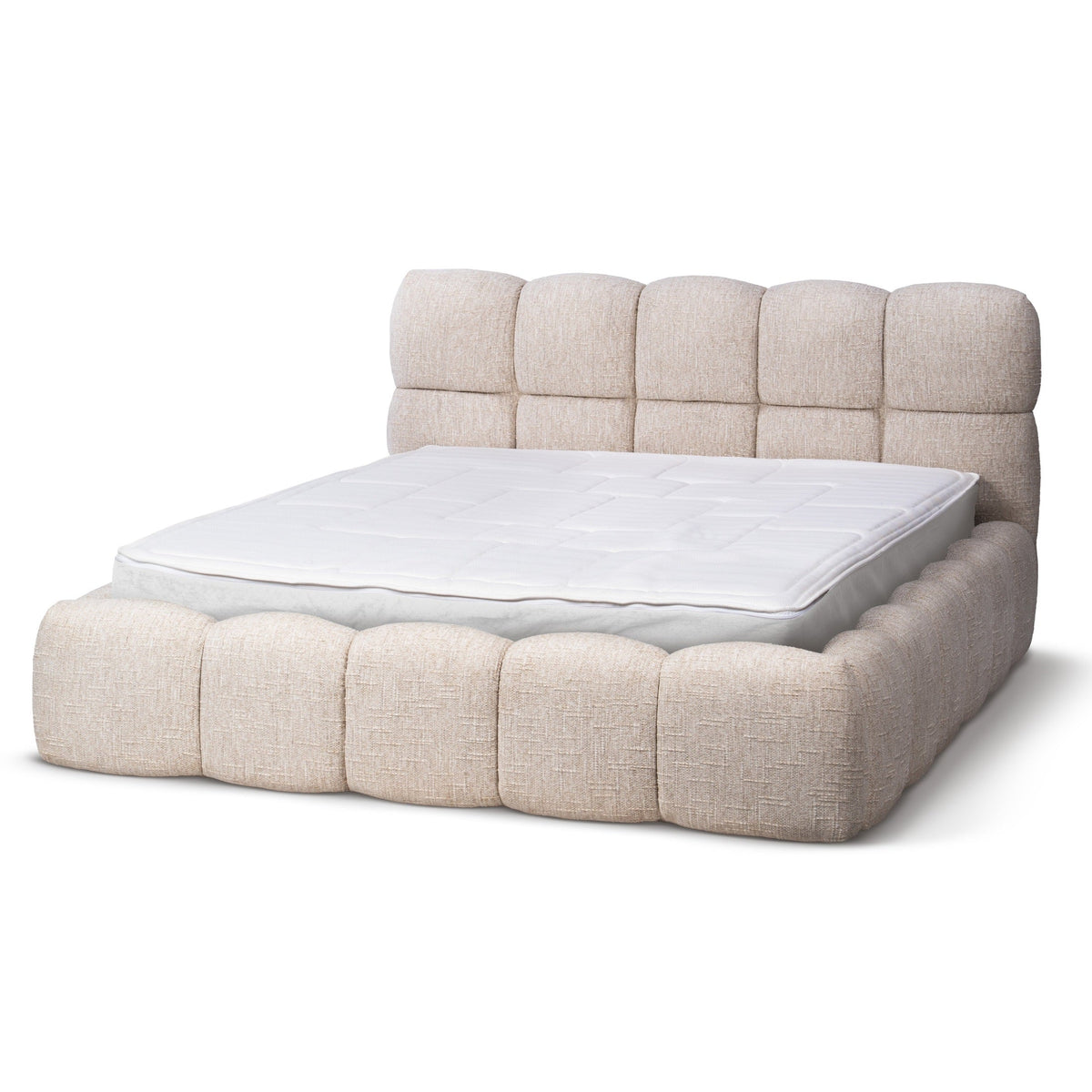
A well-thought-out teenager's room essentially consists of three areas that should be clearly separated from each other, even if the room is not particularly large. The sleeping area usually forms the quietest part of the room and should be placed as far away from the door as possible so that it doesn't become a thoroughfare. A bed with integrated storage space is particularly practical here, as teenagers often own more than a classic child's room ever had to manage – from school supplies to changing interests and hobbies. In the upholstered beds collection, you'll find models with bed boxes that offer exactly this additional storage space without the need for a separate wardrobe. The right mattress also deserves attention, as teenagers continue to grow and often spend many hours at a desk with strained posture – a look at the mattresses collection is therefore worthwhile to adequately support sleep.
The study area, on the other hand, should be as close as possible to daylight, ideally directly at the window, so that work can be done without artificial light even during the day. A desk with sufficient space for a laptop, books, and documents is more important here than a particularly large piece of furniture – teenagers primarily need order and a clearly defined workspace that visually distinguishes itself from the rest of the room.
The third area, the chill-out zone, gains significant importance with increasing age. A comfortable beanbag, a small armchair, or a cosy corner with cushions and fairy lights creates a place where teenagers can meet friends or simply relax without having to lie in bed. It is important that these three zones remain spatially clearly distinguishable – for example, through different rugs, lighting, or the deliberate arrangement of furniture in the room.

Anyone looking to furnish a small teenager's room must be particularly careful with the available space. The most important principle here: every piece of furniture should ideally serve multiple functions. A bed with a bed box replaces additional wardrobe space, a desk with integrated drawers partially makes a separate chest of drawers redundant, and a sofa bed can serve as seating for friends during the day and as a second bed for overnight guests.
The room layout also plays a crucial role. If the bed is moved into a corner or under a window, significantly more freedom of movement remains in the middle of the room. Vertical storage space – tall, narrow pieces of furniture instead of wide chests of drawers – also utilises wall space that would otherwise remain unused, without taking up valuable floor space. If you choose a new storage furniture, you will find models of different widths and heights in the chests of drawers collection that can be flexibly adapted to narrow spaces.
The choice of colours can also optically enlarge small rooms. Light wall colours combined with light furniture surfaces make a room appear more open, while too many dark or high-contrast elements can visually reduce the room. Mirrors are another proven trick: they reflect light and make even a compact teenager's room appear significantly larger than it actually is.
When it comes to furniture for a modern teenager's room, it's worth avoiding overly playful or childish designs that quickly go out of fashion. Clear forms, functional details, and high-quality but understated materials appear significantly more durable – both in terms of taste and practicality. A bed with a padded headboard and integrated storage space, such as the upholstered bed with bed box, combines modern comfort with a timeless, minimalist design that still impresses after several years.
For colour design, a calm basic palette is recommended – grey, white, soft blue or muted green – which can be individually complemented with colourful accents in cushions, posters or textiles. This approach has the advantage that preferences can be easily adjusted over time, without having to replace the entire furniture. Lighting also plays a surprisingly large role: in addition to a functional ceiling lamp, additional light sources such as a desk lamp or fairy lights in the chill-out corner create a cosy, individual atmosphere.
When it comes to decor, there should be enough room for personal expression – posters, photos, collected souvenirs, or a pinboard give the room a distinctive, personal touch that can change with each new phase of life, without the basic furnishings having to be adapted.

The classic division into a typical boy's teenager's room with cool blue tones and a girl's teenager's room with pink or pastel tones is increasingly being questioned – and for good reason. Tastes often change quickly, especially during adolescence, and an overly gender-specific design may no longer match the inhabitant's personality after a short time. Instead, opting for neutral base colours and timeless furniture forms creates a foundation that proves itself over many years, regardless of changing preferences.
Individuality can instead be introduced through interchangeable, easily adaptable elements: textiles, posters, wall paint on individual accent areas, or accessories can be easily renewed as soon as interests or tastes change. The basic furniture – bed, desk, chest of drawers – remains untouched and does not need to be replaced with every new phase.
When it comes to materials, restraint is also advisable. Neutral wood tones, muted fabrics, and simple metal accents are appealing regardless of gender and can easily be reused later, for example, when moving into a first apartment. So, anyone who wants to design their teenager's room benefits twice from a neutral, timeless base: it saves costs in the long run and at the same time gives the teenager enough freedom to individualise the room according to their own taste.
Ultimately, it shows that a successful teenager's room is created not by as many trendy elements as possible, but by thoughtful zoning, durable furniture, and enough space for a personal touch. Those who find this balance create a retreat that grows with them over the years, instead of having to be completely redesigned after a short time. Further furnishing ideas, also for the rest of the bedroom, can be found in the article Furnishing a bedroom and on the Pillovely homepage with further furniture collections for every living area.
If you enjoyed this text, be sure to check out our other inspirations:
Country house style – what is typical and how do you furnish a home in country house style?
Loveseat - What Is It, Who Is It For and How to Choose the Right One?
A loveseat is one of those pieces of furniture that can completely change how a room works. It is smaller than a classic sofa, more generous than a single armchair and often easier to place in compact interiors. A loveseat can create a cosy sitting area in a small living room, soften a bedroom corner, complete a reading nook or work as an additional seat next to a larger sofa. Its strength lies in proportion: it gives you the feeling of a sofa without taking over the whole room.
Read moreabout Loveseat - What Is It, Who Is It For and How to Choose the Right One?
EU vs UK Bed Sizes – Will UK Bedding Fit a European Bed?
European beds are 200 cm long, UK beds 191 or 198 cm. A simple EU vs UK bed size table in cm – and what it means for your mattress and fitted sheets.
Read moreabout EU vs UK Bed Sizes – Will UK Bedding Fit a European Bed?
Autumn colors at home – shades that bring peace and warmth
Do you remember autumn from your childhood, when the leaves changed color like a kaleidoscope, and your mom would pull out the pumpkin-colored sweater she'd worn since college? Or those evenings in front of the TV while a storm raged outside, and the lamplight in the house gave everything a warm, amber hue? Those were the days when no one talked about "color palettes" or "color stories"—colors simply existed, as natural as breathing. Today, when we can choose from 50 shades of gray (and no, I'm not talking about THAT book), we sometimes lose track of what truly makes a home feel cozy. At Pillovely, we believe that autumn colors aren't a trend—they're a return to what makes us feel safe. Because "You are someone"—someone who deserves a space filled with colors that snuggle like a grandma's blanket.
Read moreabout Autumn colors at home – shades that bring peace and warmth



Share:
Country Style – what are its typical features and how do you furnish a home in country style?
Slatted bed base – which slatted bed base fits your mattress and bed, and what should you look out for?