


- by Daniel Pawlik
Ottoman – What Is It and How to Use One in Your Living Room?
- by Daniel Pawlik
There's a small piece of furniture in most well-styled living rooms that does more than people realise. It props up tired feet at the end of the day, becomes extra seating when someone unexpectedly stops by, holds the blanket no one quite knows where to put, and occasionally turns into a coffee table when there's a film to watch. That piece is the ottoman – the quiet workhorse of the modern living room.
The word itself comes from the Ottoman Empire, where low, cushioned, backless seating was a fixture of palace and home alike. Three centuries later, ottomans have evolved into everything from sculptural design objects to clever storage solutions, but the core idea is the same: a soft, low piece of furniture that gives a room flexibility. Below, we walk through the difference between ottomans and pouffes, what a storage ottoman can actually do, whether using one as a coffee table is a sensible idea, and how to choose the right size for your space.
The ottoman vs pouffe debate is a classic case of two words with overlapping meanings. In practice the distinction is fuzzy, but here's how it tends to break down.
An ottoman is typically:
larger and more structured,
often rectangular or square,
sometimes upholstered to coordinate with an existing sofa,
frequently with a wooden or metal frame internally,
substantial enough that a large ottoman can seat two or three people.
A pouffe is typically:
smaller and softer,
more often round,
entirely upholstered, no visible frame,
lighter and easier to move around,
usually a standalone style piece rather than a sofa match.
In the UK and across most of Europe, "pouffe" tends to mean the small, soft, round version; "ottoman" is reserved for the bigger, more structured cousin. In American English, "ottoman" covers both. Modern brands often use the terms interchangeably – you'll see "pouffe ottoman" written as a single phrase to cover the soft, round seat-cum-footstool that fits most living rooms.
Both work brilliantly as an ottoman footstool – the original use case – and both are more useful than people give them credit for. The right choice depends on the role:
want to sit on it occasionally? → larger ottoman with internal structure,
want to put your feet up? → either works; a smaller pouffe is more comfortable,
want it as a coffee table? → larger, flat-topped ottoman wins,
want a sculptural style accent? → round, organic-shaped pouffe wins.
The Pillovely armchairs and pouffes collection carries options that span both ends of this spectrum.

A storage ottoman is exactly what the name suggests – an ottoman with a hinged lid or removable top that reveals storage space underneath. It's one of those small design ideas that quietly transforms how a living room actually works.
What people typically store in them:
spare throws and blankets (the most common use),
children's toys and books (a huge win for family homes),
remote controls, chargers, and the everyday tech mess,
magazines, board games, paused craft projects,
spare cushions for guest evenings.
If you live in a flat or smaller home where every piece of furniture needs to earn its keep, a storage ottoman often replaces both a footstool and a low cabinet in one go. The footprint is small; the impact on visible clutter is significant.
What to look for in a good storage ottoman:
A sturdy lid mechanism – ideally a gas-strut lift so the lid stays open without holding it.
A reinforced internal frame – the load-bearing function means cheaper construction shows itself faster.
A breathable interior – storing textiles in a sealed, airless compartment leads to musty smells over time.
Sufficient depth – at least 25 cm to actually hold folded blankets and bulkier items.
What to skip: ottomans with shallow, decorative-only storage (not worth the price premium), and models with leather or PVC tops that crack under repeated lid use.
Using an ottoman coffee table arrangement is one of the most popular interior choices of the last few years, and for good reason – it adds softness to a room dominated by hard sofa lines, gives you a comfortable spot for feet, and works as flexible seating during a gathering.
That said, it isn't for every household.
An ottoman coffee table works well if:
you eat at the dining table, not on the sofa,
you use a tray for drinks and books (this is non-negotiable for stability),
the room is mainly evening-led (lamp light, films, conversation),
you want a softer, more lived-in aesthetic.
It doesn't work if:
the sofa is where dinner happens daily,
young children regularly climb on it (they will spill),
you need a hard surface for laptops and dinner plates every day.
The key accessory is a flat, wide tray – ideally 40–60 cm across, in wood, marble, or rattan. The tray gives stability for drinks and creates a defined surface for books and candles. Without a tray, the arrangement looks unfinished and quickly becomes impractical.
Best fabrics for this role: performance velvet, easy-clean weaves, or full-grain leather. Bouclé looks beautiful but stains faster than people expect when drinks land on it daily. Linen is best avoided unless covered with washable removable covers.
A large ottoman of around 80–100 cm across works best in this role – enough surface for a proper tray plus room for feet from two sides of the sofa. The ALLORO Pouf 82×41 is a good example of a generous, decoratively stitched pouffe that sits comfortably in this dual seat-and-table role.
Choosing the right ottoman is mostly about matching it to your sofa and your room.
Height first. The top of the ottoman should sit within 2–3 cm of your sofa's seat height (usually 40–45 cm). Too tall and it pushes against your legs uncomfortably; too short and feet hang awkwardly.
Width and length:
a round ottoman of 60–75 cm diameter suits most living rooms and works well in front of a single armchair,
80–100 cm square or round suits an ottoman in front of a 2- or 3-seater sofa,
100–140 cm rectangular suits a corner sofa or larger sectional,
anything over 140 cm starts to function as a daybed or seat-and-table hybrid.
Shape considerations:
round ottoman – softens hard-edged rooms, works well in front of curved sofas or corners, easier to walk around,
square or rectangular – better for ottoman coffee table use, more stable trays, tighter alignment with the sofa,
organic / pebble-shaped – sculptural and modern, more about presence than function.
Spacing:
leave 30–45 cm between ottoman and sofa (so you can stretch out without contorting),
keep at least 60–80 cm of walking room elsewhere in the room.
The OLEMO Pouf 75×39 sits squarely in the "round, soft, organic modern" category – ideal as a footstool ottoman in front of a single armchair. Larger pieces like the BALOA Pouf 82×41 work better in front of two-seater sofas.
A small note on velvet ottoman pieces specifically: velvet catches light beautifully in evening rooms and reads as softer than it actually is. If you want a single piece of furniture that elevates the whole living room without changing anything else, a velvet ottoman in a deep tone (rust, forest green, plum, navy) does it almost single-handedly.

Can an ottoman replace a coffee table?
Yes, with a tray. The tray turns the soft top into a stable surface for drinks, books, and remotes. Without one, the arrangement is decorative more than functional.
Are ottomans good for small living rooms?
Particularly well. Their soft profile, low height, and double duty as footstool, extra seat, or storage make them ideal in compact spaces.
What's the best fabric for an ottoman? For daily living rooms: performance velvet, bouclé, or easy-clean weaves. For lower-use spaces: anything you love, including linen and natural cottons.
How long should a good ottoman last?
A well-constructed ottoman with a hardwood frame and quality upholstery lasts 10–15 years of regular use. Removable, washable covers extend its life considerably.
Can I use an ottoman as a guest bed?
Not unless it specifically converts (the rare convertible ottoman bed). For occasional guests, a sofa bed remains the better option.
The ottoman is the rare piece of furniture that gets more useful the longer it lives in a room. If you're looking for one that will become an unobtrusive favourite of your living room – footstool, seat, coffee-table base, all in one – the Pillovely armchairs and pouffes collection is a sensible place to start, with shapes and fabrics that age beautifully.
Console Table Ideas – Where to Use One and How to Style It
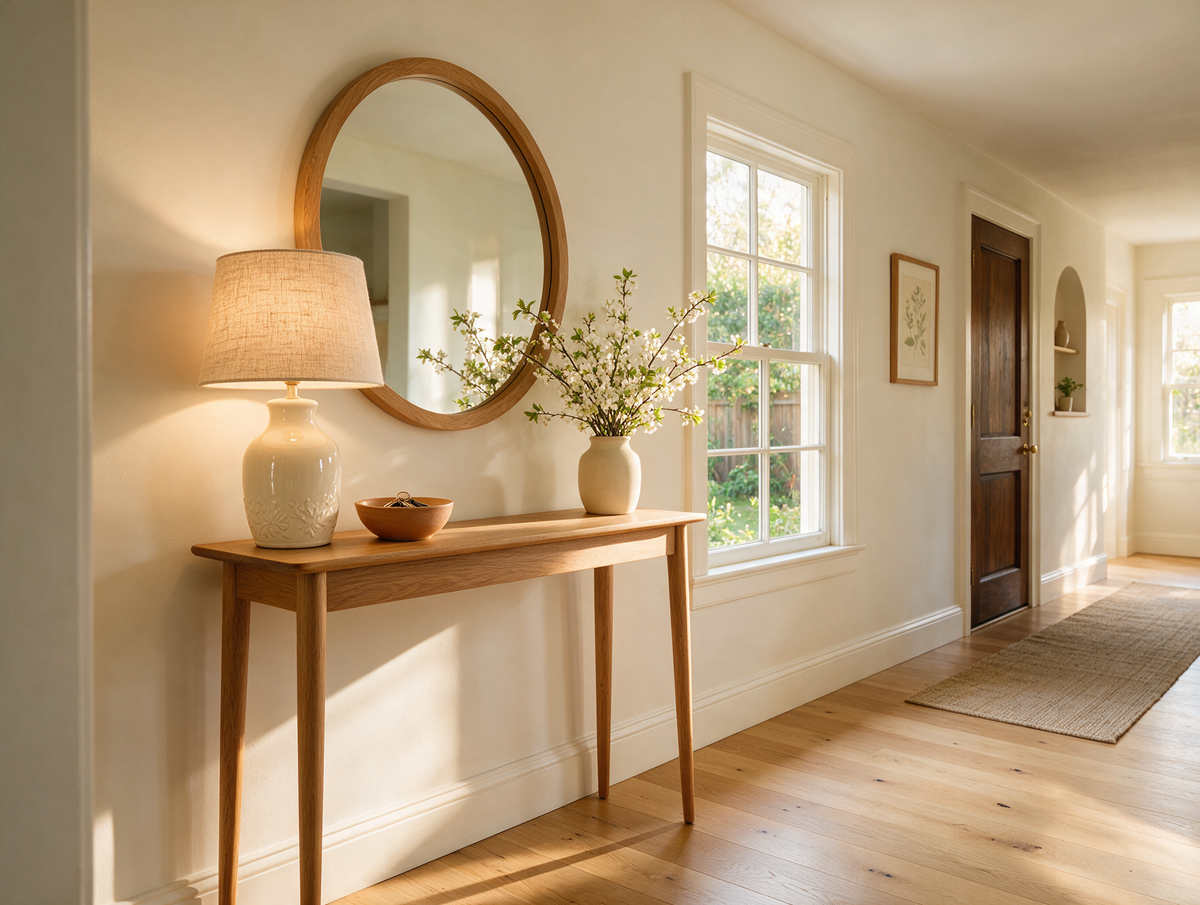
Do you remember coming home from school and dropping everything on the little table by the front door? Keys in the china dish, letters propped against the lamp, a vase of whatever was flowering in the garden and the old telephone with its curly cord. It was the first thing you saw when you walked in, and somehow it always said: you are home.
Read moreabout Console Table Ideas – Where to Use One and How to Style It
Nest of Tables – What Are They, Who Are They For and How to Style Them
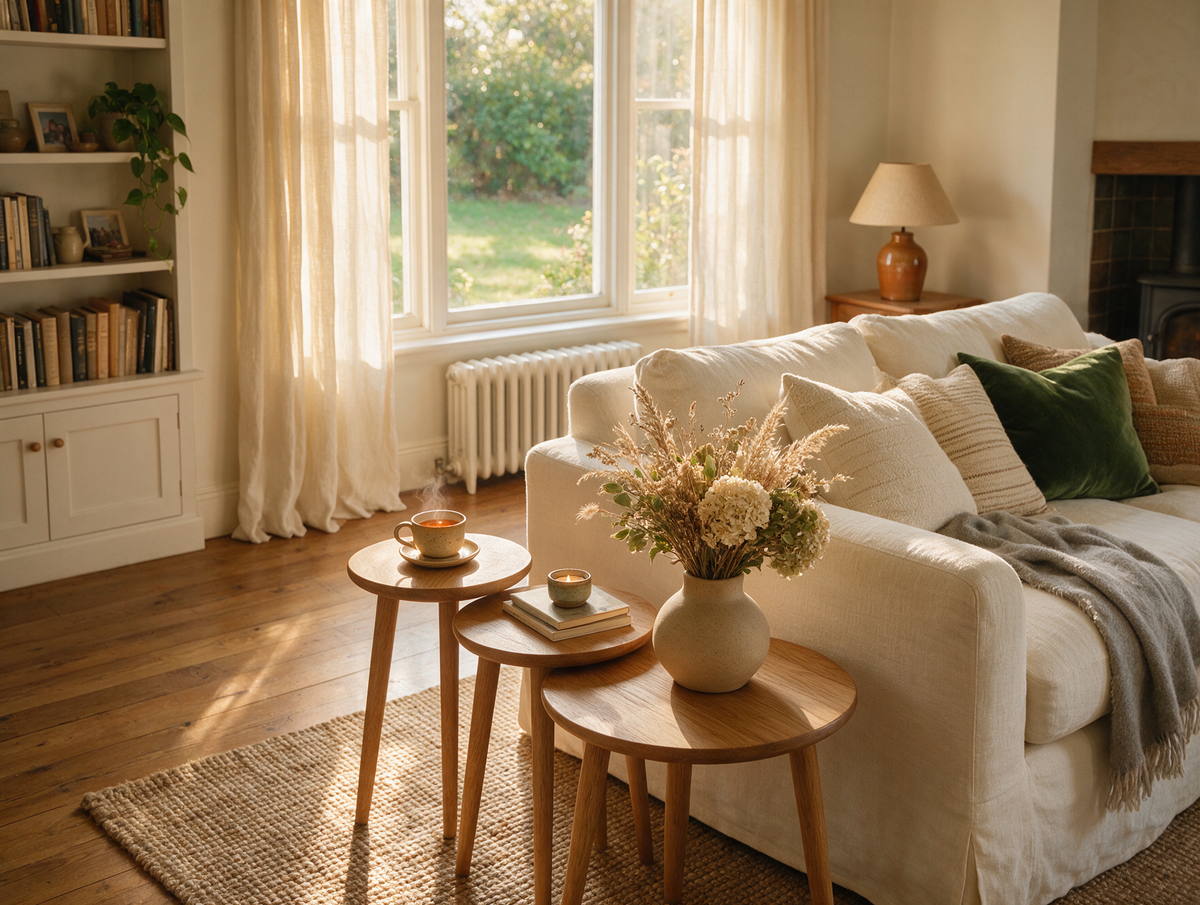
Do you remember Sunday visits to your nan's, when the nest of tables came out from beside the armchair? Three little tables, each tucked neatly under the next, were pulled apart and handed round – one for the teapot, one for the biscuit tin and one for Grandad's crossword – and then slid back together the moment everyone went home.
Read moreabout Nest of Tables – What Are They, Who Are They For and How to Style Them
Bookcase Ideas – How to Choose and Style a Bookshelf for Your Living Room
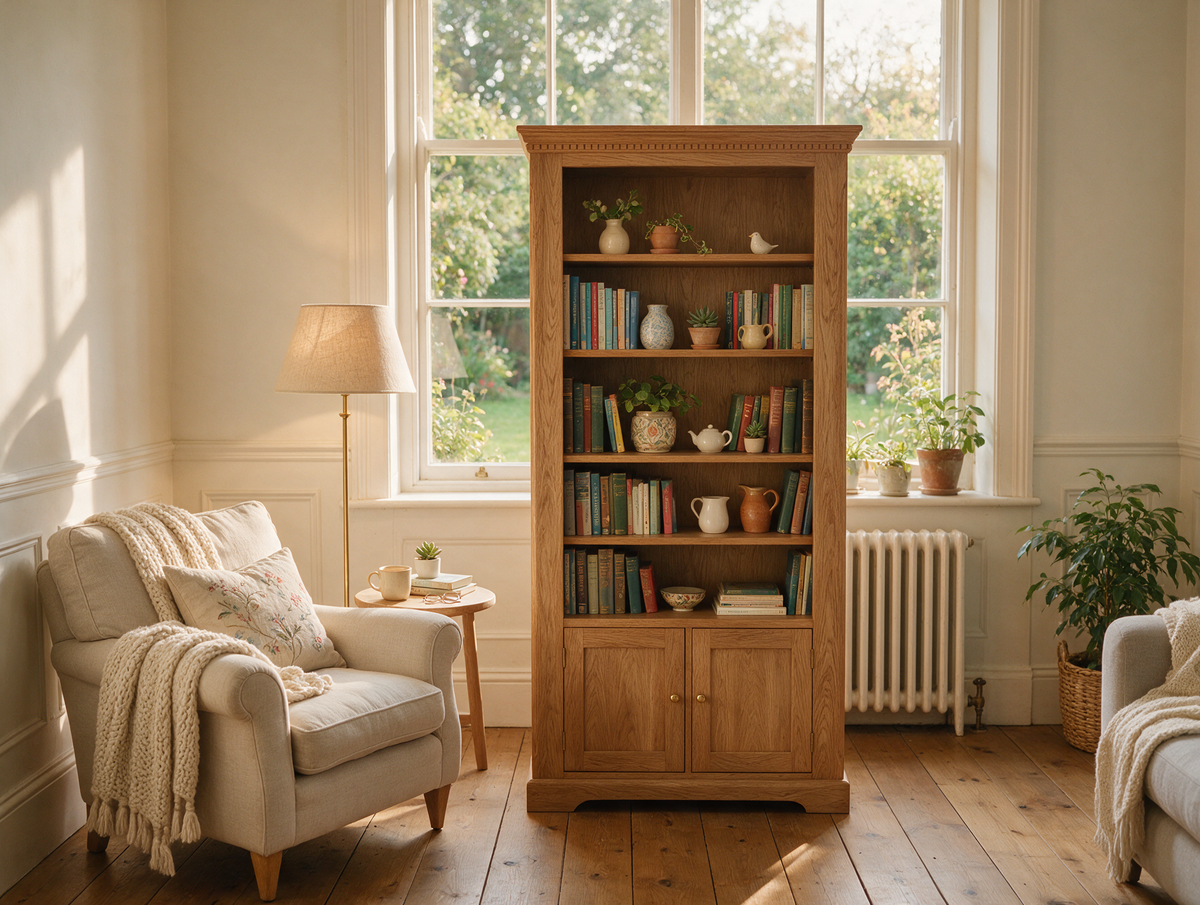
Do you remember the bookcase in your grandparents' front room? Rows of faded paperbacks, a set of encyclopaedias nobody ever finished, holiday souvenirs, a framed school photo and that one heavy atlas you pulled out on rainy afternoons. It was never styled for anyone – and yet it told the whole story of the family.
Read moreabout Bookcase Ideas – How to Choose and Style a Bookshelf for Your Living Room



Share:
Living Room Rug Ideas – How to Choose the Right Size, Shape and Material
White Sofa – Is It Practical and How to Keep It Looking Its Best?