


- by Daniel Pawlik
Upholstered Bed – What Is It, How to Choose and What Makes It Different?
- by Daniel Pawlik
There's a bed in almost everyone's memory. The one at your grandparents' house that seemed to swallow you when you sank into the mattress. The one in the flat you moved into after university, where the first proper mornings of adult life happened. The one in the film you can't quite remember but keep referring to anyway – the one with the impossibly soft headboard someone leaned back against for a scene that has stayed with you for years.
The upholstered bed sits at the centre of that memory. Soft, quiet, forgiving to lean against, and quietly capable of anchoring a whole bedroom without shouting for attention. In this guide we walk through what an upholstered bed actually is, how it compares to a wooden frame, whether the storage option is worth the extra cost, and how to choose the right size, fabric, and style for your space.
An upholstered bed is a bed frame – headboard, side rails, and often a solid base – wrapped in fabric or leather over a padded core. The visible surface you see is upholstery; underneath sits a wooden or steel structure that gives the bed its shape and durability.
The popularity is easy to explain once you've slept next to one. Compared to a plain wooden frame, an upholstered bed is:
softer and quieter – the fabric absorbs the small sounds of movement,
warmer to touch – headboards feel less startling on winter mornings,
more forgiving to lean against – reading, watching a film, morning coffee in bed all become more comfortable,
easier to style – fabric colour options range from cream and oat to deep forest green,
safer for children – no sharp edges to walk into in the middle of the night.
What defines a good upholstered bed:
Frame – solid pine or hardwood interior (never particleboard for a piece meant to last),
Padding – high-density foam or fibre wrapping the frame, not thin polyester over cardboard,
Fabric – upholstery-grade weaves designed for daily wear, ideally with easy-clean treatment,
Stitching and finish – piping, quilted panels, or vertical stitching that adds character without looking dated,
Legs or base – integrated solid base (more modern) versus visible wooden or metal legs (more classical).
The Pillovely range leans into this middle ground: solid wooden interiors, upholstery-grade fabrics, considered detailing. Explore the Pillovely upholstered beds collection to see the range of shapes and materials in one place.

The upholstered bed versus wooden bed frame decision comes down to how you use the bed and how the bedroom feels when you walk in.
Upholstered beds win when:
you read or work in bed regularly (softer headboard),
the bedroom leans toward cosy, hotel-suite, or Scandinavian style,
the room has hard flooring and needs softer texture as counterpoint,
you want the option to change fabric years later without buying a whole new bed,
warmth and quiet matter to you.
Wooden bed frames win when:
you prefer natural materials with visible grain,
the room already has upholstered furniture (armchair, ottoman, bench) and needs a hard-textured counterpoint,
you want a lower entry price,
the aesthetic leans rustic, mid-century, or minimalist industrial,
you're worried about maintaining fabric long-term.
A useful middle ground: an upholstered headboard bed with a wooden base, or a wooden bed frame with an upholstered headboard panel. Both give you softness where you need it (behind your head) and durability where you want it (the frame).
For a fabric bed with a bold visual statement – the kind of piece that becomes the focal point of the bedroom rather than blending into it – models like the Leo upholstered bed with its designer headboard shape offer a more sculptural take on the category. For softer, more organic shapes, the Genz upholstered bed in Japandi style with integrated bedside tables shows how curves and natural materials work together.
An upholstered bed with storage is one of those quiet upgrades that transforms how a bedroom actually functions – especially if you don't have a walk-in closet or generous wardrobe space.
The two common formats:
Front-opening bedding compartment. The base opens from the foot end (like a lid lifting upward), giving access to a full-bed-sized storage well underneath. Common on modern upholstered beds, including several Pillovely models.
Lift-up mattress with side or full-length storage. The entire mattress lifts on hydraulic arms, revealing the compartment. Similar capacity, slightly heavier mechanism, higher price.
What fits inside:
Two full duvet sets with spare pillows,
Seasonal winter blankets and throws,
Off-season clothing (winter jumpers in summer; summer linens in winter),
Suitcases stored flat,
Bulky items like memory-foam mattress toppers you're not currently using.
What to check before buying:
Gas-strut mechanism on the lid (so it stays open safely),
Reinforced base where the storage sits,
Breathable interior – sealed storage can develop musty smells, so a slatted or perforated base is better,
Weight capacity – some cheaper storage beds sag under heavy loads over time.
Both the Elle upholstered bed and the Carla upholstered bed come with generous bedding compartments – Elle with a rounded headboard and decorative stitching, Carla in a soft-minimalism form with rounded edges and vertical stitching. Both give you the storage of a full-size compartment without visible mechanism.
Choosing the right upholstered bed involves three separate but related decisions.
Size. Upholstered beds typically come in three standard adult sizes:
Upholstered double bed (140 x 200 cm) – suits one adult with generous space or two adults in a compact room,
160 x 200 cm – the modern default for couples; room to sleep comfortably without spillover onto each other,
Upholstered king bed (180 x 200 cm) – luxurious for two adults, or two adults plus an occasional visiting child.
Measure the bedroom before ordering: leave at least 60 cm of walking room on either side of the bed, and 90 cm at the foot for opening the bedding compartment.
Fabric. The most common upholstery families:
Bouclé – textured, warm, currently very fashionable,
Velvet – dramatic under lamp light, ages beautifully with care,
Chenille and performance weaves – practical for daily use, easy to clean,
Linen – natural feel, needs the right care but rewards it,
Faux leather – wipeable, harder-edged aesthetic, works in loft and industrial interiors.
Pillovely offers free fabric samples (up to five) before you commit – genuinely useful, since fabric colour and texture always look slightly different in person than on a screen.
Style. The choices break into families that suit different bedroom aesthetics:
Curved and organic (like the Genz) – Japandi, natural, softly modern,
Bold sculptural headboards (like the Leo) – contemporary, statement-piece bedrooms,
Piped and detailed (like the Elle and Carla) – classic-modern, hotel-suite feel,
Tall tufted headboards – traditional, romantic, formal.
For a fuller sense of how these pieces work together with the rest of the bedroom – nightstands, wardrobes, dressers – the Pillovely beds and mattresses collection shows the ecosystem.

How long does an upholstered bed last?
A well-made upholstered bed with a solid wood frame lasts 15–20 years. Upholstery may need refreshing or re-covering after 8–10 years; the frame outlasts it.
Do upholstered beds attract dust more than wooden frames?
Slightly – fabric holds dust more than smooth wood. Weekly vacuuming with an upholstery attachment resolves this completely.
Can I clean an upholstered bed at home?
Yes. Vacuum weekly, spot-clean spills immediately with a barely damp cloth, and use fabric-appropriate cleaner as needed. Removable covers (available on some models) simplify the process.
Is an upholstered bed suitable for children's rooms?
Absolutely – soft edges, warm feel, and no hard corners make them family-friendly. Bouclé and easy-clean fabrics handle everyday life particularly well.
What's the best fabric for allergy sufferers?
Tightly woven performance weaves and easy-clean velvets. Avoid loose-weave linen or open bouclé if allergies are a concern; both can trap more dust.
An upholstered bed is more than a place to sleep. It's the piece of furniture that defines the whole feel of the room you retreat to at the end of the day – soft, warm, quiet, and ready to hold you until morning. If you're looking for the piece that will anchor your own bedroom, the Pillovely upholstered beds collection is a warm place to start – with organic curves, sculptural headboards, and flexible storage options across the range.
Console Table Ideas – Where to Use One and How to Style It
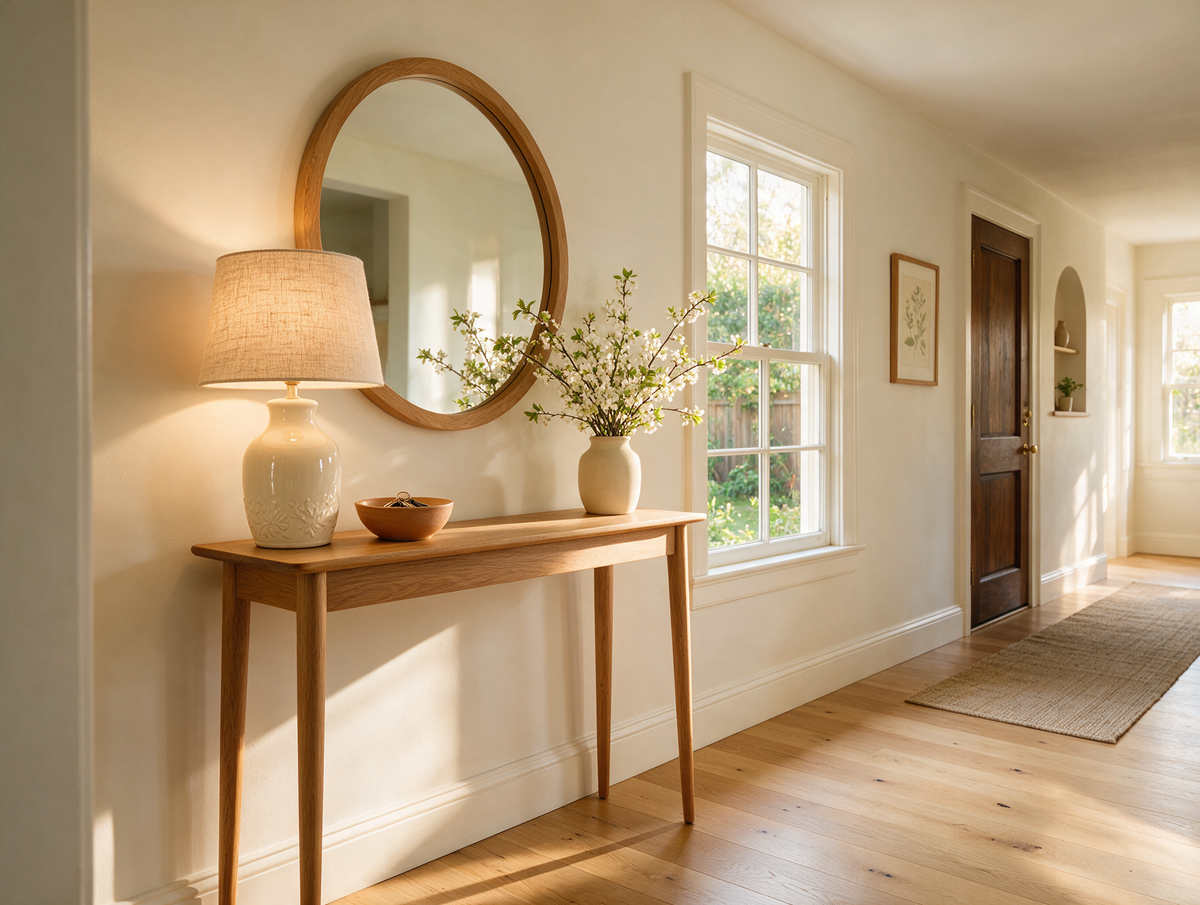
Do you remember coming home from school and dropping everything on the little table by the front door? Keys in the china dish, letters propped against the lamp, a vase of whatever was flowering in the garden and the old telephone with its curly cord. It was the first thing you saw when you walked in, and somehow it always said: you are home.
Read moreabout Console Table Ideas – Where to Use One and How to Style It
Nest of Tables – What Are They, Who Are They For and How to Style Them
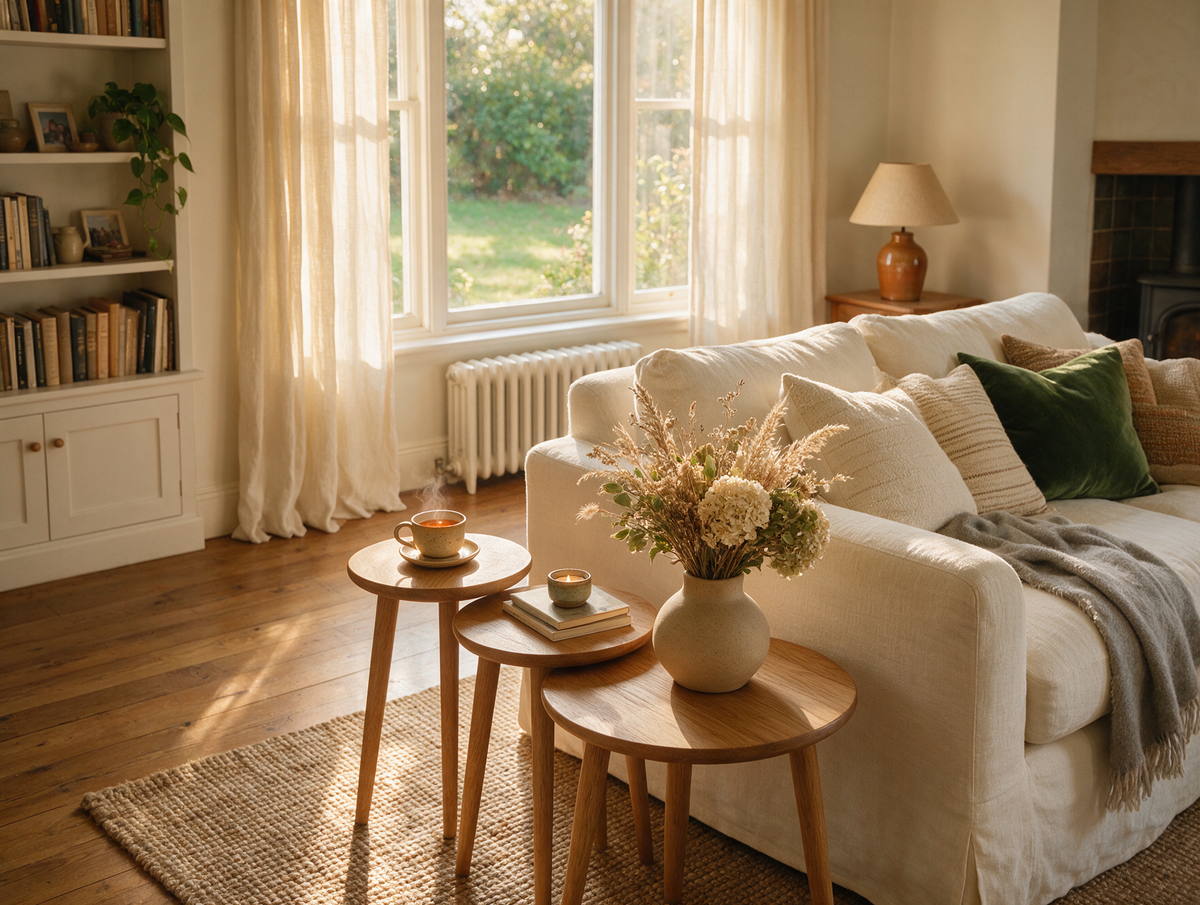
Do you remember Sunday visits to your nan's, when the nest of tables came out from beside the armchair? Three little tables, each tucked neatly under the next, were pulled apart and handed round – one for the teapot, one for the biscuit tin and one for Grandad's crossword – and then slid back together the moment everyone went home.
Read moreabout Nest of Tables – What Are They, Who Are They For and How to Style Them
Bookcase Ideas – How to Choose and Style a Bookshelf for Your Living Room
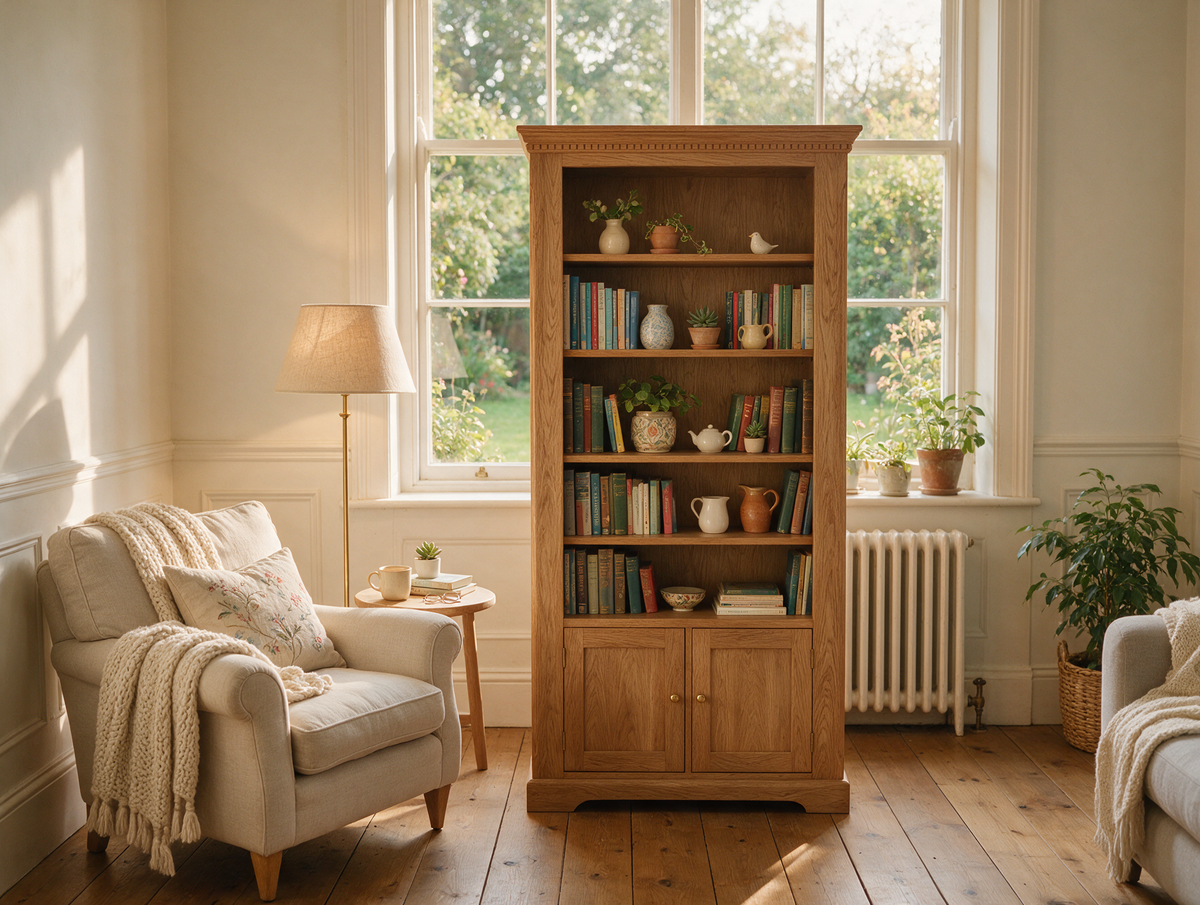
Do you remember the bookcase in your grandparents' front room? Rows of faded paperbacks, a set of encyclopaedias nobody ever finished, holiday souvenirs, a framed school photo and that one heavy atlas you pulled out on rainy afternoons. It was never styled for anyone – and yet it told the whole story of the family.
Read moreabout Bookcase Ideas – How to Choose and Style a Bookshelf for Your Living Room



Share:
UK Bed Sizes – Double, King and Super King Bed Dimensions Explained
Wardrobe Ideas – How to Choose, Style and Organise the Perfect Bedroom Wardrobe