


- by Damian Jerzy Zadora
Children’s bedroom – what furniture and accessories create a safe and cosy interior
- by Damian Jerzy Zadora
A child's bedroom is more than just four walls and a bed – it is the first place where a child learns independence, safety and that they have their own space to play, learn and rest. A well-designed children's bedroom combines three things: safe, sturdy furniture, age-appropriate storage and lighting that is suitable for both learning and falling asleep peacefully.
In this guide, we've compiled specific tips on children's bedroom furniture – from beds and desks, through wardrobes and bookcases, to safety and lighting. We provide actual dimensions, the age of the child for whom a particular piece of furniture is suitable, and advice on where it's worth saving money and where it's better not to compromise.
A child's bedroom changes as the child grows – what's perfect for a three-year-old won't work for a ten-year-old. That's why, later in this article, we've broken down the furnishings into stages: 0–3, 4–7, 8–12 and 13+ years, to make it easier to plan purchases several years ahead, rather than just for the 'here and now'.
In short: A well-planned child's bedroom needs a safe bed (preferably with rounded edges), a desk 50–75 cm high, a wardrobe or shelving unit for toys and clothes, and lighting with adjustable brightness. Furnishing a room from scratch on a budget usually costs between 3,000 and 5,000 zł, and it is not worth replacing furniture designed to last (bed, mattress, lighting) with the cheapest alternatives.
Every child's bedroom is based on four key elements: a bed, a study area, a wardrobe and a toy storage system. Bed is an investment for years to come – beds that grow with your child (with adjustable lengths from approx. 70 to 200 cm) mean you don't have to replace the bed every 2–3 years, whilst models such as house-style beds or those with a bedding storage compartment also save space in a small room. An example of a house-style bed is Koti (168x86x125 cm, from €349) – you'll find the full range of such models in the children’s beds collection.
The desk should be height-adjustable between 50 and 75 cm so that it grows with the child and does not force them to slouch whilst writing. A good desk with drawers or a bookshelf will be suitable from Year 1 onwards, and for older children it is worth adding a top with space for a laptop.
A modular wardrobe, where you can rearrange the shelves and add drawers, adapts to changing needs – more space for a toddler's toys, more hangers for a teenager. The Montessori system (a low wardrobe that a child can reach on their own) teaches independence from as early as 2–3 years of age.
Transparent boxes are best for storing toys (you can see what's inside), fabric baskets with handles, and modular mesh shelving units, where each category of toys has its own place – this really does cut down the time spent tidying the room.

0–3 years – safety and stimulation. A cot with a safety rail, a changing table (which later converts into a shelf), a sensory mat, a toy basket and a baby monitor. At this age, the priority is furniture with rounded edges and no small, detachable parts.
4–7 years – creativity and learning. The first 'grown-up' bed with a safety rail, the first desk, a bookcase for picture books, a play area on the floor and a blackboard or chalkboard for drawing.
8–12 years – hobbies and learning. A desk for doing homework, shelves for collections, a place where a child can have a friend over, and more privacy than before – this is the time when a child begins to develop their own style.
13+ years – a teenager's space. A relaxation area (armchair, pouffe), a larger desk, a full-length mirror and maximum personalisation – posters, colours, their own rules for tidiness.

Safety in a child's bedroom is not an optional extra, but a fundamental requirement. Rounded edges on furniture, non-slip pads for carpets and furniture legs, and securing tall bookcases to the wall should be standard from day one. For young children, it is worth fitting locks or soft-close stops to drawers to prevent fingers from getting trapped.
Materials are just as important as form: VOC-free paints, FSC-certified wood and easy-to-clean fabrics (preferably allergen-resistant) are a standard that should not be overlooked.
When it comes to lighting, a dimmer switch is key – it allows you to transition smoothly from bright light for studying to cosy, subdued lighting for reading. A ceiling light is safer than a chandelier (balls and flying toys pose no threat to it), and a good night light – a battery-powered LED, a star projector or a smart lamp with dimming – helps younger children fall asleep without fear of the dark. It's also worth adding blackout curtains, especially for children who wake up at dawn.

There are areas where compromise costs more than a lower price: the bed and mattress (healthy sleep and a developing spine), a desk and chair (ergonomics for years to come), lighting (a child's eyes are in use for long periods every day) and paints and materials (health is the priority here). These are not areas where it is worth skimping.
However, you can save money on decorations (DIY works a treat), storage containers (even shoe boxes do the trick), decorative textiles and accessories – second-hand shops or swapping items with other parents are good options here.
The most common mistakes when furnishing a child's bedroom are: a room that is 'too big for them' (a three-year-old feels lost in a teenager's room), a décor that is overly saccharine or childish, a lack of space for free play, ignoring the child's opinion (from the age of 3–4, it's worth asking about their preferences) and perfectionism – a child's bedroom is meant to be used, not photographed for a catalogue.

| Product | Dimensions | Price from | Who it's for |
|---|---|---|---|
| Mellia children's bed | 90x160 cm, with storage | €503.23 | children aged approx. 3–8, small rooms |
| Koti children's house bed | 160x80 cm, with safety rails | €349 | children aged 6+, fairytale character for the room |
| Softly pocket spring mattress | 80–120x200 cm | €96.98 | children aged approx. 5+, junior beds |
| ADIA desk with drawers | 120x75 cm | €259 | from Year 1 onwards |
| Mandala bookcase | 80x160 cm, shelves and cabinets | €369 | books, toys, collections |
| July armchair | 95 cm | €155.91 | reading nook, ages 8+ |
| Cloud decorative pillow | cloud shape | €49 | decoration, any age |
The best children's bedroom isn't the one in the catalogue, but the one where a child feels safe and can be themselves – to play, learn and rest. Well-chosen children's bedroom furniture doesn't have to be the most expensive, but it should grow with your child, be safe and easy to clean. The rest – decorations, colours, little touches – is your shared family story.
A well-designed children's bedroom includes a safe bed, a study area, a storage system for toys and clothes, and dimmable lighting. It is also crucial to adapt the space to the child's age and leave room for free play, rather than just for furniture.
The absolute minimum is a bed, a mattress, a desk (from school age) and a wardrobe or bookcase for clothes and toys. It's worth choosing modular furniture for a child's bedroom, as it's easier to reconfigure when the child's needs change in 2–3 years' time.
Budget children's bedroom furniture (bed, mattress, desk, basic storage) usually costs between 3,000 and 5,000 zł, depending on the dimensions and models chosen. Lighting and textiles add a further 300–800 zł to this.
A bed that grows with your child (adjustable length) offers better value over several years, as it eliminates the need to replace the furniture every 2–3 years, although it costs more initially. A standard children's bed, e.g. 90x160 cm, is cheaper and better suited to small rooms, but you'll need to factor in replacing it around the age of 7–8.
The most common mistakes include buying furniture that is 'too big for their age' and unsuitable for their stage of development, overfilling the room with furniture so there is no space left for play, ignoring the opinions of children aged 3–4, and striving for a perfect, 'catalogue-style' décor that cannot withstand everyday use.
The basics include furniture with rounded edges, securing tall bookcases and wardrobes to the wall, non-slip carpet pads and drawer locks for the youngest children. It is also worth choosing VOC-free paints and FSC-certified timber to minimise a child's exposure to toxins.
It's not worth skimping on a bed, mattress, desk with chair and lighting – these are elements that affect a child's health and development. However, you can save money on decorations, storage containers and textile accessories by making them yourself or buying second-hand.
A child's bedroom goes through four stages: 0–3 years (safety and stimulation), 4–7 years (creativity and learning), 8–12 years (hobbies and more privacy) and 13+ years (a relaxation zone and full personalisation). Each stage requires a different set of furniture and accessories.
A dimmable ceiling light works best as the main light, along with an additional night light – such as an LED, star projector or smart lamp – for younger children who are afraid of the dark. It's also worth adding blackout curtains if your child wakes up too early.
For a room of around 10 m², a compact children's bed, such as the Mellia 90x160 cm with a bedding storage compartment, is a good choice – it takes up little space whilst providing extra storage. For older children, it is worth considering the 90x200 cm version, which a child can use right through to their teenage years.
What Size Bed Fits Your Bedroom? A Room Size Chart
Do you remember rearranging your childhood bedroom furniture every few months, convinced that if the bed just went against the other wall, the whole room would finally feel right?
Read moreabout What Size Bed Fits Your Bedroom? A Room Size Chart
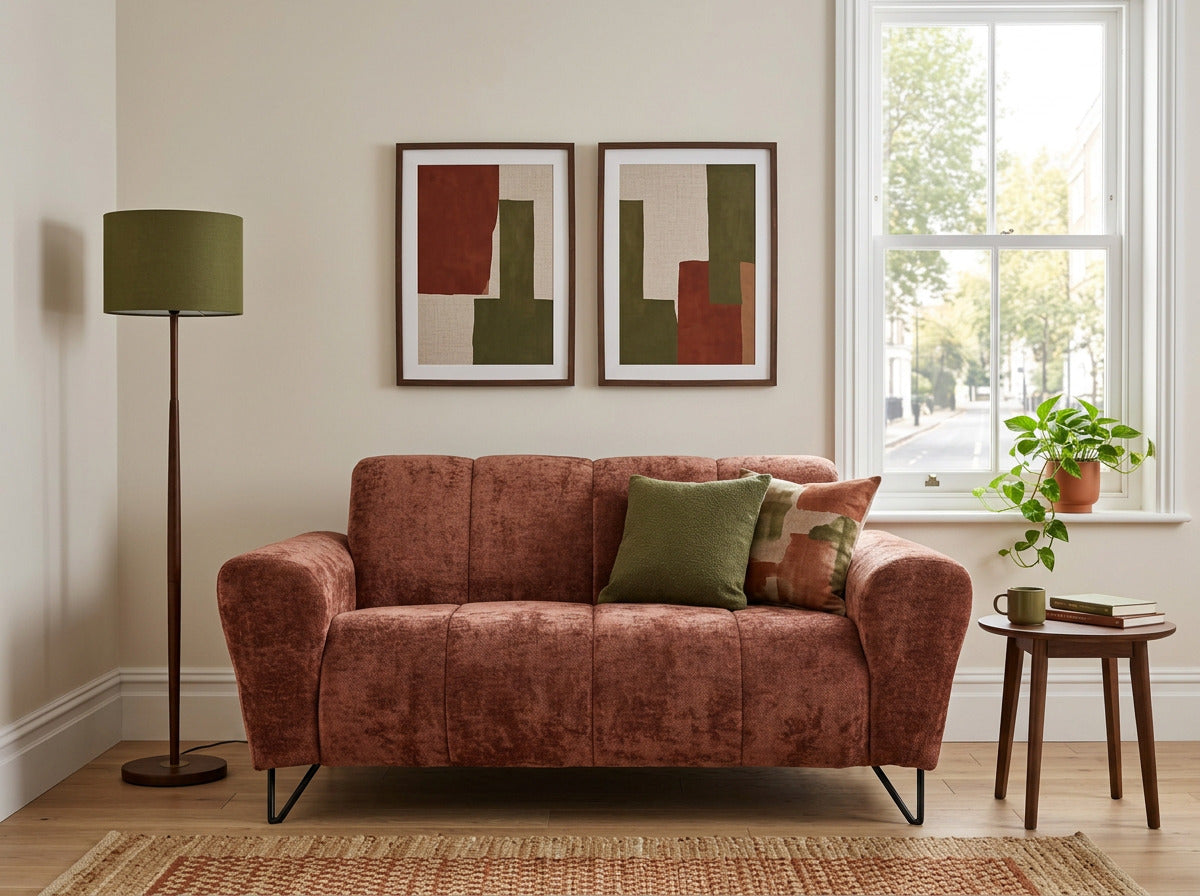
What sofa is best for a small living room? Compact models that fit
Read moreabout What sofa is best for a small living room? Compact models that fit
Bunk Beds for Kids – Age, Weight Limits and Safety Explained
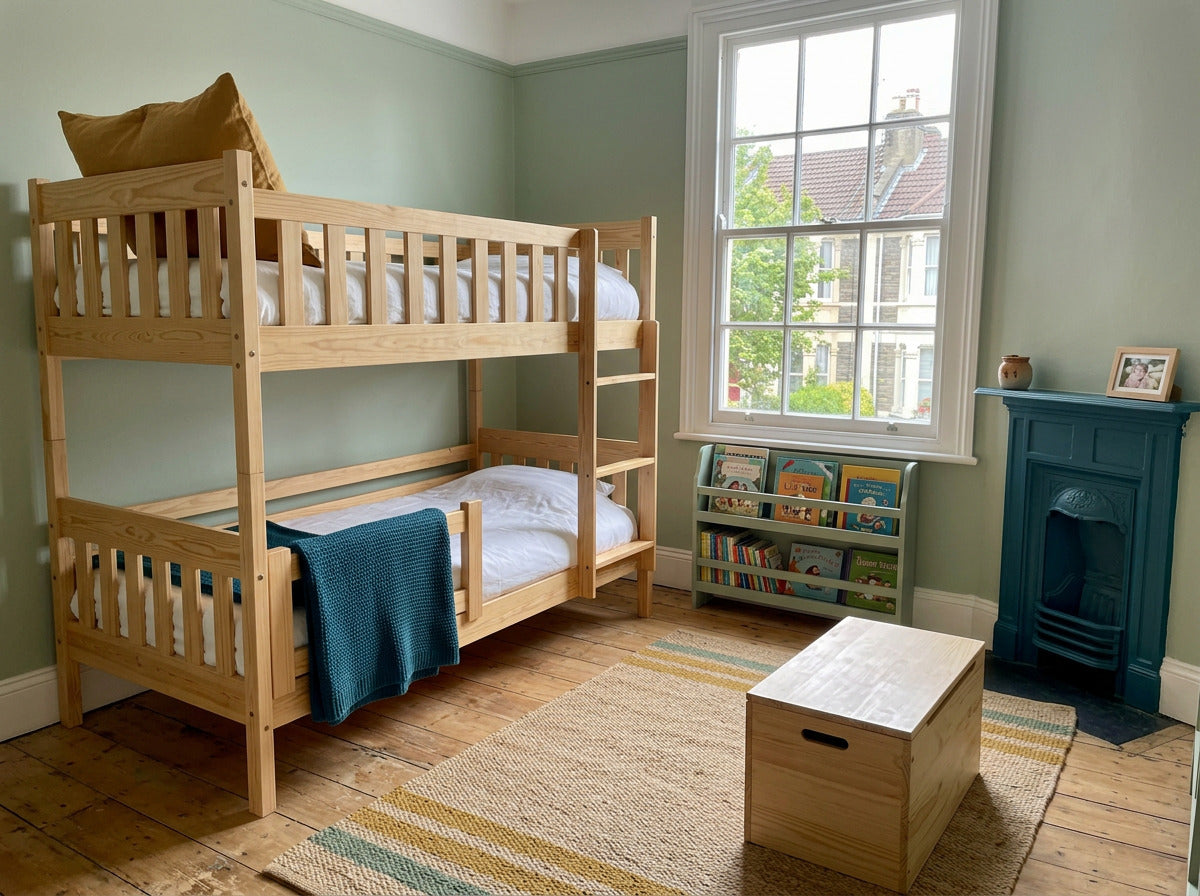
A bunk bed is a great way to save space in a room shared by siblings, but it comes with a few safety rules – the child's age, the weight limit, and properly designed guardrails. Here's the age it's recommended from, and how much weight the top and bottom bunks are built to hold.
Read moreabout Bunk Beds for Kids – Age, Weight Limits and Safety Explained


Share:
Light and shadows – table lamps and wall lamps in autumn styling
Dream Living Room – How to Create a Space for Conversations