


- by Daniel Pawlik
What color to choose for the bedroom? Proven wall colors that promote relaxation
- by Daniel Pawlik
Bedroom wall colors should harmonize with the interior style, size, and individual preferences. What wall color for the bedroom will work best in various situations? Here's a practical guide.
Small bedroom – optical enlargement of space
Bedroom colors in small rooms (up to 12 m²) should optically enlarge the space. Bright, warm colors for the bedroom like creamy beige, ecru, delicate peach create a feeling of spaciousness without coldness. It's like those cozy rooms from the 90s that, despite their modest size, seemed larger thanks to light and color.
White with warm undertones (not hospital optical white!) is a universal choice for small bedrooms. Combined with an upholstered bed made of natural material and linen textiles, it creates an elegant, spacious atmosphere.
Large bedroom – depth and coziness
Wall colors in a bedroom over 20 m² can be bolder. Darker shades – warm graphite, bottle green, deep navy blue – create an intimate, enveloping atmosphere. These are wall colors for the bedroom that do not overwhelm a large space but add character to it.
Accent walls also work well in large bedrooms – one wall behind the bed in a more intense color, the rest lighter. An upholstered bed with a high headboard beautifully contrasts with a dark wall, creating a sophisticated composition.
Scandinavian style bedroom
What color for a Scandinavian style bedroom? Warm beiges, grays, creamy whites with natural furniture. The wall color for a bedroom in this style should be subdued, matte, creating a neutral background for textures – linen, wool, wood. This aesthetic draws from the 90s, when simplicity and naturalness were valued.
Modern bedroom
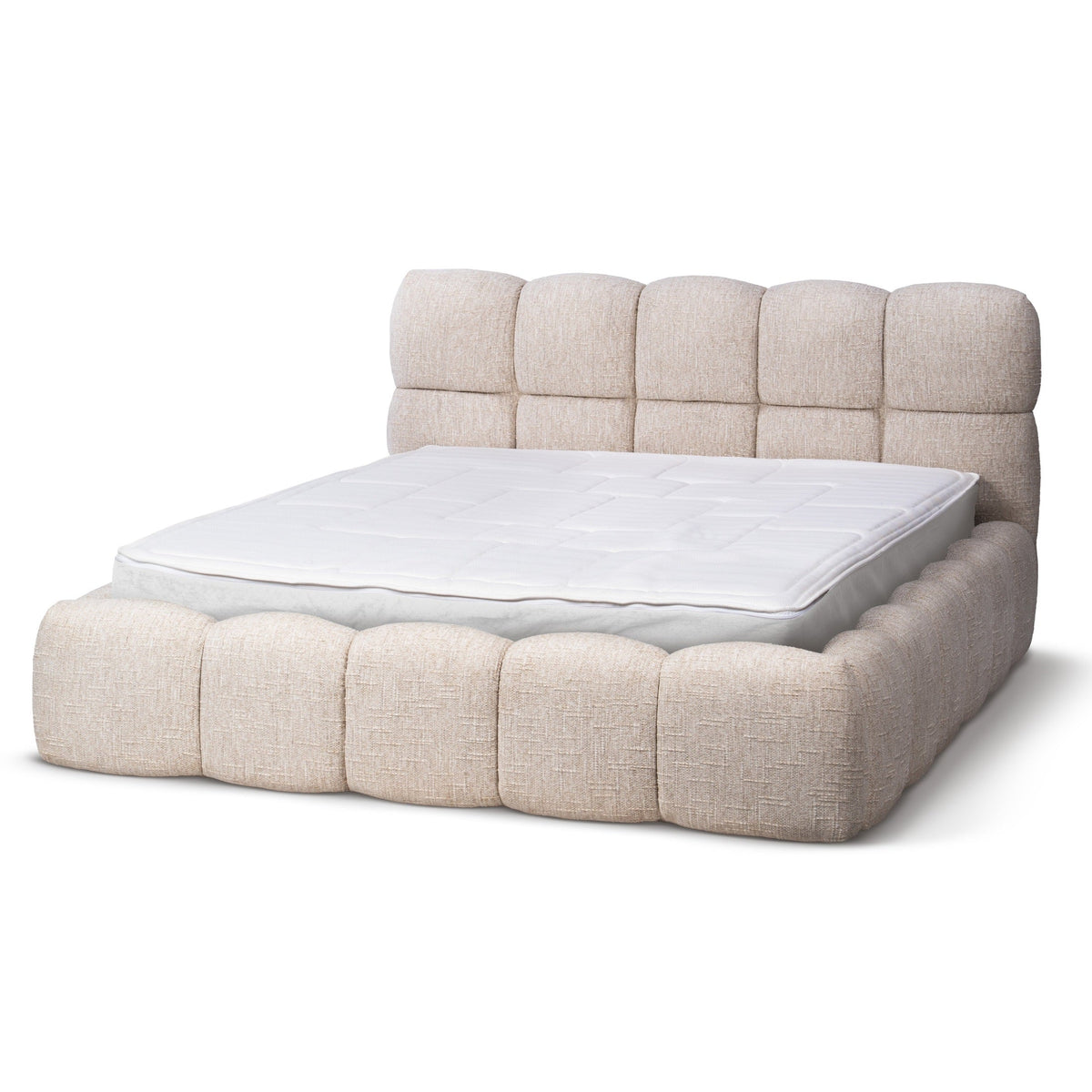
Colors in a modern bedroom can play with contrasts – light walls with black accessories or dark walls with light furniture. A continental box spring bed
in white upholstery looks beautiful against a dark wall. Modernity also means geometric patterns and matte finishes.

What bedroom wall color best supports restful sleep and relaxation? The psychology of color indicates several proven solutions.
Blue – scientifically proven for sleep
Delicate blues (not optical blue!) are the bedroom wall colors most conducive to melatonin. Studies show that blue bedrooms improve sleep quality by 20-30%. Powder blue, mist blue, azure – these are bedroom colors associated with the sky and water.
Combined with the natural wood of the bed, blue creates a harmonious, calm space. This is an ideal bedroom wall color for people who have trouble falling asleep.
Green – nature and balance
Warm bedroom colors are often based on green – sage, moss, olive. Green lowers cortisol and supports mental regeneration. This is a bedroom wall color that beautifully harmonizes with Pillovely wooden furniture. Sage green is a hit in recent years – warm, cozy, universal. A high-quality mattress against a green wall creates a nature-inspired composition.
Beiges and creams – universal coziness
The color most often chosen by designers for the bedroom is warm beige. Shades of cream, ecru, sandstone create a neutral background that never gets boring. Warm bedroom wall colors in beiges suit every style and furniture.
These are bedroom colors that optically warm up the room regardless of sunlight. A solid wood bedside table beautifully contrasts with creamy walls.
Colors to avoid
Red, orange, intense yellows are bedroom wall colors that stimulate and make it difficult to fall asleep. Even as an accent, they can disrupt regeneration. Cold grays and graphites can also be depressing – choose warm undertones.
Warm colors for the bedroom are the foundation of coziness regardless of the season. Here's a palette that works 365 days a year.
Earth palette – terracotta, ochre, clay
Warm bedroom wall colors inspired by nature – terracotta, burnt ochre, warm clay – create an earthy, cozy atmosphere. These are bedroom colors that look beautiful with Pillovely natural furniture.
Terracotta on one wall with beige on the others creates sophisticated depth. A solid wood chest of drawers in a warm shade beautifully harmonizes with earthy colors.
Golden beiges and peaches
Peach fuzz (delicate peach) is the Pantone color of the year – perfect as a bedroom color. Warm, subtle, associated with morning light. Use butter yellow carefully – as an accent or in very sunny rooms.
These warm bedroom colors blend beautifully with linen textiles and bamboo accessories. These are bedroom wall colors that create a "home spa" feeling.
Rose pink – from powder to apricot
Powder pink is a warm bedroom wall color that has come a long way from its stereotype. Millennial pink, blush, dusty rose – all these shades create a romantic, calm atmosphere. Combined with grays and beiges, a sophisticated color scheme is created.

What color to choose for the bedroom, considering light and furnishings? Here are practical tips to avoid common mistakes.
Room sunlight exposure
Bedroom wall colors depend on exposure. North-facing bedrooms require warm colors – beiges, peaches, warm grays – to compensate for the lack of sun. South-facing bedrooms can be cooler – blues, mints, lavenders – due to abundant natural light.
In north-facing bedrooms, avoid cold grays and blues – the room will look gloomy. Test colors in natural light at different times of the day.
Matching furniture
Colors in the bedroom must harmonize with the bed and wardrobes. Pillovely wooden furniture (oak, beech) looks best with warm beiges, earthy tones, delicate blues. Upholstered beds in beige upholstery beautifully contrast with gray and green walls.
White furniture requires a warm background – pure white walls with white furniture create a sterile effect. Black furniture looks best against a background of bright, warm colors.
Paint finish
Matte paints create a cozy bedroom atmosphere. Satin and semi-matte are more practical – easier to clean. Glossy paints reflect light and can be dazzling in the evening.
Color accents
One wall in a more intense color (behind the bed) is a safe way to experiment. The rest of the walls are neutral – beige, white, gray. Textiles (bedding, curtains, pillows) introduce color accents that are easy to change.
Final advice – your dream bedroom
What color to choose for the bedroom? Warm beiges, blues, earthy greens are proven bedroom wall colors that promote relaxation. Choose consciously, test in daylight, consider furniture and room architecture.
Discover Pillovely beds, chests of drawers, bedside tables – natural wood and fabrics that beautifully complement any color palette. Create a bedroom where every evening will be a regeneration, and every morning – a pleasure.
Pillovely – for those who want more.
If you liked this text, be sure to check out our other inspirations:
At what height should the TV cabinet be? A practical guide for a modern living room
Loveseat - What Is It, Who Is It For and How to Choose the Right One?
A loveseat is one of those pieces of furniture that can completely change how a room works. It is smaller than a classic sofa, more generous than a single armchair and often easier to place in compact interiors. A loveseat can create a cosy sitting area in a small living room, soften a bedroom corner, complete a reading nook or work as an additional seat next to a larger sofa. Its strength lies in proportion: it gives you the feeling of a sofa without taking over the whole room.
Read moreabout Loveseat - What Is It, Who Is It For and How to Choose the Right One?
EU vs UK Bed Sizes – Will UK Bedding Fit a European Bed?
European beds are 200 cm long, UK beds 191 or 198 cm. A simple EU vs UK bed size table in cm – and what it means for your mattress and fitted sheets.
Read moreabout EU vs UK Bed Sizes – Will UK Bedding Fit a European Bed?
Autumn colors at home – shades that bring peace and warmth
Do you remember autumn from your childhood, when the leaves changed color like a kaleidoscope, and your mom would pull out the pumpkin-colored sweater she'd worn since college? Or those evenings in front of the TV while a storm raged outside, and the lamplight in the house gave everything a warm, amber hue? Those were the days when no one talked about "color palettes" or "color stories"—colors simply existed, as natural as breathing. Today, when we can choose from 50 shades of gray (and no, I'm not talking about THAT book), we sometimes lose track of what truly makes a home feel cozy. At Pillovely, we believe that autumn colors aren't a trend—they're a return to what makes us feel safe. Because "You are someone"—someone who deserves a space filled with colors that snuggle like a grandma's blanket.
Read moreabout Autumn colors at home – shades that bring peace and warmth




Share:
Pilla's Reading Corner: Harry Hole series - Jo Nesbø
Vanity lighting – how to choose the ideal vanity for makeup and daily skincare