


Remember those Saturday morning "revolutions" at home when Mom announced, "Something has to change in the living room"? Dad would sigh, knowing he'd have to carry the sofa, and you'd watch, fascinated, how the same room could look completely different just by shifting the furniture a few dozen centimeters? These spontaneous transformations were magical – they showed us that home isn't just four walls, but a living space that adapts to our needs and moods.
Even today, when you own your corner sofa and living room, the need for change is still palpable. But did you know that most of us live in much smaller spaces than we did as children? In an era where apartments are 40 to 60 square meters, the art of arranging a corner sofa becomes a true art of living – how can you arrange a piece of furniture so that it serves you instead of dominating you, how can you maintain creative freedom in a limited space?
Space psychology: Why do we constantly want to change?
Our grandmothers rarely moved furniture – it simply settled in and stayed in place for decades. Our mothers began to experiment with arrangements, but always cautiously. We are the first generation to view living spaces as flexible living environments.
The need for change is not a whim – it is a natural instinct to adapt to changing needs. In winter, we long for a cozy atmosphere with a corner sofa in front of the TV and fireplace. In summer, we dream of freshness and openness with a corner sofa by the window. When guests come, we need a different arrangement than for everyday relaxation for two.
Personalization is up to you, you design it yourself – and that includes designing your space. Your need for frequent changes is not a flaw, but a trait that should be used wisely.
Small apartment, big possibilities
In a 35-50 square meter apartment, every centimeter counts. A corner sofa, which would only be one element in a larger living room, becomes the dominant element here – and this can be both a problem and a solution.
Rule number one: A corner sofa against the wall is not always the best idea. In a small living room, a corner sofa in the corner can visually shrink the room even further. Sometimes it is a better solution to move the sofa a little further into the room, creating additional space behind it – for a desk, a shelf, or simply a visual "breathing zone."
Rule number two: Think modular. Choose corner sofas that can be disassembled into individual units. Today you have a complete corner sofa, tomorrow you can separate it into a sofa and a separate module, and next week you can combine it differently. It's like LEGO bricks for adults – endless possibilities in a limited space.
Rule three: Middle or wall? In very small living rooms, a corner in the middle of the room can create a cozy island, but at the expense of movement space. In larger rooms, on the other hand, it can be the focal point around which the rest of the decor is oriented.

Inspirations from pop culture: From "Friends" to today
Pop culture has given us unforgettable lessons in decorating small spaces. "Friends" , with Monica and Rachel's legendary apartment, showed how to make a small space functional – their corner was arranged to create a social focal point without blocking the transition between the kitchen and the rest of the apartment.
"How I Met Your Mother" , in turn, showed different configurations of the same apartment over the years – sometimes the corner was oriented towards the TV, sometimes it provided a broader setting for conversations. It's a perfect example of how the same space can serve different needs.
Current series such as "Emily in Paris" or "Sex and the City" (in the reboot) already show a modern approach to small apartments – modular furniture, flexible solutions, quickly reconfigurable spaces.
Different layouts for different life needs
Perhaps you are more introverted and need a cozy corner for reading and watching movies? Place a sofa in the corner, wrap it in textiles, and place a reading lamp next to it. Your corner becomes a cozy den where you can retreat.
Or are you a sociable person and like to host guests? Arrange the corner to create an open configuration – perhaps U-shaped, perhaps facing the entrance. Guests should feel that they can participate in the conversation and not feel excluded.
Perhaps you belong to the generation of home office workers who sometimes want to use their living room as an office? Choose a corner sofa with space for a desk or one where one of the modules can serve as a workspace. Flexibility is key.
Do you have children and want your living room to be safe and functional? A corner sofa against the wall gives them more space to play, and the soft edges are safer than the sharp angles of individual pieces of furniture.

Practical tricks for small spaces
Mirror rule: If you have a mirror on the wall in your living room, place it in the corner so that it reflects your reflection. This visually doubles the space and creates the illusion of a larger room.
Movement rule: Leave at least 60–70 cm of space around the corner so that you can move easily. In small apartments, this can be difficult, but every extra centimeter counts.
Multi-functionality: Choose corner sofas with storage space, pull-out sofas, and additional functionality. In a small space, every piece of furniture should serve multiple functions.
Colors and light: Light colors on a corner sofa visually enlarge the room, while dark colors create a cozy atmosphere, but can also dampen it. It's a choice between functionality and ambiance.

Seasonal changes: How to refresh without getting tired
One of the biggest advantages of a corner sofa is the ability to adapt it seasonally without much effort. Eco-friendly furniture renovation tips : Instead of replacing the entire piece of furniture, you can change the fabrics, cushions, and blankets.
In spring, move the corner closer to the window, add light cushions and fresh plants. In summer, make the decor brighter, remove some textiles, and use cool colors. In autumn, move the corner to a cozier spot and add warm blankets and lamps. In winter, make the decor as cozy as possible with additional cushions and warm textiles.
These changes are not just a matter of aesthetics – they are a way to keep a small space fresh and tidy, which could quickly become monotonous.
Technology supports flexibility
Modern corner sofas may have wheels for easy movement, mechanisms that allow quick configuration changes, and even apps that let you visualize different layouts in your specific space.
Modularity is the keyword for 2025. Corner sofas that are easy to disassemble, reassemble, and adapt to changing needs. This is the answer to our increasingly dynamic and unpredictable lives.

Mistakes to avoid
Mistake number one: Orienting the corner sofa solely towards the television. You can move the TV or mount it on a movable bracket, but the corner sofa determines the entire energy of the room.
Mistake number two: Ignoring natural light. Ideally, at least part of the corner should have access to natural light – this improves the mood and makes the room feel more inviting .
Mistake number three: Only thinking about aesthetics. A corner sofa must be functional – check if you can get up comfortably, if it has the right seating height, and if it doesn't block important passages.
A place that grows with you
Loving the warmth of home also means understanding that a home is a living organism that evolves with us. The corner sofa you buy today can serve you for years in various configurations, in different places, and for different needs.
Today, it might be in a small studio apartment, serving as a sofa , bed, and social hub all at once. In a few years, it might be in a larger apartment, surrounded by other furniture, serving a different purpose. In a decade, it might be in a house with a garden, witnessing family gatherings, children's first steps, and teenagers' conversations about life.
How do you arrange a corner sofa in the living room? The answer is: Arrange it so that it reflects your living desires. If you love variety, choose modular solutions. If you live in a small space, think creatively about every inch. Plan for the future, invest in quality that allows you to experiment with your design for years.
Latest Articles
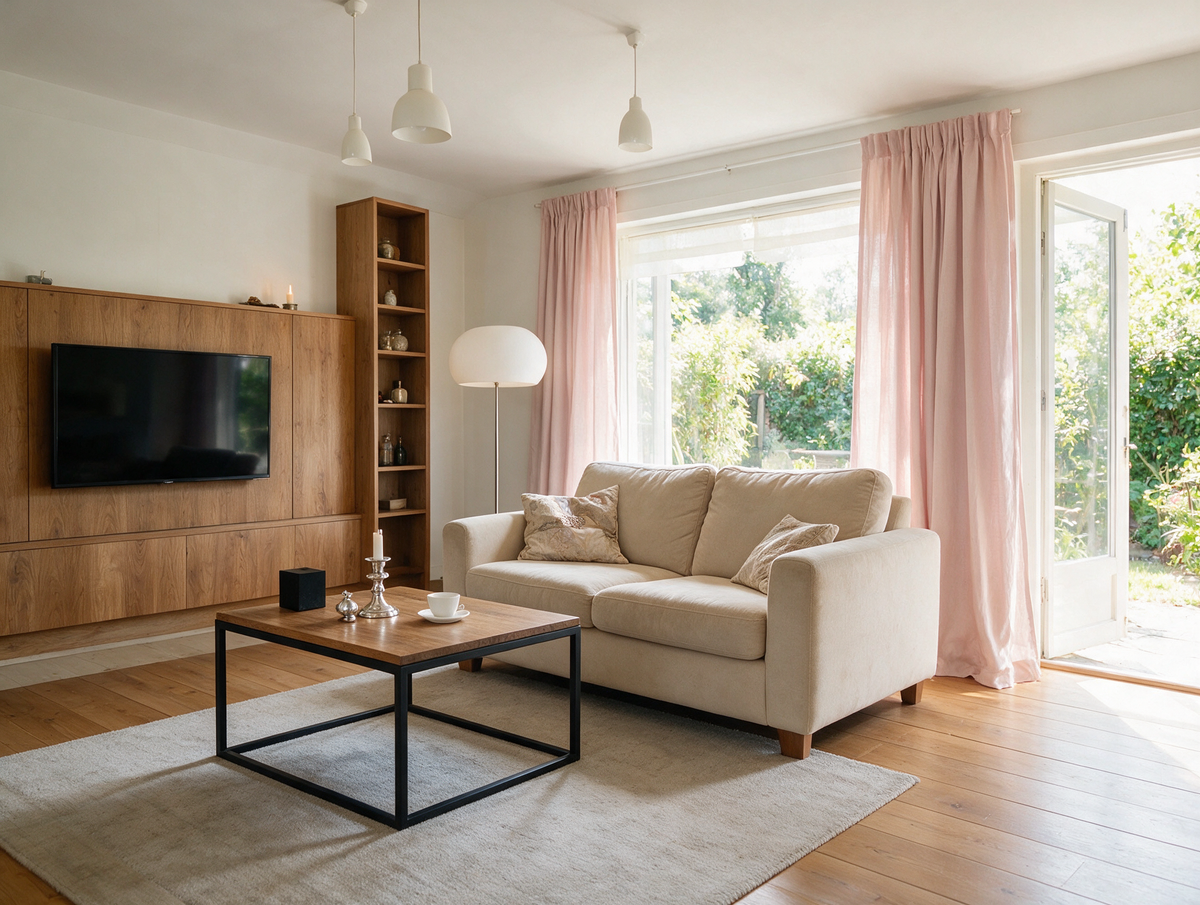
Loveseat - What Is It, Who Is It For and How to Choose the Right One?
A loveseat is one of those pieces of furniture that can completely change how a room works. It is smaller than a classic sofa, more generous than a single armchair and often easier to place in compact interiors. A loveseat can create a cosy sitting area in a small living room, soften a bedroom corner, complete a reading nook or work as an additional seat next to a larger sofa. Its strength lies in proportion: it gives you the feeling of a sofa without taking over the whole room.
Read moreabout Loveseat - What Is It, Who Is It For and How to Choose the Right One?
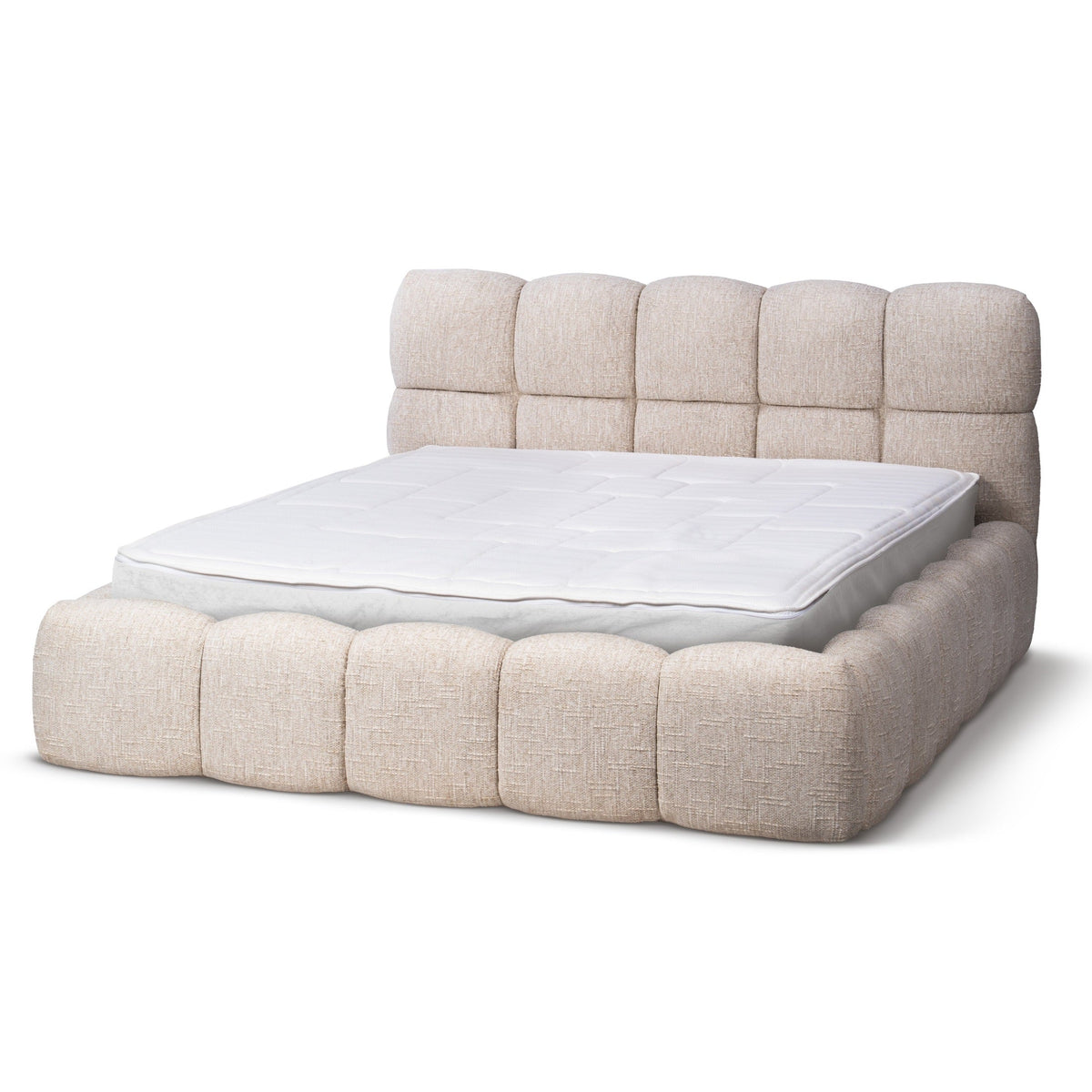
EU vs UK Bed Sizes – Will UK Bedding Fit a European Bed?
European beds are 200 cm long, UK beds 191 or 198 cm. A simple EU vs UK bed size table in cm – and what it means for your mattress and fitted sheets.
Read moreabout EU vs UK Bed Sizes – Will UK Bedding Fit a European Bed?
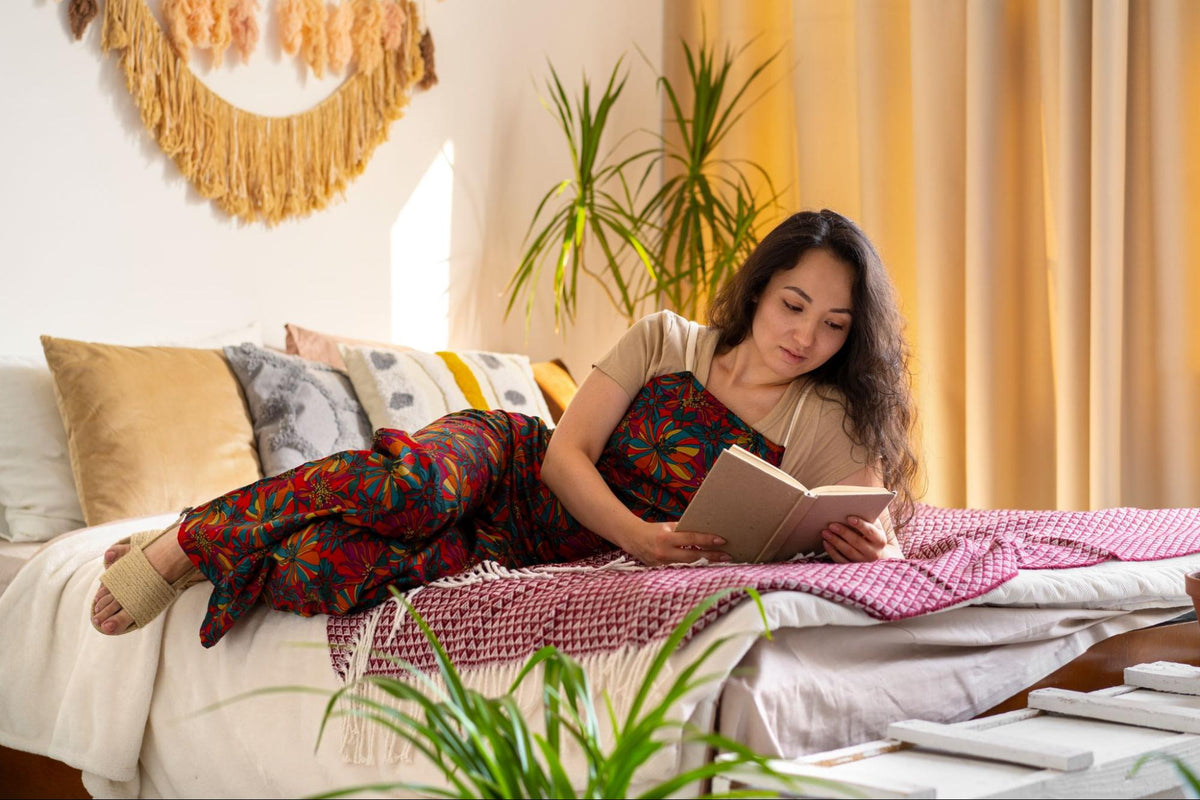
Autumn colors at home – shades that bring peace and warmth
Do you remember autumn from your childhood, when the leaves changed color like a kaleidoscope, and your mom would pull out the pumpkin-colored sweater she'd worn since college? Or those evenings in front of the TV while a storm raged outside, and the lamplight in the house gave everything a warm, amber hue? Those were the days when no one talked about "color palettes" or "color stories"—colors simply existed, as natural as breathing. Today, when we can choose from 50 shades of gray (and no, I'm not talking about THAT book), we sometimes lose track of what truly makes a home feel cozy. At Pillovely, we believe that autumn colors aren't a trend—they're a return to what makes us feel safe. Because "You are someone"—someone who deserves a space filled with colors that snuggle like a grandma's blanket.
Read moreabout Autumn colors at home – shades that bring peace and warmth



Share:
Relaxation zone in the garden or on the terrace - furniture that helps
The most common interior design mistakes and how to avoid them