


- by Daniel Pawlik
Wall unit – what is it and which models fit into modern living rooms?
- by Daniel Pawlik
The living room wall unit has been the focal point of many living rooms for decades. While it used to be known as a bulky wall cabinet with a display cabinet, glass sliding doors, and a corner section for family silverware, the term has long since evolved. Today, a living room wall unit is no longer a rigid furniture system, but a flexible composition of individual elements – sometimes purist, sometimes playful, but always personal. Perhaps you still remember your parents' dark wall unit with records, photo albums, and the living room clock in the center. Exactly this feeling of centrality and security lives on today, just in a modern, lighter form. In this guide, we show what makes a living room wall unit and what really matters when buying one.
A living room wall unit, in the classical sense, is a coherent furniture composition that combines several functions in one piece: storage space, display area, TV stand, and often lighting. It is the visual center of the living room – and thus one of the most important pieces of furniture in the room.
Today, there are essentially three variations:
Classic wall unit – a continuous, often very wide furniture combination with cabinets, a display cabinet, a TV element, and shelves
Modular living room wall unit – flexible individual elements that can be combined as desired, typically consisting of a TV cabinet, sideboard, and shelf
Media wall – a sleek, often floating construction focused on TV and multimedia
While the classic wall unit is currently experiencing a comeback, modular solutions dominate many living room wall unit concepts. The advantage: you can design your living room wall unit exactly as it suits your space, your style, and your life. Instead of a rigid set, an individual composition is created – from a TV cabinet, a chest of drawers, and perhaps a shelf as a third element.
A brief overview of what a modern living room wall unit typically includes:
TV element (low or wall-mounted)
Storage space (drawers, doors, closed compartments)
Open shelves for books, plants, and mementos
Optional display cabinet or showcase for special decorations
Lighting, ideally integrated LED
When looking for a living room wall unit, you should also pay attention to the proportions. A wall unit only looks harmonious if its height and width match the wall. A composition that is too small will be lost in a large room, while a wall that is too massive will overpower a small living room. As a rule of thumb: the wall unit should occupy about two-thirds of the wall width and leave at least 20 cm of space to the ceiling so that the room can "breathe."

A modern interpretation of a living room wall unit foregoes bulk and instead focuses on lightness, clean lines, and natural materials. Instead of a single, heavy front, a play of volume, height, and depth is created.
The most important current styles:
Japandi – a blend of Japanese minimalism and Scandinavian warmth. Light wood, rounded edges, calm forms.
Modern Organic – gentle curves, natural textures, muted colors.
Soft Loft – oak wood with fine grooves, black accents, clear geometry.
Minimalism – handleless fronts, push-to-open mechanism, monochrome surfaces.
Glamour – high-gloss fronts, subtle gold accents, elegant look.
In terms of materials, wood looks are particularly convincing: oak in various shades, warm caramel, soft cashmere beige. A modern living room wall unit gladly combines these natural surfaces with MDF fronts, which are refined with fine grooves or a subtle 3D structure.
Two poles dominate in terms of colors today:
White and light-colored living room wall unit (cream, sand, cashmere) – ideal for small rooms, light-reflecting and soothing
Black and dark-colored living room wall unit (anthracite, dark oak, deep black) – elegant, striking, and particularly effective as a contrast to light walls
If you like the modern look, you can, for example, choose a slim TV cabinet Senra with grooved fronts or the TV cabinet Kiyro in warm caramel oak and combine it with a matching shelf. The mix of closed and open elements creates exactly the balance that characterizes a modern living room wall unit.
A living room wall unit with a TV is the most common concept in German-speaking living rooms. However, the TV as a dark rectangle can quickly dominate the entire wall. The trick is to integrate it into the furniture instead of letting it stand alone.
Three proven arrangements:
TV on a low lowboard – the classic and most popular concept. The TV stands on a slim sideboard, leaving the wall space above it free.
Wall-mounted TV, sideboard underneath – modern and airy, ideal for small rooms
TV as part of a composition – flanked by shelves on the sides or complemented by an open shelf above the sideboard
Practical tips for integration:
Observe viewing height – the center of the screen should be approximately at eye level when seated (approx. 100–110 cm from the floor).
Plan cable management – a TV cabinet with cable ducts saves a lot of frustration later.
Maintain distance – leave at least 10–15 cm between the TV and the sideboard, otherwise it will look cramped.
Integrate lighting – indirect light behind the TV reduces eye strain and looks elegant.
Plan storage space specifically – closed doors for technology, open compartments for personal items.
Models such as the TV cabinet Viola 187x52 with ribbed fronts or the larger TV cabinet Muzzi 195x51 are typical representatives of modern living room wall unit components. Both offer enough storage space without visually overloading the room and can be easily extended with other furniture to form a complete composition.
One last thought: a well-composed living room wall unit with a TV not only tells the story of your multimedia setup but also your own. Deliberately add memories, books, and favorite items – turning a piece of furniture into a small family archive that enables new conversations every evening.
If you want to buy a living room wall unit, you should ask yourself a few practical questions before clicking "order". A living room wall unit is not a cushion; it is a piece of furniture for many years – and mistakes here are expensive.
Step 1: Take measurements
Measure wall width, wall height, and wall depth accurately
Mark sockets, radiators, and doors
Calculate seating distance to the TV (recommended: 2.5–3× the screen diagonal)
Allow space for doors and drawer extension
Step 2: Define functions
How much storage space do you really need?
Should technology (receiver, console) be hidden?
How many open shelves do you want for books and decor?
Do you need a display cabinet or a showcase for special decorations?
Step 3: Check quality
Sturdy support board (at least 18 mm)
Smooth-running drawers with soft-close
Push-to-open or high-quality handles
Clean edges and precisely fitting fronts
ABS edges instead of adhesive films
Step 4: Choose style and color
White living room wall unit for bright, friendly rooms
Black living room wall unit for striking, elegant accents
Wood decors for warmth and naturalness
High gloss for glamour, matt for modern tranquility
The advantages of a modular solution are obvious: you only pay for the elements you really need and can let your living room wall unit grow as your life changes. If you start today with a TV cabinet and a chest of drawers, you can always add a shelf later.
Trends for living room wall units in 2026:
Natural materials like oiled oak, walnut, and solid wood fronts
Bold colors – deep greens, warm caramel, and muted earth tones are replacing pure white
Mix of open and closed – instead of completely closed fronts, one or two open compartments are planned for personal items
Floating constructions – lowboards and sideboards with legs make the room appear airier
Integrated LED lighting – indirect light behind the TV or under the shelves creates atmosphere
A practical tip from our experience: When planning, start with the TV cabinet as the anchor piece, because its position and height are usually the most fixed. All other elements can then be grouped around it. This creates a composition that is not only functional but also visually appealing.

What is the difference between a living room wall unit and a wall cabinet?
Classically, a wall cabinet was a firmly connected furniture system, while a modern living room wall unit often consists of individual, combinable modules. Today, both terms are largely used synonymously.
How wide should a living room wall unit be?
That depends on the room. In small living rooms, 180–220 cm is often sufficient, in larger rooms, 280–360 cm is common. It is important that the living room wall unit matches the wall and the sofa.
Which color is most popular for living room wall units?
Currently, light wood tones and muted natural colors are particularly in demand. However, white and black living room wall units remain classic favorites because they match almost any decor.
How do I integrate a large TV into a living room wall unit?
Choose a lowboard with sufficient depth and stability, plan for cable passages, and leave enough space between the TV and the wall for ventilation. Indirect lighting helps visually.
Is a modular living room wall unit worth it?
Yes, precisely because it can grow with your needs. You select the elements individually and can retrofit or reconfigure them later – ideal for rental apartments and for people who want to design their home step by step.
How do I properly care for my living room wall unit?
Wipe surfaces regularly with a slightly damp cloth, avoid aggressive cleaners, and treat wood surfaces with special care products depending on the sealant. Glass fronts require a microfiber cloth and a mild glass cleaner.
If you are looking for a modern living room wall unit with character, take a look at our selection at Pillovely. In the categories TV cabinets, chests of drawers, and cabinets and chests of drawers you will find modular elements with which you can design your own composition – personal, timeless, and exactly as you like it. Because in the end, a living room wall unit is more than just a piece of furniture: it is the stage for all the small stories that make up your home.
If you liked this text, be sure to check out our other inspirations:
Living Room Rug – What Size, Shape, and Color Best Suits Your Sofa?
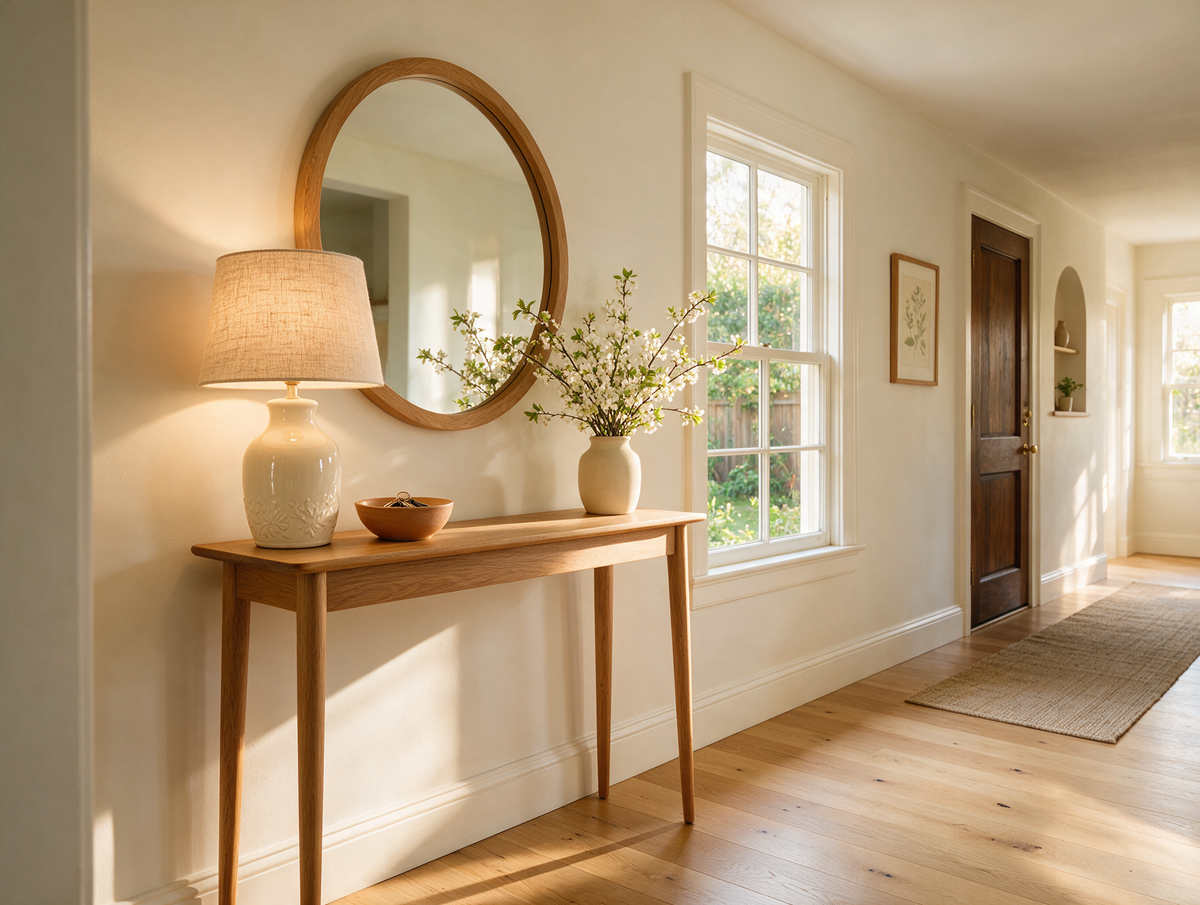
Console Table Ideas – Where to Use One and How to Style It
Do you remember coming home from school and dropping everything on the little table by the front door? Keys in the china dish, letters propped against the lamp, a vase of whatever was flowering in the garden and the old telephone with its curly cord. It was the first thing you saw when you walked in, and somehow it always said: you are home.
Read moreabout Console Table Ideas – Where to Use One and How to Style It
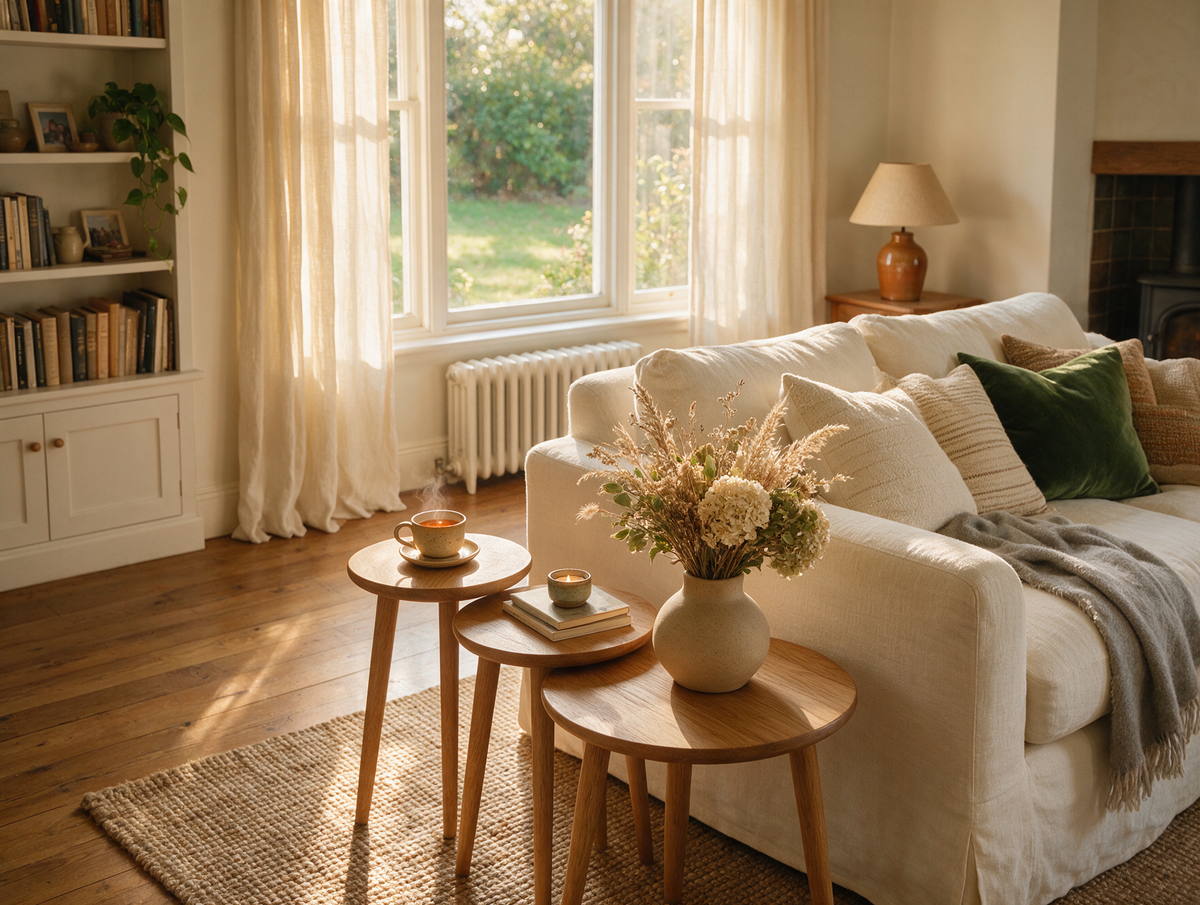
Nest of Tables – What Are They, Who Are They For and How to Style Them
Do you remember Sunday visits to your nan's, when the nest of tables came out from beside the armchair? Three little tables, each tucked neatly under the next, were pulled apart and handed round – one for the teapot, one for the biscuit tin and one for Grandad's crossword – and then slid back together the moment everyone went home.
Read moreabout Nest of Tables – What Are They, Who Are They For and How to Style Them
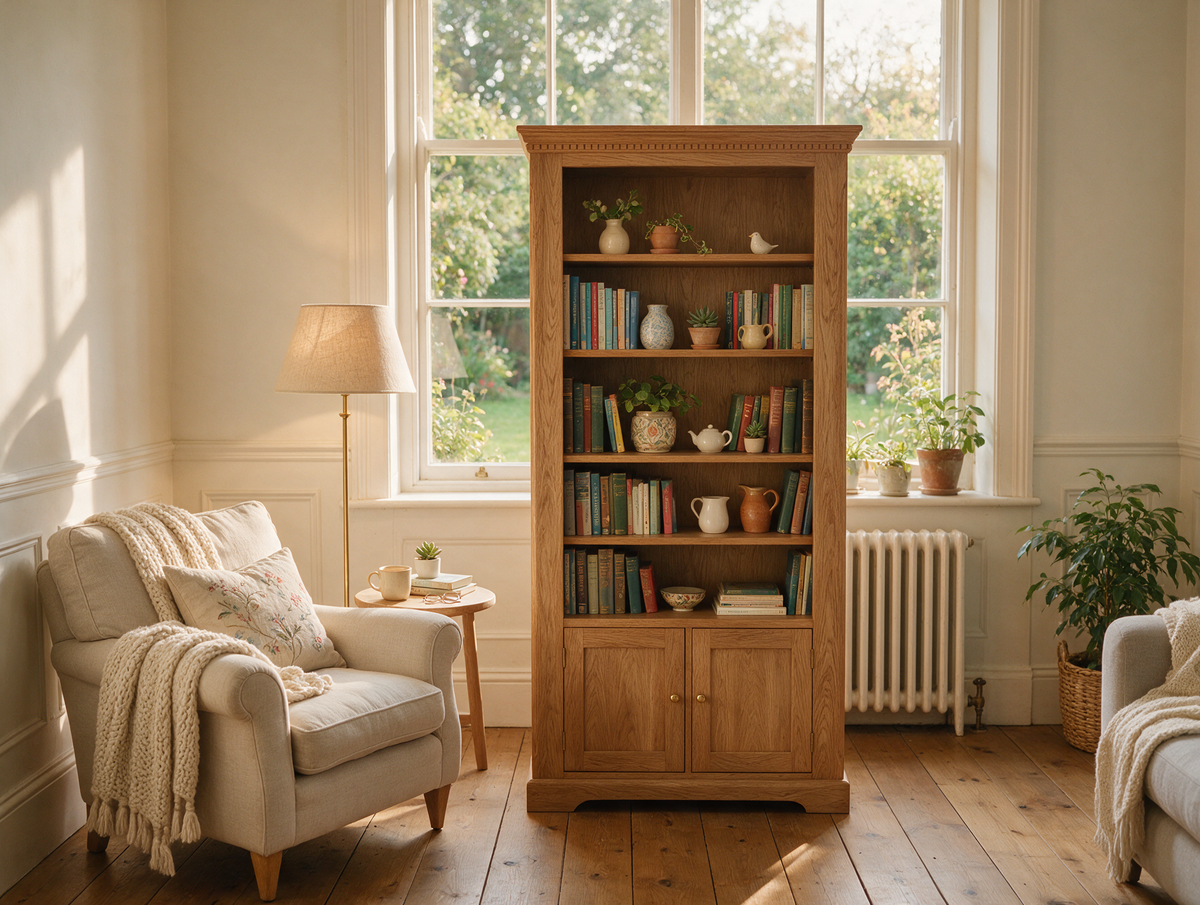
Bookcase Ideas – How to Choose and Style a Bookshelf for Your Living Room
Do you remember the bookcase in your grandparents' front room? Rows of faded paperbacks, a set of encyclopaedias nobody ever finished, holiday souvenirs, a framed school photo and that one heavy atlas you pulled out on rainy afternoons. It was never styled for anyone – and yet it told the whole story of the family.
Read moreabout Bookcase Ideas – How to Choose and Style a Bookshelf for Your Living Room



Share:
Living room rug - What size, shape, and color best suits your sofa?
Bedroom decor – Ideas and tips for a modern and relaxing sleep atmosphere