


- by Damian Jerzy Zadora
A Living Room to Dream About – How to Create a Space for Conversation
- by Damian Jerzy Zadora
Do you remember the living room from "Foster Family" where the whole gang gathered on the couch? Or the legendary sofa from "Friends" where countless conversations took place? These pieces of furniture are more than just space fillers – they are stages where our life stories unfold. At Pillovely, we believe that every living room can become a charming meeting place where generations connect to the sound of their favorite music, and the furniture becomes a silent witness to our memories.
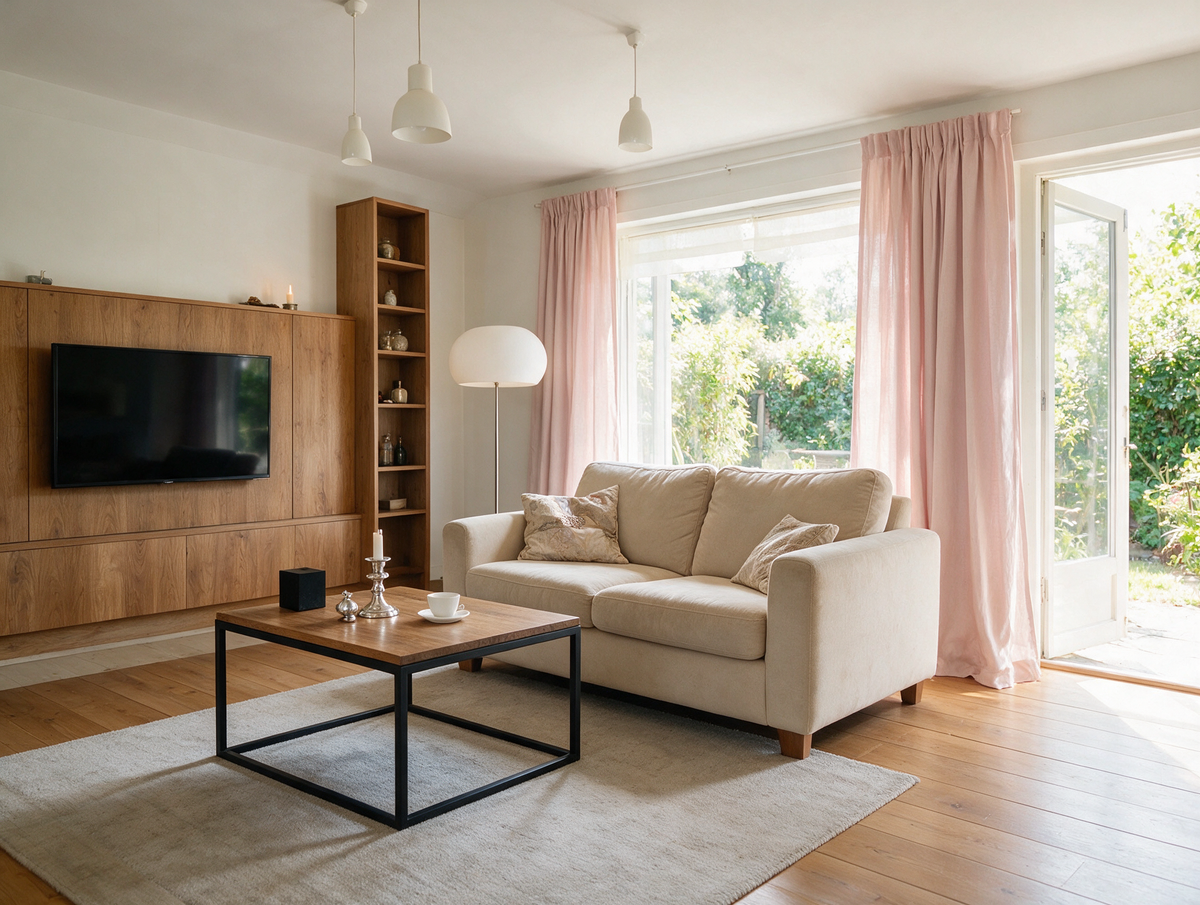
Creating a space for conversation is a balancing act between proximity and personal comfort. The ideal distance between a sofa and armchairs is 1.5 to 2.5 meters – close enough not to have to shout like Krzysztof Krawczyk at a concert in Opole, but far enough for everyone to have their own space.
The best layouts resemble a natural circle – like a campfire around which our ancestors told stories. Arranging furniture at a 90-135-degree angle to each other creates an open, inviting atmosphere. It's like in Grandma's old communist-era apartment, where the armchairs faced each other and not the TV.
A large sofa facing two armchairs, with a coffee table in the middle. A classic seen in countless films – from "Sexmission" to "Boys Don’t Cry". Remember the scene from "Alternative 4" where Bożena Dykiel sits in an armchair opposite a sofa full of guests? That's how the magic works – everyone has their own place, but everyone is part of the same story.
A three-seater sofa and two armchairs can accommodate five people. For parties, a stool can be added. The optimal sofa size is 180-220 cm, and the armchairs can vary – one wider for a relaxed evening with beer and a game, the other compact for someone who prefers to curl up with a book. A coffee table should ideally be placed 40-50 cm from the sofa – close enough to grab a snack during a "The Witcher" marathon, but far enough to stretch your legs.

A corner sofa or an L-shaped sofa with one or two armchairs in a semicircle. This arrangement is reminiscent of Sunday dinners at Mom's, when the whole family gathers for dessert and coffee – Grandma tells stories about her childhood in her favorite armchair, children run around between the furniture, and "Szansa na Sukces" plays in the background.
The centerpiece is a coffee table – like the kitchen table in our grandparents' house, around which life revolved. Ideally, it should be oval or round (80-120 cm in diameter), as this avoids sharp angles and allows everyone to sit at the same distance from the center. A corner sofa should comfortably seat 4-5 people, and additional armchairs can be placed at a 45-degree angle to the main sofa.
Modular sofas are revolutionizing living room design – like LEGO bricks for adults. They consist of individual components: corner sofas, middle sections, chaises longues, poufs, and ottomans, which can be combined as desired. Today a classic three-seater sofa? Tomorrow perhaps a corner sofa with a chaise longue? Next week even two separate sofas facing each other? Anything is possible!
It's the perfect solution for families on the go. If the kids are having a sleepover, the modules can be spread out on the floor like giant cushions. If guests come over to play, we set up an amphitheater around the TV. And if you want a private conversation, a single module at the coffee table is enough.
The best modular sofas have a uniform seat height (approx. 45 cm) and backrest, which allows for a harmonious appearance in various configurations. The modules are connected with special clamps – sturdier than a piece of tape, safer than election promises. The fabrics should be easy to clean, because with so much mobility, stains are as inevitable as traffic jams in Warsaw.

An asymmetrical arrangement of different furniture. It is reminiscent of the Warsaw cafés of the 1960s, where poets, musicians and ordinary people gathered at one table. A vintage wing chair can stand next to a modern modular sofa or an industrial bar stool with a plush pouf from the 1970s.
The variety of furniture emphasizes the individuality of each household member – because at Pillovely, we believe: "Everyone is someone." Dad can have his leather armchair, as if it came from the office of a communist company boss, Mom a modern bottle-green sofa, and Daughter a pink pouf, as if from Maryla Rodowicz's room. It's chaos with its own logic – like a jazz improvisation, where each instrument contributes its part, but together harmony emerges.
Every piece of furniture has its own soul and story. It could be an armchair from your grandfather's time with Red Guitars or a new sofa in a color inspired by the cover of the Behemoth album "Katharsis." It's important that the space speaks volumes about you.
Add elements that evoke memories: checkered cushions reminiscent of a communist-era holiday resort, a blanket reminiscent of Grandma's attic, or a modern lamp that contrasts with a vintage armchair. It's this mix of nostalgia and modernity that creates a true home.

A coffee table is like a theatrical stage – everything happens around it. It should be low enough not to obstruct eye contact (45–50 cm) and within reach of every seat. This is where the cup of tea lands during late-night conversations, records await their playback, and board games that connect generations – from the legendary "Chinese Checkers" to the modern "Settlers of Catan."
The size of the table is crucial – if it's too small, it looks like a lost island in a sea of carpets; if it's too big, it dominates the room like Chopin's piano in an M-2 apartment. The ideal width is two-thirds of the sofa's length and should allow everyone to reach the center without acrobatic feats. The material also plays a role – wood adds warmth, as in the house from "Czterdziestolatka," glass visually enlarges the room, as in the modern lofts in "Colors of Happiness," and metal gives the room an industrial flair, straight from Krakow's Kazimierz district.
On the coffee table, the stories of generations intersect – next to a tablet with the latest Netflix series lies Grandma's crocheted doily, a volume of Szymborska's poetry next to the PlayStation controller, and a modern designer vase next to a crystal ashtray reminiscent of a time when smoking in living rooms was still guilt-free. The coffee table is a democratic space where everyone can make their own contribution – like a shared playlist to which everyone adds their own song.
Lighting is the director of every conversation. The main light should be warm and diffused – like in old Polish films, where the softness of the light created the intimacy of the scene. Imagine the atmosphere of "Nights and Days" or "The Promised Land" – it's this magic of semi-darkness that adds depth to every face and makes conversations more sincere.
Supplement reading armchairs with spotlights – ideally with adjustable arms, like those used in communist-era design offices, but with a modern touch. Mood LEDs behind the sofa create a halo effect, as if the furniture were floating – a trick known from Warsaw's best theaters. Candles also have their own power – placed on a table or windowsill, they provide the flickering warmth reminiscent of Grandma's fireplace.
Remember: good lighting makes everyone look like a 70s movie star – a bit of Beata Tyszkiewicz, a bit of Daniel Olbrychski. Avoid harsh overhead lighting that makes you look older and emphasizes fatigue. Instead, opt for multiple light sources at different heights – a floor lamp, wall lights, a table lamp. It's like an orchestra – each light plays its role, and together they create a symphony of mood.

Sound is an often-overlooked design element. Upholstered furniture, carpets, and curtains absorb reverberation, creating cozy acoustics – like in old student clubs where Breakout played and every word from Tadeusz Nalepa could be heard across the crowd. This is crucial for conversations to flow unimpeded and for music – from Niemen to Taco Hemingway – to sound optimal.
A thick carpet not only warms the feet but also acts as a natural sound absorber – absorbing up to 30% of unwanted sound. Curtains, especially velvet or thick cotton, act like the acoustic panels seen on Polish Radio 3. A bookshelf full of books and CDs? It's not just decorative but also an excellent diffuser that disperses sound waves. Sofa cushions also play a role – the softer they are, the better the acoustic comfort.
Because as we say at Pillovely: "Nothing connects generations like music." And to connect fans of "Czerwone Gitary" with fans of Dawid Podsiadło, you need to create a space where every sound finds its place – be it the nostalgic rustle of vinyl or crystal-clear streaming.
Diverse seating options are key to successful meetings. A soft sofa for cuddling buddies – perfect for evening "The Ranch" screenings or a "The Witcher" marathon where you can lounge with a bowl of popcorn like at a home film festival. A firmer armchair for the elegant uncle who values a straight back and a good vantage point – like Bogumił Kobiela in "The Cruise," but with a homely touch. An ottoman for the spontaneous teenager who uses it as a base – sometimes sitting, sometimes lying, sometimes as a footrest during online battles.
Or maybe an oriental-style ottoman for the aunt who comes back from yoga and now tells everyone about chakras? Or an industrial bar stool for the hipster brother who stops by with craft beer and Młynarski records? Even a simple stool can become a throne for the grandfather who tells stories of the Warsaw Uprising. Everyone should find their own place – because "You are valuable" and deserve comfort. These are not just pieces of furniture, but personal spaces that say: Here you can be yourself, whether you prefer cult or Chopin, "Czterech pancerni" or "Stranger Things."

Light, adjustable armchairs, portable seat cushions, and extendable tables – with these elements, your living room can be rearranged like a set. Sometimes you need an intimate space for a one-on-one conversation, sometimes an open stage for a house party with a playlist of the greatest Polish hits – from Perfect's "Autobiografia" to Dawid Podsiadło's "Małomiasteczkowy."
Imagine: Friday night with a movie – you move the armchairs closer to the TV, creating a home cinema. Saturday party – you push the furniture to the walls and the center becomes a dance floor like in "Night and Days." Sunday afternoon with a book – a spot by the window, a pouf under your feet, a tea table within reach. It's like a transformer in a student apartment, where the couch becomes a bed, a sofa, and sometimes a table for a beer.
Wheels on armchairs are not a sign of stinginess, but of practicality. Foldable side tables are reminiscent of clever solutions from the communist era – hidden behind the sofa and waiting for their use. A modular sofa that can be reconfigured like Lego bricks also allows for new setups. Because life is dynamic, and the living room should keep up.
The current trend in living room design is "new coziness" – a return to softness and comfort, but with a modern touch. The curved lines of the furniture are reminiscent of the organic forms of the 1970s, but are made from innovative, environmentally friendly materials. It's like a remix of a classic hit – a familiar melody reinterpreted.
The colors of the year are warm earthy tones – terracotta, dark green, and caramel. They resemble the color palettes from Kieślowski's Polish films, but are combined with bold accents – electric blue and neon pink, like the covers of contemporary Polish albums.
However, the biggest trend is the "conversation pit 2.0" – sunken conversation areas inspired by the 1960s and 1970s. If a floor renovation is not possible, low sofas and high carpets can create an optical "pit." It's like a modern interpretation of Grandma's living room, where the carpet was sacred and hours of conversations were held.
"Dopamine decor" is also trending – bold patterns and colors that evoke joy. But at Pillovely, we interpret it in our own way: it could be a houndstooth cushion reminiscent of the Pewex era, a canary yellow armchair, or wallpaper inspired by the cover of Republika's "Strange Days" newspaper. Because true joy comes from memories.
The "Slow Living" trend perfectly fits our philosophy – furniture for years to come, not just for a season. Renovating old armchairs and breathing new life into them. This is ecology combined with history – each piece of furniture tells its own story, like the characters in Wajda's films.
Technology is also making its way into living rooms, but in a discreet way – furniture with integrated USB ports, tables with wireless chargers. All of this is to ensure that technology supports meetings, not replaces them. Because the best conversations still happen in person, over a cup of tea and the sounds of vinyl.

A dream living room doesn't need expensive furniture or a perfect setup straight out of a catalog. It's a space that reflects your personality and invites you to share your stories. At Pillovely, we believe that everyone deserves such a place – as cozy as childhood, as brave as youth, and as wise as maturity.
Because a truly dream living room is one where we write new stories with our favorite music and surrounded by furniture full of memories. Where every sofa, every armchair, every cushion says: Here you are home, here you can be completely yourself. And that's what it's all about – the love for the warmth of home.
Loveseat - What Is It, Who Is It For and How to Choose the Right One?
A loveseat is one of those pieces of furniture that can completely change how a room works. It is smaller than a classic sofa, more generous than a single armchair and often easier to place in compact interiors. A loveseat can create a cosy sitting area in a small living room, soften a bedroom corner, complete a reading nook or work as an additional seat next to a larger sofa. Its strength lies in proportion: it gives you the feeling of a sofa without taking over the whole room.
Read moreabout Loveseat - What Is It, Who Is It For and How to Choose the Right One?
EU vs UK Bed Sizes – Will UK Bedding Fit a European Bed?
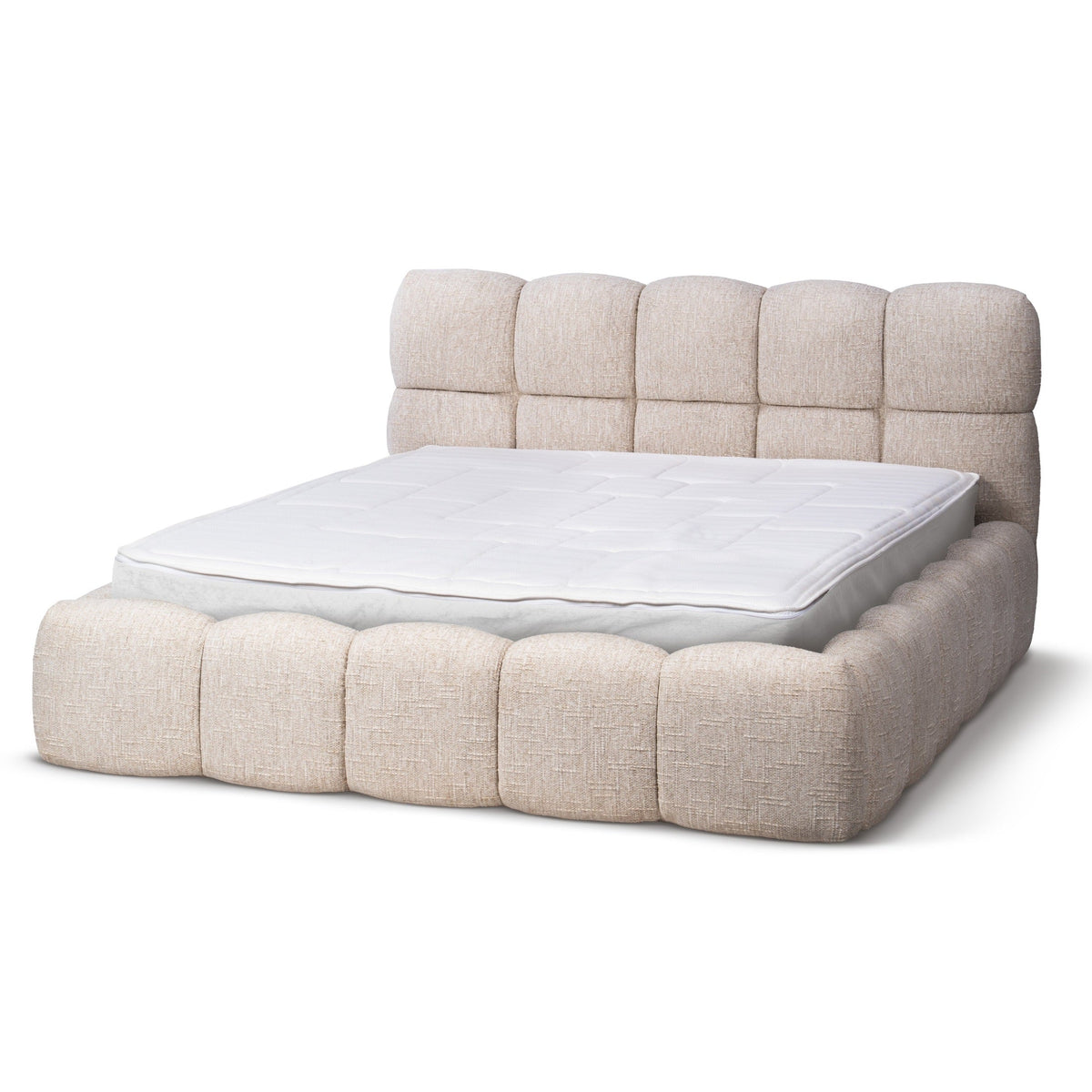
European beds are 200 cm long, UK beds 191 or 198 cm. A simple EU vs UK bed size table in cm – and what it means for your mattress and fitted sheets.
Read moreabout EU vs UK Bed Sizes – Will UK Bedding Fit a European Bed?
Autumn colors at home – shades that bring peace and warmth
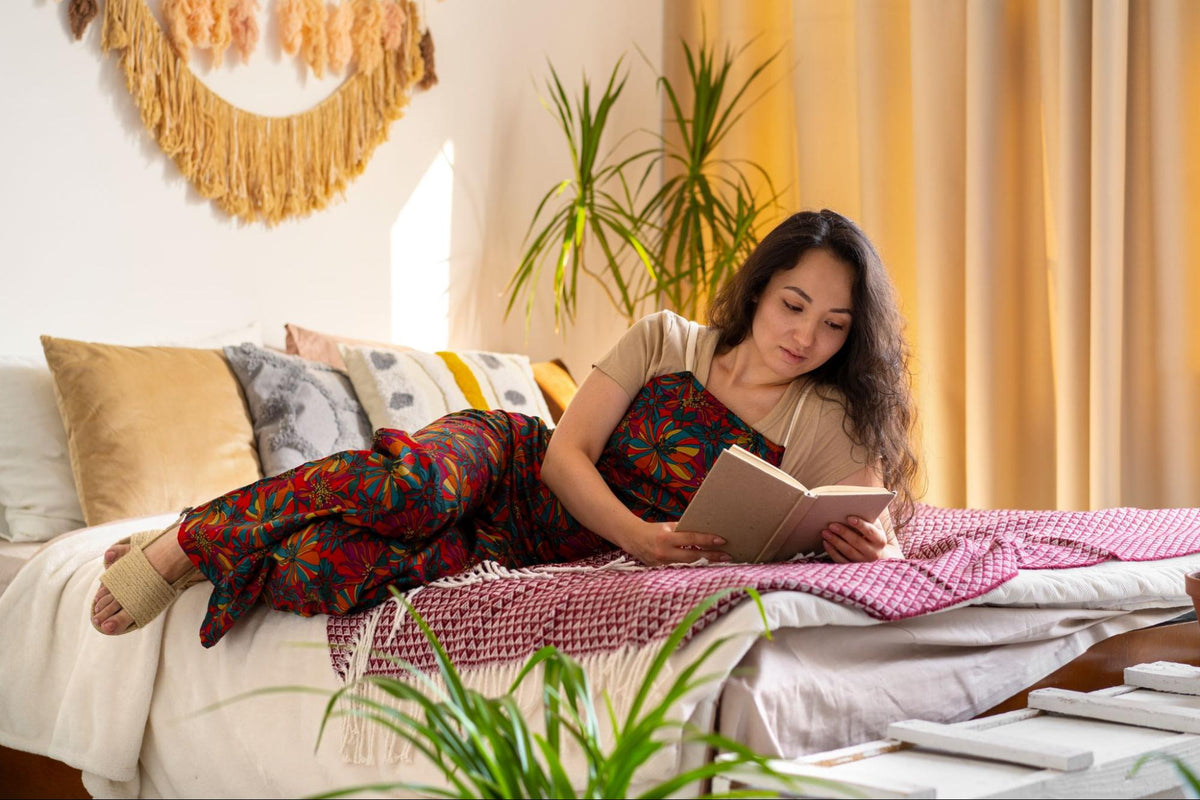
Do you remember autumn from your childhood, when the leaves changed color like a kaleidoscope, and your mom would pull out the pumpkin-colored sweater she'd worn since college? Or those evenings in front of the TV while a storm raged outside, and the lamplight in the house gave everything a warm, amber hue? Those were the days when no one talked about "color palettes" or "color stories"—colors simply existed, as natural as breathing. Today, when we can choose from 50 shades of gray (and no, I'm not talking about THAT book), we sometimes lose track of what truly makes a home feel cozy. At Pillovely, we believe that autumn colors aren't a trend—they're a return to what makes us feel safe. Because "You are someone"—someone who deserves a space filled with colors that snuggle like a grandma's blanket.
Read moreabout Autumn colors at home – shades that bring peace and warmth



Share:
Children's Room – What furniture and accessories create a safe and cozy environment
Autumnal Colours in the Home – Hues That Bring Peace and Warmth