


- by Daniel Pawlik
Narrow Hallway Ideas – How to Design a Small Hallway That Works
- by Daniel Pawlik
The hallway is the first sentence of your home. Before anyone reaches the living room, they see this narrow corridor – shoes against the wall, coats hanging from a hook, keys lost somewhere. Sound familiar? A small, narrow hallway is one of the most underrated spaces in a home, yet it is exactly where you create the first impression – warm, organised and truly yours. It deserves the same care as the living room or bedroom, because everyone who comes into your home starts here.
The entrance is a transition zone between the outside world and home. That is why it needs to work smoothly: shoes have their place, coats go on a hook and keys always hang where they should. Small entrance hall ideas have to combine minimum space with maximum function – without feeling cramped the moment you walk in.
The essentials of a well-designed entrance:
In a small, narrow hallway every centimetre of depth counts. Shallower furniture – up to about 35 cm – beats freestanding wardrobes because it does not get in the way and does not feel like a wall right in front of you. Narrow hallway ideas are above all about flow, not about how many things you can squeeze in.

When a hallway is narrower than about 120–130 cm, you start playing with perception. Narrow hallway design is largely about how the eye reads space – and the good news is that a few simple tricks make a real difference.
Colours and materials. Light walls – white, ecru, pale grey, soft beige – reflect light and visually push the walls apart. It is no coincidence that designers start a narrow hallway by lightening the walls. If you want colour, put it on the end wall (perpendicular to the direction of travel), where it draws the eye instead of emphasising the narrowness.
Light. Daylight is priceless – if the hallway has a window, do not cover it. Where daylight is lacking, install several light points along the ceiling instead of one central light. Recessed downlights take up no space and light the whole length evenly. Small hallways with layered lighting always look better than those with one weak bulb.
Mirrors and reflective surfaces. Mirrored wardrobe doors or a large mirror on the wall add depth – the eye does not hit a barrier but "enters" the reflection. It is one of the most effective designer tricks and works on any budget, especially when the mirror is floor-to-ceiling or covers the full width of a wall.
Flooring. Tiles or boards laid diagonally make a space feel wider. If new flooring is too big a project, a rug laid at an angle has a surprisingly visible effect without any building work.
A long, narrow hallway is a different problem from a small entrance. The challenge is proportion – the space feels like a tunnel and everyone moves in one line. Long narrow hallway ideas need visual breaks and zones that interrupt the monotony.
How to break up a long hallway:
Furniture in a long hallway. Plan two zones: the entrance zone (shoes, coats, keys) and a through zone with a low sideboard or decorative shelf. The Meva sideboard 160x85 suits the second zone perfectly – its horizontal silhouette does not block the space, and its wide top invites a lamp or decorations that give the hallway character. Another idea for a long hallway is to place all the furniture on one side only – a clear wall opposite makes moving around far more comfortable.
Flats have their limitations – the hallway is usually dark, with no window and doors opening in several directions. But it has one advantage: it is predictable. Here, proven layouts really work, and one well-chosen piece of furniture can change everything.
A wardrobe is the best choice for a hallway in a flat. Sliding versions do not need space for doors to swing open, they close storage off completely and visually lengthen the wall. Pillovely has several models that suit this role:
If a wardrobe is not an option, combine wall hooks with a slim chest of drawers. The compact Bema sideboard 97x122 fits even a tight hallway, and its top becomes the natural place for a lamp, keys and the small things you put down every day. A small, narrow hallway can be not only tidy but full of character.
Low ceiling? Avoid tall, heavy pieces. Lower chests of drawers or half-height cabinets leave the upper part of the wall clear, which gives the whole space room to breathe.

What colour should I paint a narrow hallway?
Light colours – white, ecru, pale sage – make the space look bigger. For a bold accent, use it on the end wall, not on the long side walls. A dark colour on the end wall actually makes the "tunnel" look shorter.
Can I put a wardrobe in a narrow hallway?
Yes, as long as you keep at least 60–70 cm of walkway once it is in place. A good option is the Armelia wardrobe 97x194 – its compact 97 cm width does not dominate the space but gives real room for coats and shoes.
How do I stop a long narrow hallway looking like a tunnel?
Break it up visually: a runner, a gallery wall, zoned lighting and a plant as a focal point. Dividing the space into sections always looks more natural and homely.
Can a small hallway without a window look good?
Yes – the key is good artificial lighting (several warm light points) and mirrors. Light walls and furniture on legs create a sense of space even without daylight.
What furniture works in a narrow hallway in a flat?
Wall hooks, a wardrobe up to 60 cm deep or a slim chest of drawers up to 40 cm deep. Every piece should do at least two jobs – storage plus seating, hooks plus shelf, chest of drawers plus a display surface.
If you are designing your hallway from scratch or looking for the one piece that will make the biggest difference, browse wardrobes and walk-in closets and cabinets and chests of drawers at Pillovely. Every model lists its dimensions and interior layout, so you know exactly whether it will fit.
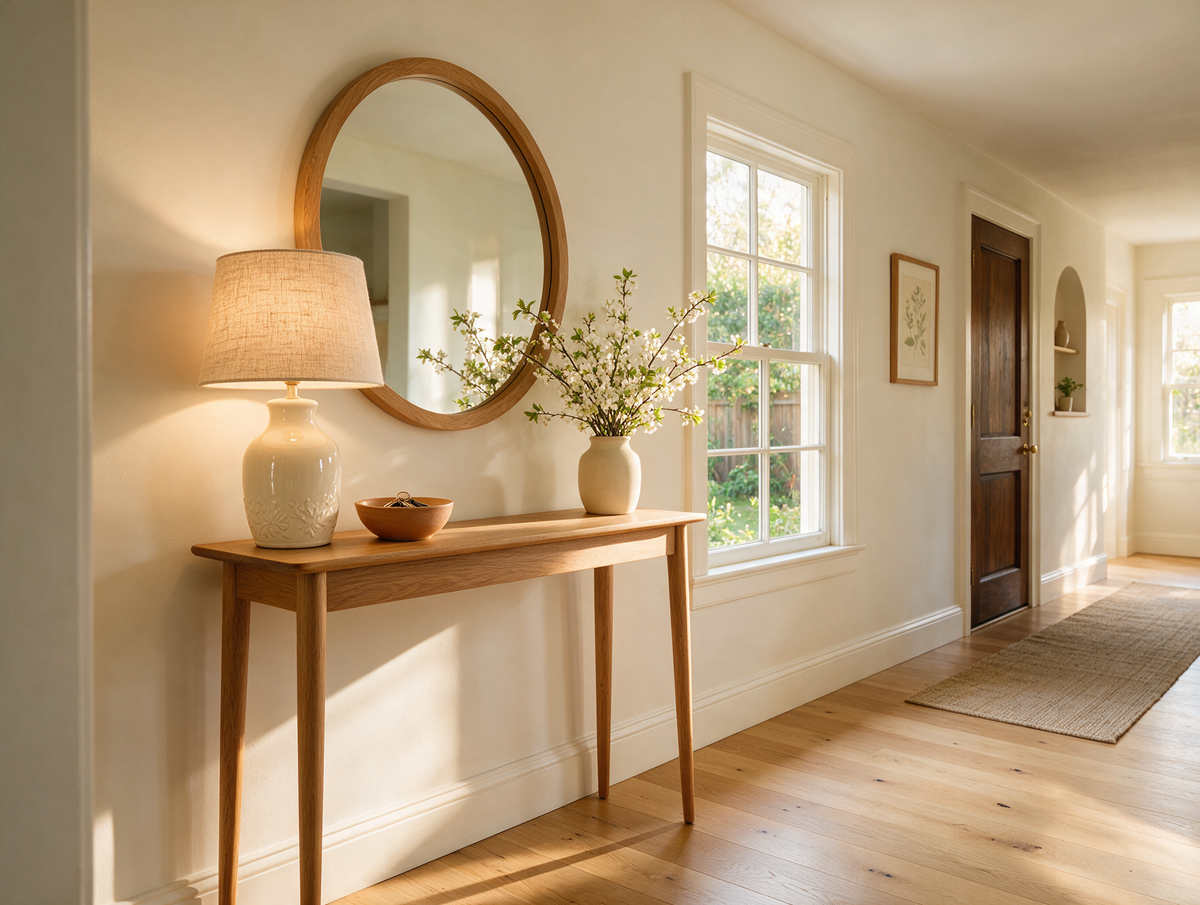
Console Table Ideas – Where to Use One and How to Style It
Do you remember coming home from school and dropping everything on the little table by the front door? Keys in the china dish, letters propped against the lamp, a vase of whatever was flowering in the garden and the old telephone with its curly cord. It was the first thing you saw when you walked in, and somehow it always said: you are home.
Read moreabout Console Table Ideas – Where to Use One and How to Style It
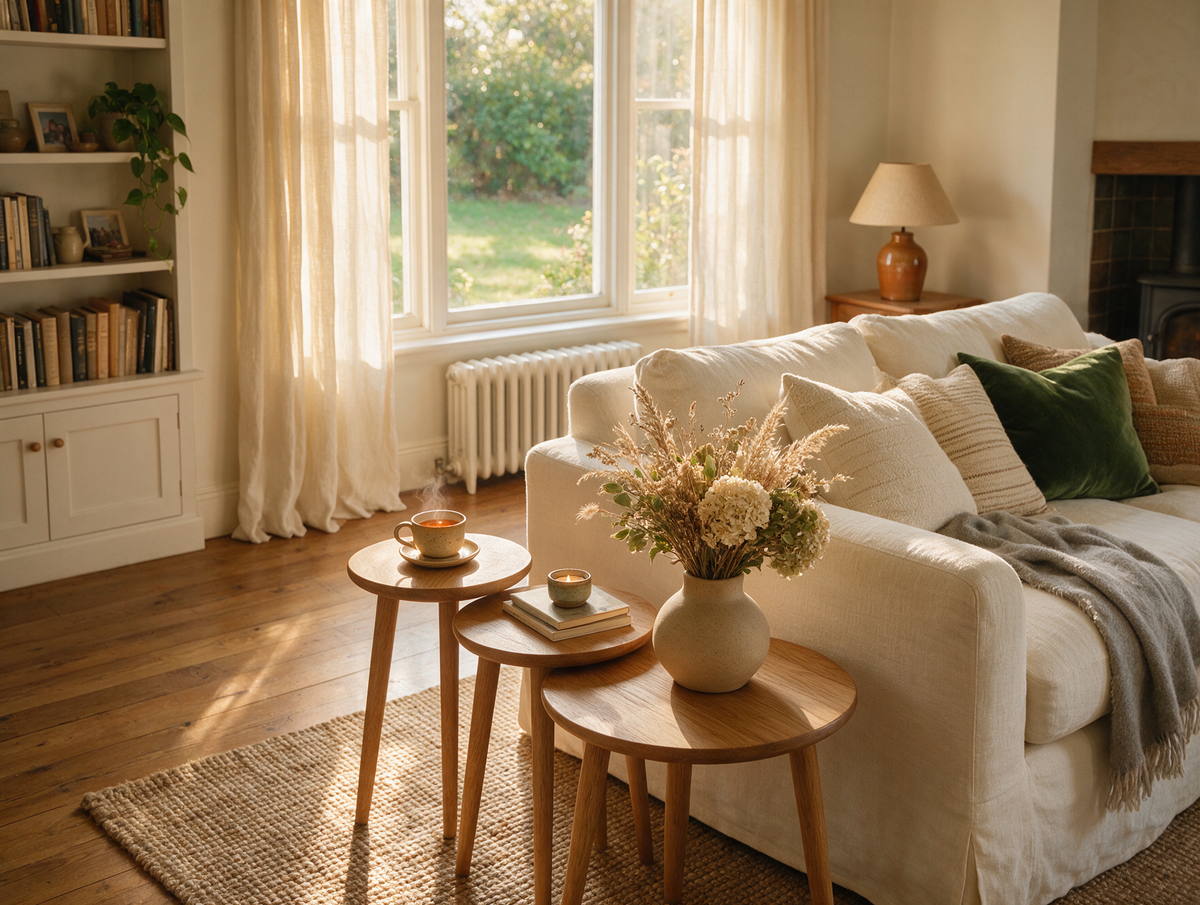
Nest of Tables – What Are They, Who Are They For and How to Style Them
Do you remember Sunday visits to your nan's, when the nest of tables came out from beside the armchair? Three little tables, each tucked neatly under the next, were pulled apart and handed round – one for the teapot, one for the biscuit tin and one for Grandad's crossword – and then slid back together the moment everyone went home.
Read moreabout Nest of Tables – What Are They, Who Are They For and How to Style Them
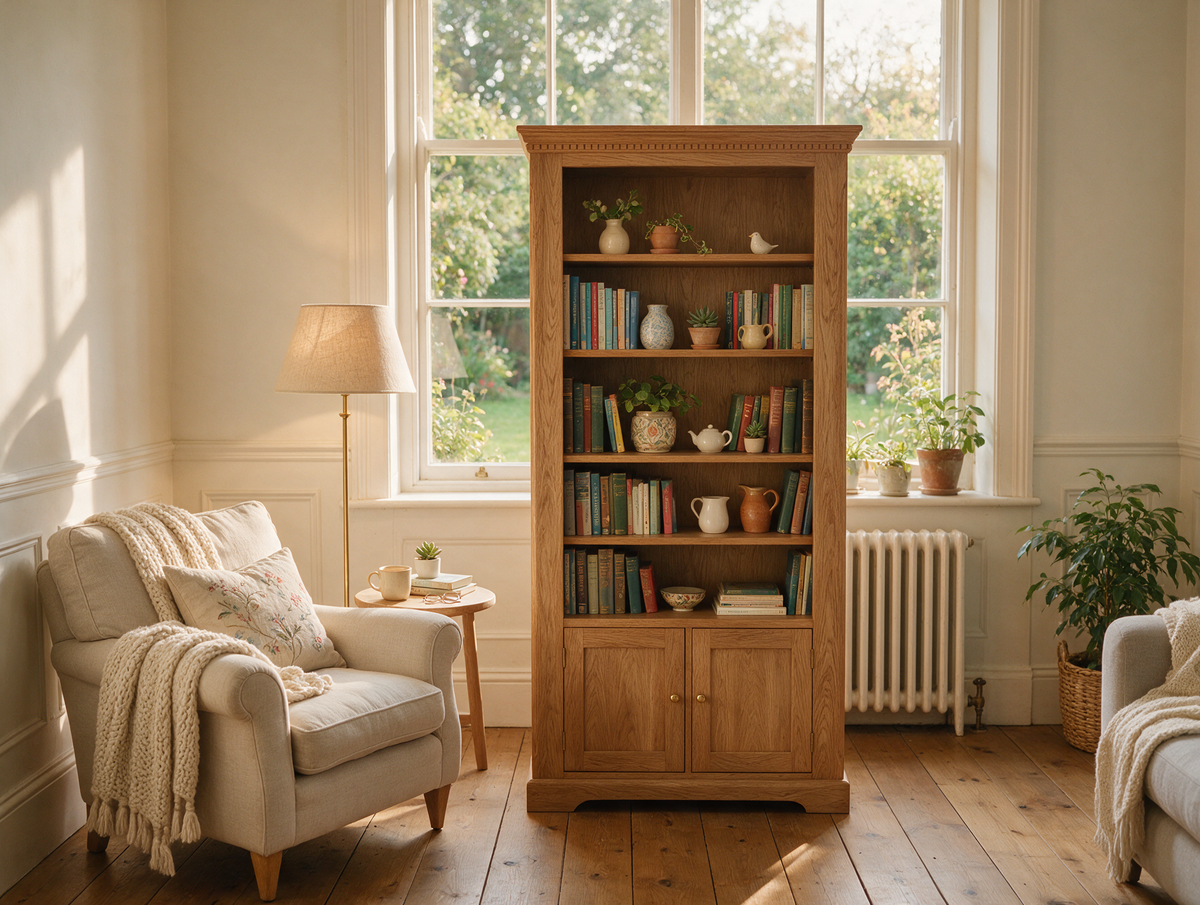
Bookcase Ideas – How to Choose and Style a Bookshelf for Your Living Room
Do you remember the bookcase in your grandparents' front room? Rows of faded paperbacks, a set of encyclopaedias nobody ever finished, holiday souvenirs, a framed school photo and that one heavy atlas you pulled out on rainy afternoons. It was never styled for anyone – and yet it told the whole story of the family.
Read moreabout Bookcase Ideas – How to Choose and Style a Bookshelf for Your Living Room



Share:
Best Type of Mattress – How to Choose the Right Mattress for Better Sleep
Pet Friendly Sofa: How to Choose a Stylish Couch That Survives Dogs and Cats