


- by Daniel Pawlik
Small Bedroom Ideas – How to Make the Most of a Compact Bedroom
- by Daniel Pawlik
Some of the most memorable bedrooms aren't the biggest ones. A first flat, a room tucked under the eaves, a childhood bedroom just large enough for a single bed and a poster-covered wall — small rooms have a way of holding onto us precisely because every centimetre had to be considered. A compact bedroom doesn't need to feel like a compromise. It needs a plan.
Here's how to build one, from the very first decision to the finishing touches that make a small room feel deliberately designed rather than simply squeezed in.
Before buying a single piece of furniture, a small bedroom rewards a bit of upfront thinking that a larger room can more easily forgive later.
Measure before you fall in love with anything. Note the room's full dimensions, the door swing, any radiators or sloped ceilings, and where the natural light comes from. A small bedroom design that ignores these constraints usually needs correcting — and returning furniture — later.
Decide what the room actually needs to do. A bedroom that's purely for sleeping needs far less than one that also has to be a home office, a dressing area and a guest space. Being honest about this early saves you from cramming in furniture the room was never really built to hold.
Prioritise the bed first, then work outward. The bed is almost always the largest single piece in a small bedroom, so its size and placement should be decided before anything else — a queen bed might feel generous on paper but leave no real floor space once you add a wardrobe and a nightstand.
Think vertically, not just horizontally. A small bedroom's floor area is limited, but the wall space above head height rarely is. Shelving, wall-mounted lighting and tall, narrow furniture all make use of a dimension most small bedroom layouts underuse.
Getting these fundamentals right before shopping is what separates a small bedroom that feels curated from one that feels like everything was bought first and squeezed in after.

Furniture arrangement in a small bedroom is really an exercise in choosing what earns its footprint.
Push the bed against the longest wall. This is usually the single most space-efficient placement, freeing up the rest of the room for a walkway and any other furniture rather than boxing the bed into a corner with awkward access on one side.
Choose a bed with genuine storage. In a small bedroom, the space under the mattress is too valuable to waste. A design like the FJORD upholstered bed with storage turns an otherwise unused void into somewhere for bedding, off-season clothes or spare pillows to live.
Go compact and slim with the nightstand. A single narrow nightstand — like Kiyro, with its small footprint and single drawer — usually beats a bulkier pair in a genuinely small double bedroom, especially if one side of the bed sits close to a wall.
Let a chest of drawers replace a wardrobe where it can. A compact sideboard-style chest, such as Kiyro's 98x82 model, can hold as much as a shallow wardrobe while taking up a fraction of the depth — a genuinely useful trade in a small bedroom furniture plan.
Leave a clear walking path of at least 60 cm. Around the bed and to the door, this width is the minimum for the room to feel functional rather than obstacle-coursed — worth protecting even if it means a slightly smaller piece of furniture elsewhere.
Storage is usually the real test of a small bedroom, since clothes, bedding and everyday items don't shrink just because the room did.
Use under-bed storage properly. Whether it's a bed frame with a built-in storage compartment or simple boxes slid underneath a standard frame, this is the single largest area of "hidden" storage most small bedrooms have and don't use.
Choose furniture with closed storage over open shelving. Open shelves look effortless in photos but demand constant tidying in real life; a chest of drawers or a nightstand with a drawer keeps the room looking calm even on a busy week.
Go tall, not wide, with storage furniture. A narrower, taller chest of drawers holds nearly as much as a wide, low one while leaving more floor clear — one of the simplest small bedroom storage ideas that's easy to overlook when shopping by eye rather than by footprint.
Add a shelf above the bed or door frame. The wall space directly above a doorway is almost always unused in a small bedroom, and a single floating shelf there is enough for books, a small plant or decorative objects that would otherwise clutter a surface.
Keep one drawer for the things you don't want to see. Chargers, spare batteries, hand cream — every bedroom accumulates a small pile of daily-use items that don't need to live on display. A single dedicated drawer keeps them accessible without keeping them visible.
Resist buying storage "just in case." In a small bedroom, an extra basket or shelf that isn't solving a specific problem usually just becomes something else to work around.

Once the furniture and storage are sorted, a handful of styling choices genuinely change how spacious a small bedroom feels — often more than any piece of furniture could.
Keep walls light, but not necessarily white. A soft, muted colour — pale sage, warm oat, dusty blue — reflects light nearly as well as pure white while giving the room more character. What matters most is avoiding a strong contrast between wall and ceiling, which visually lowers a room and makes it feel smaller.
Let the bedding and curtains blend with the walls. A close tonal match between the walls and the larger soft furnishings removes visual breaks in the room, which makes the whole space read as more continuous and open.
Use a mirror deliberately, not decoratively. A mirror placed to reflect a window, rather than a blank wall, doubles the sense of natural light in the room — this single trick does more for how to make a small bedroom look bigger than almost any paint colour choice.
Prioritise layered lighting over one central bulb. A single overhead light in a small bedroom tends to flatten the whole room. Add a bedside lamp and one other light source — a wall light or a floor lamp in a corner — and the room gains depth even though its size hasn't changed.
Let furniture legs show. Furniture that sits on visible legs, rather than a solid base flush to the floor, lets light and sightlines pass underneath it, which makes a small bedroom layout feel considerably less crowded than the same pieces on solid plinths.
Edit, rather than expand, your decor. A few well-chosen objects — one piece of art, one plant, one framed photo — read as intentional. The same number of objects scattered without a plan reads as clutter, regardless of how large or small the room actually is.
A compact bedroom rewards care rather than compromise — every choice simply has to work a little harder. Explore Pillovely's upholstered beds, bedside tables and chests of drawers collections to find pieces genuinely built for small bedroom furniture planning, not just downsized versions of something meant for a bigger room.
Explore more bedroom ideas at Pillovely — furniture designed for the rooms where every centimetre still gets to feel like home.
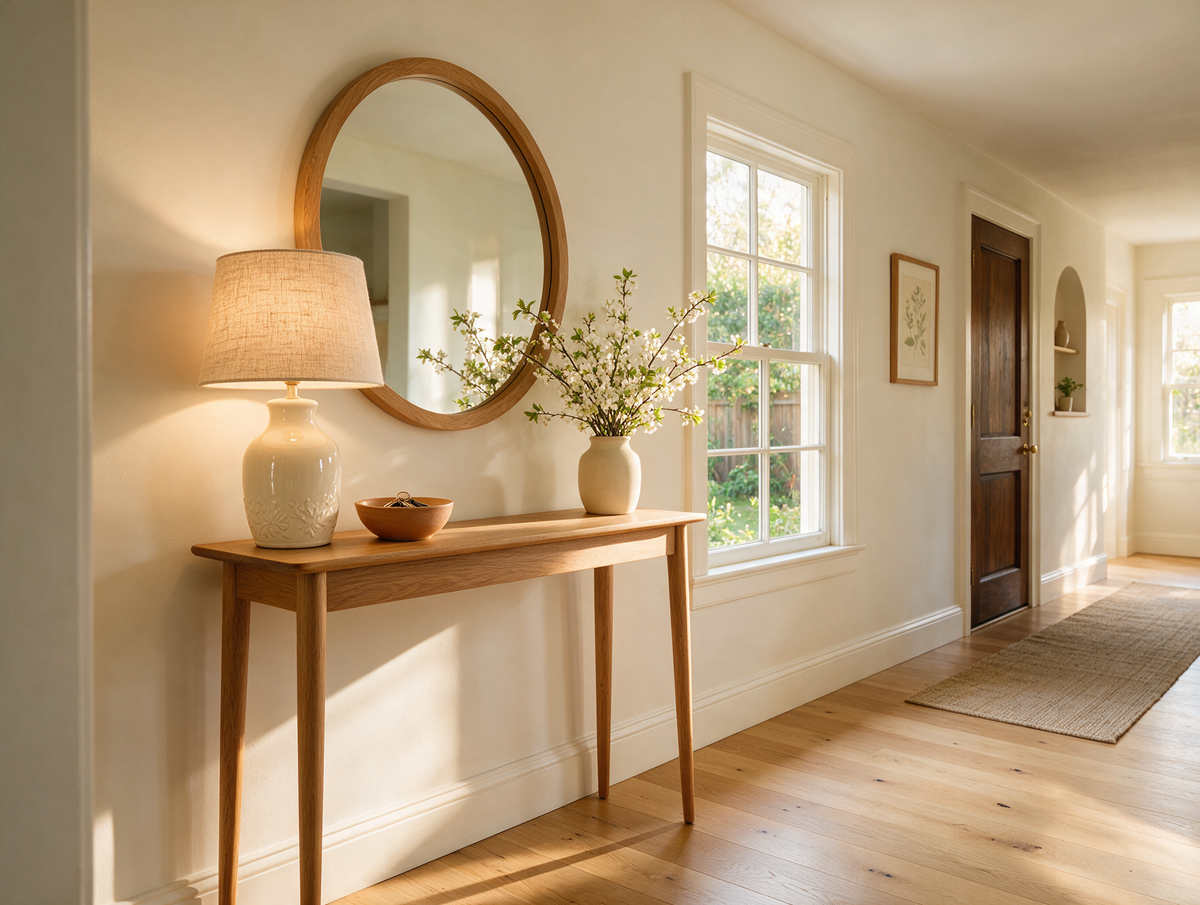
Console Table Ideas – Where to Use One and How to Style It
Do you remember coming home from school and dropping everything on the little table by the front door? Keys in the china dish, letters propped against the lamp, a vase of whatever was flowering in the garden and the old telephone with its curly cord. It was the first thing you saw when you walked in, and somehow it always said: you are home.
Read moreabout Console Table Ideas – Where to Use One and How to Style It
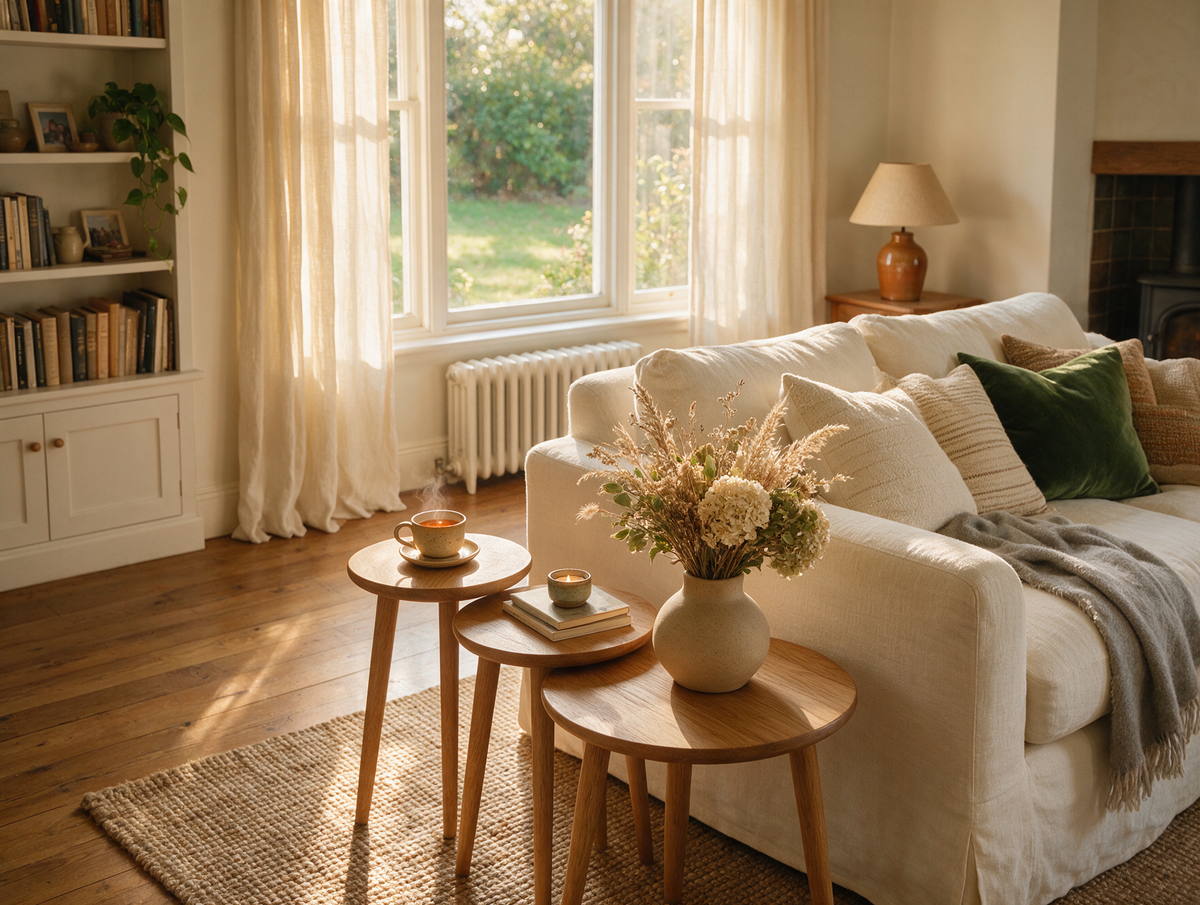
Nest of Tables – What Are They, Who Are They For and How to Style Them
Do you remember Sunday visits to your nan's, when the nest of tables came out from beside the armchair? Three little tables, each tucked neatly under the next, were pulled apart and handed round – one for the teapot, one for the biscuit tin and one for Grandad's crossword – and then slid back together the moment everyone went home.
Read moreabout Nest of Tables – What Are They, Who Are They For and How to Style Them
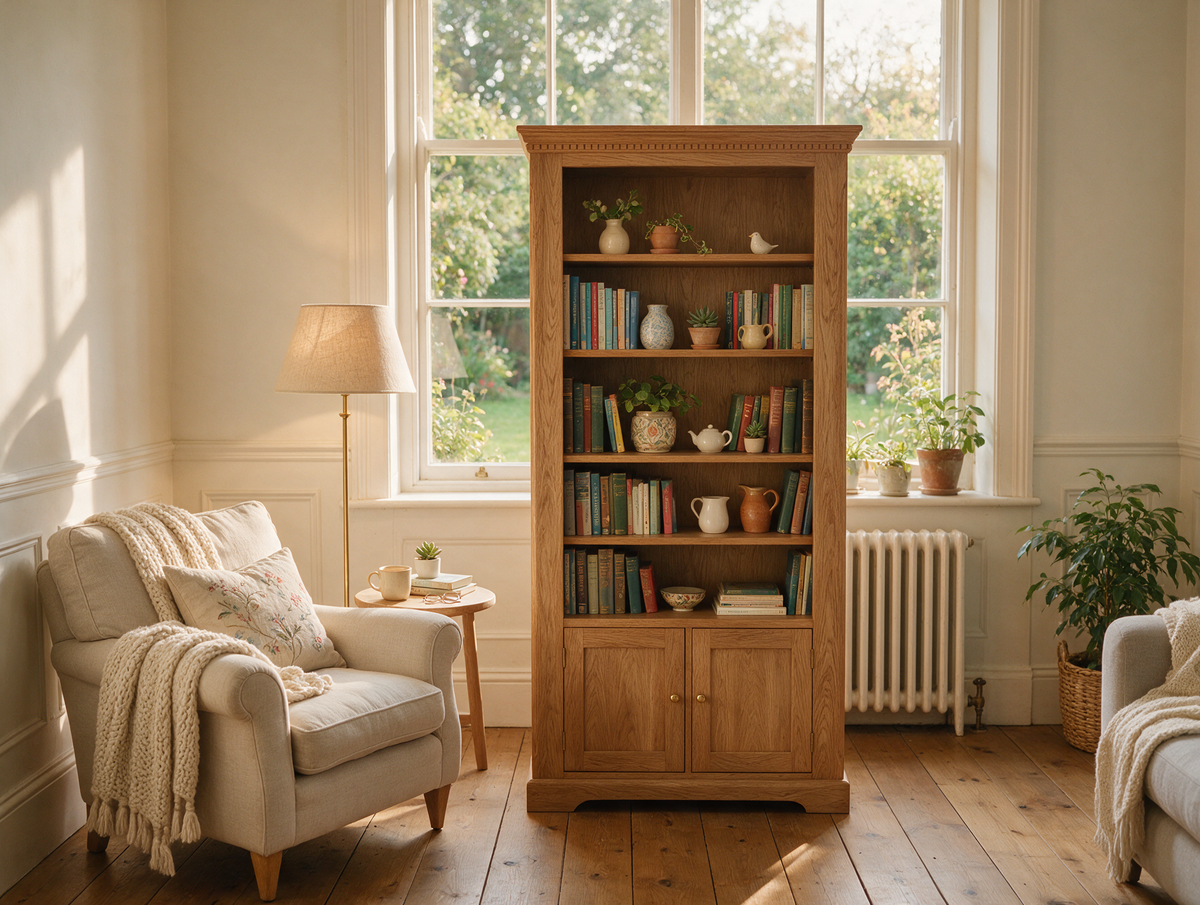
Bookcase Ideas – How to Choose and Style a Bookshelf for Your Living Room
Do you remember the bookcase in your grandparents' front room? Rows of faded paperbacks, a set of encyclopaedias nobody ever finished, holiday souvenirs, a framed school photo and that one heavy atlas you pulled out on rainy afternoons. It was never styled for anyone – and yet it told the whole story of the family.
Read moreabout Bookcase Ideas – How to Choose and Style a Bookshelf for Your Living Room



Share:
Walk-In Wardrobe Ideas – Design, Dimensions and Storage Step by Step
Living Room Lighting Ideas – How to Choose Lamps for a Modern Living Room