


Walk-In Wardrobe Ideas – Design, Dimensions and Storage Step by Step
- by Daniel Pawlik
A morning without frantically searching for one sock in a pile of clothes, and without asking "where on earth did I hang that?" — that, in short, is what a well-designed walk-in wardrobe gives you. It is not a luxury reserved for big houses, but a solution that, with a little planning, can be created in almost any bedroom, alcove or loft eaves.
In this guide we show you where to start when designing a walk-in wardrobe and which dimensions to use, how to find space for one in a small bedroom, how to use awkward spaces such as eaves and alcoves, and which fittings are really useful.
Start not with furniture but with an inventory of what needs to go inside. How many hanging clothes do you have, how many folded, how many pairs of shoes, and do you need space for bedding and suitcases? This list decides the balance of rails, shelves and drawers far more than any ready-made template.
The key technical measurement is the walkway between rows of clothes, or between the wall and the units — the minimum functional width is 70–90 cm, but you can only move comfortably with 100–120 cm, especially if more than one person uses the dressing room at the same time.
Plan the height of each zone around specific types of clothing. A rail for long items such as dresses and coats usually needs 140–160 cm of clear height, while shorter clothes — shirts, jackets, skirts — need only about 90–100 cm, leaving room for a shelf or second, lower rail underneath. The standard depth for units with hangers facing forward is 55–60 cm; if space is very tight you can go down to about 40 cm with pull-out rails parallel to the front.
Before choosing specific furniture, sketch a simple plan of the walk-in wardrobe with the zones marked — it helps avoid a situation where everything works on paper but in reality a rail blocks a drawer from opening.

In smaller bedrooms a walk-in wardrobe does not have to be a separate room — it can just as well be a well-planned wall or alcove. The first step is choosing the right type of storage. A sliding wardrobe needs no space for doors to swing open, saving 60–70 cm compared with a hinged wardrobe — a real difference in a room where every centimetre counts.
An open dressing area — no fronts, with rails and shelves visible — is another good option in a small bedroom. It is often cheaper and visually "lighter" than full fitted furniture, although it needs more discipline, as everything stays on show.
Use the space that often stays empty: above a long-hanging rail, at 180–190 cm and higher, add a shelf for seasonal items such as suitcases and blankets. The space under a short-hanging rail is perfect for shoe organisers or low drawers.
If there is no room for a separate dressing area, combine both functions in one piece — a wardrobe with a well-planned interior of rails, drawers and shelves gives a similar sense of order while taking up far less floor space.
Loft eaves and irregular alcoves are often seen as hard to use, but they are among the best places for a dressing room — space that is awkward for most furniture works brilliantly for hanging clothes or low drawers.
Under the eaves, plan zones by height. The lowest part, where the ceiling drops below about 60–70 cm, is ideal for drawers or pull-out boxes, which you reach while crouching anyway. The higher part, with room for a full-height rail, can hold a standard hanging zone. Made-to-measure units that follow the exact angle of the slope work best — off-the-shelf furniture rarely uses such an irregular space well.
An alcove wardrobe is one of the most convenient solutions, as long as the alcove is deep enough — at least 60 cm to fit hangers facing forward. Fit a rail, a few shelves and perhaps a drawer system, and the alcove becomes a fully functional dressing area without building any extra walls. To hide the contents, use curtains on a track instead of doors — cheaper and easier to fit than joinery, yet effective.
Well-planned fittings are the heart of a functional dressing room — take time to think them through before choosing specific elements.
Rails are the foundation — consider at least two levels, one for long clothes and one for short, to make full use of the height. Pull-down or rotating rails make it easier to reach clothes deeper in the units.
Shelves are ideal for folded clothes, bedding and accessories — vary their heights to suit different items, from thin T-shirts to chunky jumpers.
Drawers are the best place for underwear, socks and small accessories — models with internal organisers keep things tidy even with heavy daily use. For more small items, add a chest of drawers by the entrance to the dressing room or inside it, if space allows.
Shoe storage — angled or wire shelves fit more pairs in the same space than flat shelves and make it easier to keep order, because every pair has its place. See more in shoe storage ideas.
Lighting — even the best-planned walk-in wardrobe loses functionality if you cannot see the colours of your clothes. LED spotlights inside the units or on the ceiling make a big difference to everyday comfort.

A well-designed walk-in wardrobe is not about square metres but about a considered plan — even a small alcove or eaves, well used, can offer more real function than a large but chaotic wardrobe. Start with an inventory of your needs, then choose furniture and fittings.
Looking for solutions for your own dressing room? Explore our wardrobes and walk-in closets and chests of drawers at Pillovely.
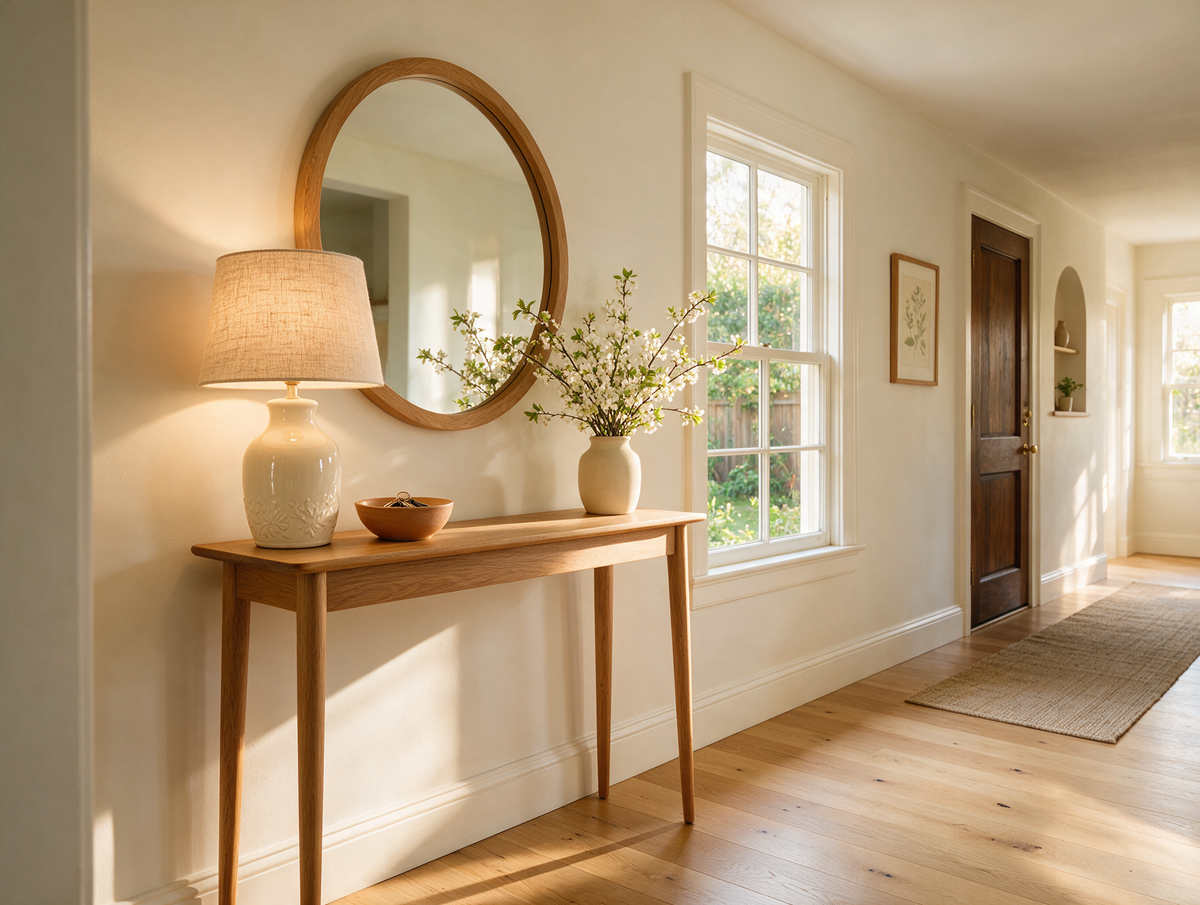
Console Table Ideas – Where to Use One and How to Style It
Do you remember coming home from school and dropping everything on the little table by the front door? Keys in the china dish, letters propped against the lamp, a vase of whatever was flowering in the garden and the old telephone with its curly cord. It was the first thing you saw when you walked in, and somehow it always said: you are home.
Read moreabout Console Table Ideas – Where to Use One and How to Style It
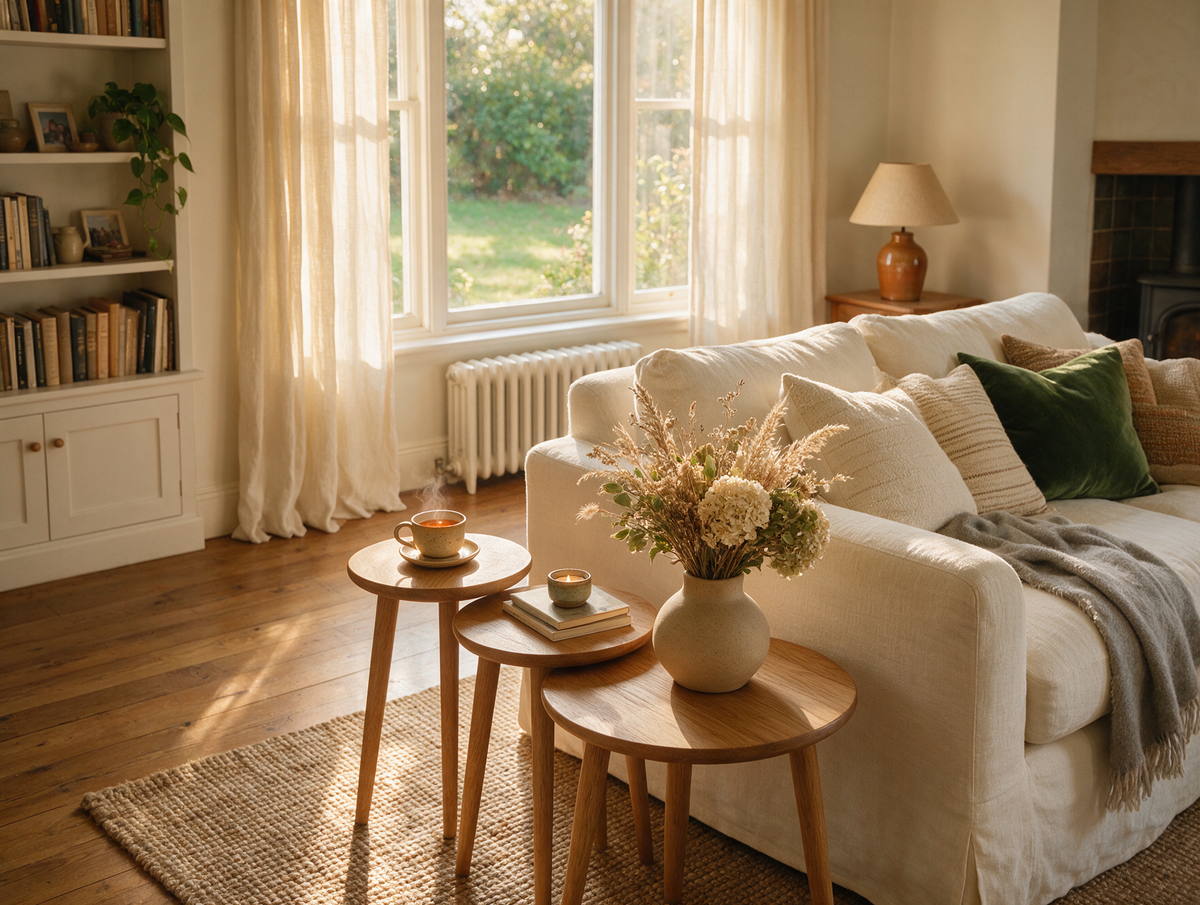
Nest of Tables – What Are They, Who Are They For and How to Style Them
Do you remember Sunday visits to your nan's, when the nest of tables came out from beside the armchair? Three little tables, each tucked neatly under the next, were pulled apart and handed round – one for the teapot, one for the biscuit tin and one for Grandad's crossword – and then slid back together the moment everyone went home.
Read moreabout Nest of Tables – What Are They, Who Are They For and How to Style Them
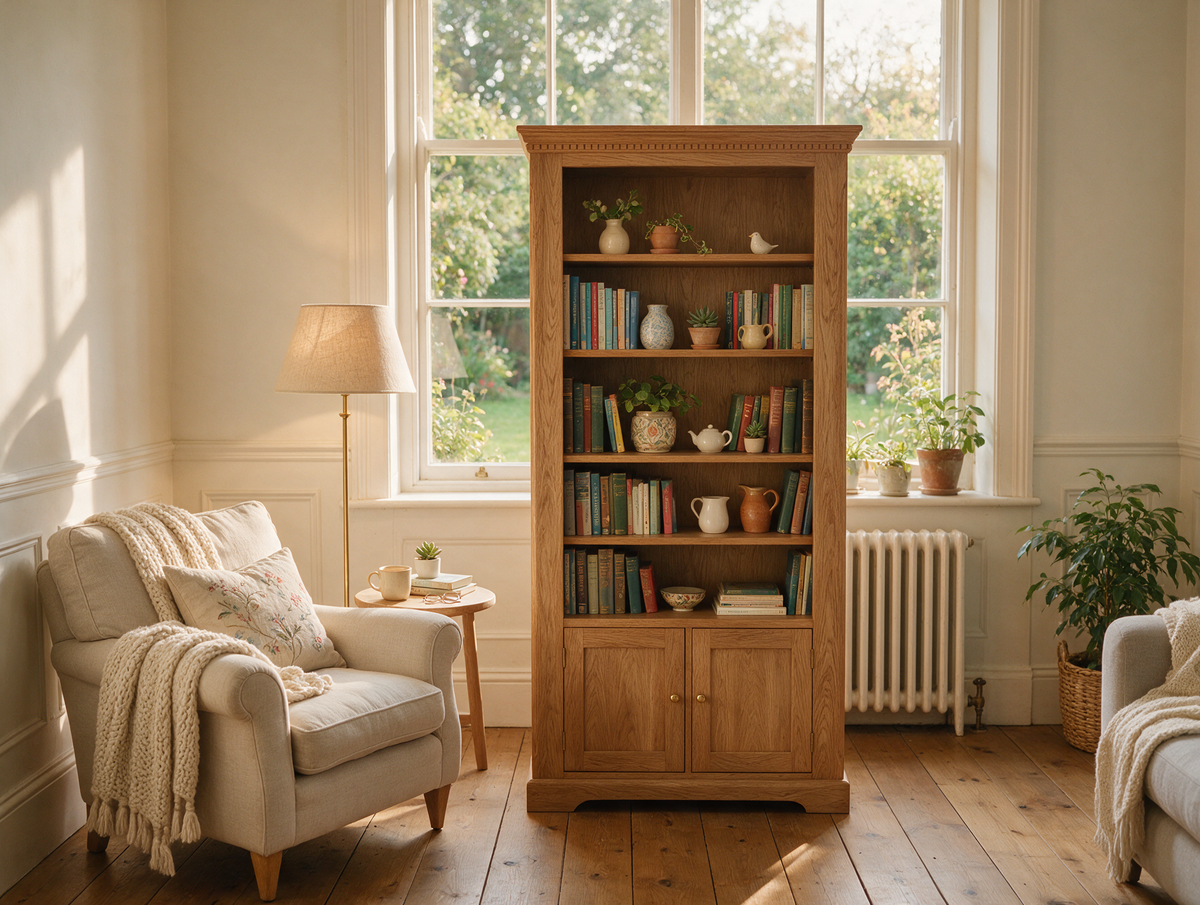
Bookcase Ideas – How to Choose and Style a Bookshelf for Your Living Room
Do you remember the bookcase in your grandparents' front room? Rows of faded paperbacks, a set of encyclopaedias nobody ever finished, holiday souvenirs, a framed school photo and that one heavy atlas you pulled out on rainy afternoons. It was never styled for anyone – and yet it told the whole story of the family.
Read moreabout Bookcase Ideas – How to Choose and Style a Bookshelf for Your Living Room



Share:
Accent Chair – How to Choose and Style a Statement Chair for Your Living Room
Small Bedroom Ideas – How to Make the Most of a Compact Bedroom