


- by Daniel Pawlik
Wall colors for the living room – which to choose for a modern interior?
- by Daniel Pawlik
The color of your walls is one of the most important interior design decisions you’ll make for your living room. More impactful than choosing a sofa, more significant than a rug, more visible than a lamp. The wall surrounds everything – it provides the backdrop against which every piece of furniture, every detail, every one of your Sunday coffees lives. That’s why the question “which living room wall color to choose” deserves more than an impulse before visiting the paint store.
At Pillovely, we see every day how the same sofa can look completely different against a white wall compared to bottle green. Wall color determines the mood of the entire room – whether the living room is “functional” or yours. This guide will show you which living room colors work best, which are timeless, and which set trends for 2026, as well as how to intelligently combine wall color with furniture.
Color trends change annually, but a good choice outlasts them by a decade. The best living room wall colors for 2026 combine currency with timelessness – they look fresh today and won’t age tomorrow.
What dominates living room wall colors in 2026:
Warm shades of brown and mocha – “mocha mousse,” cocoa, coffee with milk, cinnamon. This is a return to an earthy palette with a strong, mature character.
Muted greens – sage, olive, bottle green, moss. In 2026, green is no longer an accent – it becomes a full-fledged base color.
Warm whites and creams – “greige” (mix of gray + beige), ecru, ivory. They return in place of the cool, sterile whites of 2010–2020.
Terracotta and warm powder pink – delicate but characterful. They harmonize wonderfully with wood and natural materials.
Deep blues and bottle greens as accent colors – not on all walls, but on one, as a strong focal point of the composition.
What’s out:
cool whites and grays with a blue tint – they made the living room look like a hospital corridor,
very cold, “industrial” concretes – they give way to warmer, more textile-like perceptions,
aggressive wall patterns – only wallpapers with subtle textures remain, not flashy motifs.
When choosing fashionable living room wall colors, remember one rule: trends are an inspiration, not a sentence. The best color is one you can live with for five years without getting bored, not the one currently trending on Pinterest.

If you live in a smaller living room or have little natural light, a light wall color is the safest and smartest choice. But “light” doesn’t automatically mean “white” – contrary to popular belief.
The best light wall colors for the living room:
Warm cream (ecru, vanilla, alabaster) – feels warmer than white, gives the same sense of space,
Off-white with a hint of beige – a versatile base for any style,
Sand / sandstone – introduces a natural tone, harmonizes beautifully with wood,
Very light gray (dove gray, light greige) – elegant, modern, neutral,
Powder beige with a hint of pink – romantic, warm, perfect for living rooms with natural light.
It’s a matter of color psychology. Walls in warm tones reflect more soft light – the living room appears larger because the eye doesn’t encounter contrast. Cool white visually enlarges but also cools down – in the Polish climate with 5 months of gray days, this isn't always a good strategy.
Light wall colors in the living room work best when they are half a shade lighter than the floor, but half a shade darker than the ceiling. Sounds technical, but in practice, it gives the impression that the room “grows” upwards.
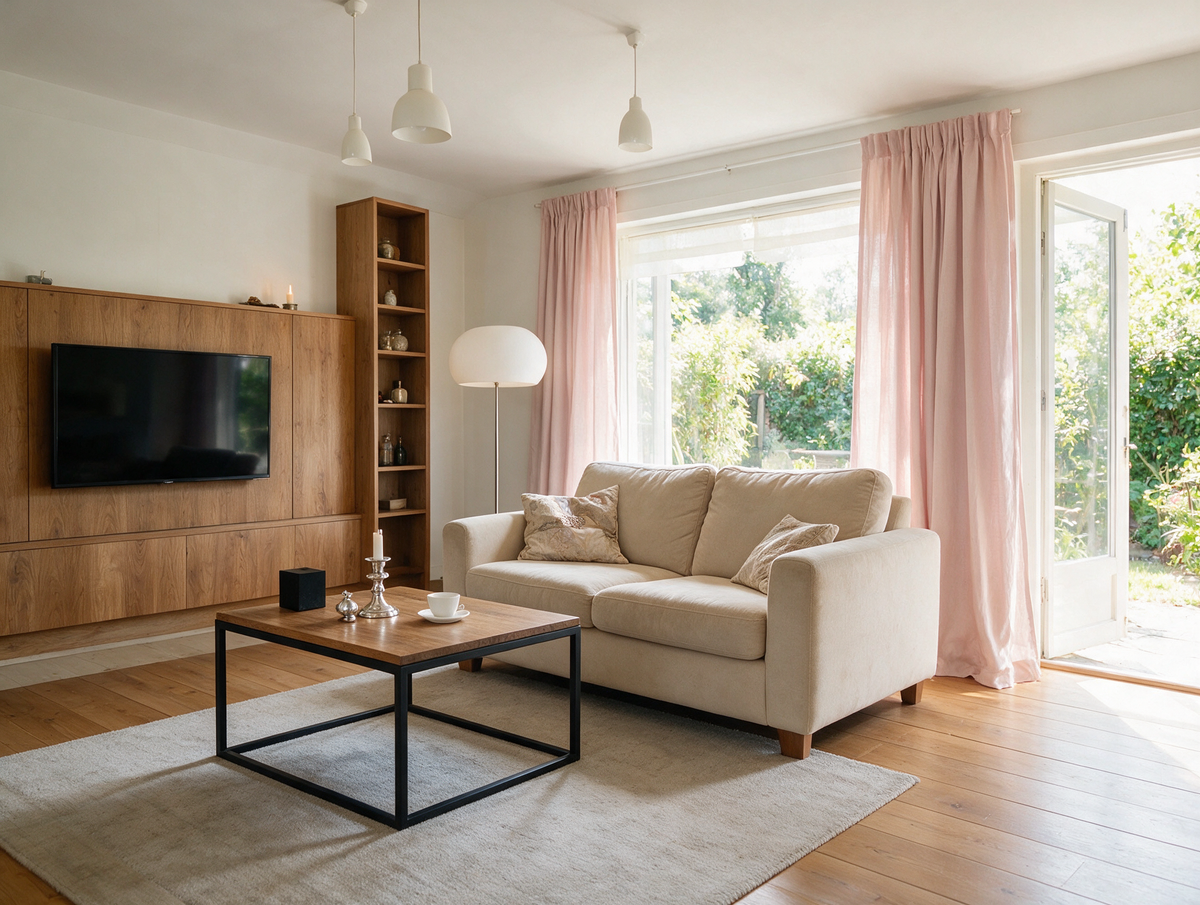
A sofa in natural colors – sand, cream, coffee with milk, olive – looks particularly effective against a light wall. In the Pillovely sofa category, you’ll find models in neutral fabrics that flourish against a warm wall and don’t compete for attention.
If you don’t want “safe white” but aren’t looking for an extreme experiment either, fashionable living room wall colors for 2026 offer three main directions worth considering.
Green is returning to Polish living rooms on a wave that was hard to predict a few years ago. The reason is simple: green is the color of nature, tranquility, and balance. It affects the nervous system better than any other wall shade.
Practical suggestions:
sage – muted, light, great for smaller living rooms,
olive – warmer, earthy, suits wood and linen,
bottle green – deep, dramatic, for accent walls or larger living rooms,
moss / pine – dark but warm, great for expressive furniture.
A sofa that looks excellent against a green wall is a model in terracotta, warm brown, ecru, or sand tones. Natural fabrics – linen, cotton, velvet – harmonize best with green.
The gray living room color didn’t die, it just grew up. Contemporary grays are warm, soft, with a hint of beige or brown (the so-called greige). The cold concrete gray that dominated for a decade is rightly fading away.
What works:
dove gray – elegant, neutral,
greige – mix of gray and beige, most fashionable in 2026,
taupe – dark, warm gray-beige, ideal for dark wood furniture.
This palette fits perfectly with the nostalgia for natural materials and organic forms. A living room color in terracotta or mocha is strong but not garish – it harmonizes with wood, linen, cotton, and ceramics.
It works perfectly as a backdrop for a corner sofa in cream or ecru. You can find models in neutral fabrics in the corner sofas category – it’s worth choosing those in a light palette so that the earthy-toned wall can “show off.”
The wall behind the sofa is the number one interior poster. You look at it when sitting opposite (e.g., from the dining table), it’s shown to guests, it frames the sofa. If you’re planning only one strong accent in the living room, it’s most often this wall.
1. Strong color as an accent. The wall behind the sofa in bottle green, navy blue, terracotta, or deep brown. The other three walls in neutral white or beige. This is a classic solution that has worked for decades.
2. Color drenching – the entire color on the entire wall. A trendy approach for 2025–2026: the same color on the wall and on skirting boards, sometimes even on the ceiling. Creates an effect of depth and “enclosure” of the space. Works best in muted shades (sage, mocha, dove gray).
3. Texture instead of color. The wall behind the sofa finished with wood panels, vertical slats, decorative structural plaster, or wallpaper with a subtle pattern. Introduces interest without using a strong color.
4. Art and photo gallery on a neutral wall. The safest approach. A wall in a light, neutral color + a large framed photo or a group of pictures. Allows you to freely change the decoration without repainting.
Beige / cream sofa → bottle green wall, terracotta, warm brown,
Gray sofa → greige, sage, powder pink wall,
Navy / bottle green sofa → cream, ecru, light sand wall,
Terracotta / brick sofa → sage, olive, creamy white wall,
Velvet sofa in a strong color → neutral wall (cream, greige), so the sofa can be the star.
The living room wall color looks completely different in daylight, different in 2700 K warm light, and different again in 4000 K neutral light. Test a paint sample on the wall for at least 2–3 days and observe it at different times – morning, noon, evening. Make your decision only after you’ve seen all its manifestations.

What is the most fashionable living room wall color in 2026?
Among the most popular colors are shades of mocha, sage, olive, greige, and warm beiges. Trends emphasize natural, muted tones inspired by earth and nature.
Which wall colors visually enlarge the living room?
Light shades such as ecru, off-white, light beige, or very light greige work best. They reflect more light and make the interior appear larger and more spacious.
Is one wall in a different color a good idea?
Yes. An accent wall behind the sofa is one of the most commonly used solutions. It allows you to introduce a stronger color without overwhelming the entire interior.
How to choose a wall color for a beige sofa?
A beige sofa pairs beautifully with bottle green, terracotta, olive, warm brown, and mocha shades. Such combinations create a cozy and modern living room.
Are gray walls still fashionable?
Yes, but provided they are warm shades of gray. Greige, taupe, and dove gray work best, appearing more natural than cool, concrete grays.
How to check if the chosen wall color will look good in the living room?
Before painting, it's worth applying a paint sample to the wall and observing it for a few days at different times of the day. The same color can look completely different in natural and artificial light.
The best living room wall colors aren’t those that look best in the paint store. They are the ones that make you feel good every day – after work, on a Friday evening, on a Sunday morning with coffee.
Three takeaways from this text:
Choose warmth, not coolness – warm whites and earthy tones age much slower than cool grays.
One strong accent wall is enough – a full palette in the living room will tire the eye. Leave the accent to the wall behind the sofa.
Match the color to the sofa, not vice versa – furniture stays for years, you can repaint the wall on a weekend. The sofa dictates the palette.
At Pillovely, we design furniture with the idea that it should be a backdrop for your life – including the color you want to frame it with. Whether you choose a sofa in classic beige, a corner sofa in deep olive, or a strong accent in terracotta – the living room wall color for 2026 should make your home truly yours.
Pillovely – for those who want more. More of their own. More warmth. More at home.
If you liked this text, be sure to check out our other inspirations:
Japandi Style – What Is It and How to Decorate an Interior in the Spirit of Japandi?
Loveseat - What Is It, Who Is It For and How to Choose the Right One?
A loveseat is one of those pieces of furniture that can completely change how a room works. It is smaller than a classic sofa, more generous than a single armchair and often easier to place in compact interiors. A loveseat can create a cosy sitting area in a small living room, soften a bedroom corner, complete a reading nook or work as an additional seat next to a larger sofa. Its strength lies in proportion: it gives you the feeling of a sofa without taking over the whole room.
Read moreabout Loveseat - What Is It, Who Is It For and How to Choose the Right One?
EU vs UK Bed Sizes – Will UK Bedding Fit a European Bed?
European beds are 200 cm long, UK beds 191 or 198 cm. A simple EU vs UK bed size table in cm – and what it means for your mattress and fitted sheets.
Read moreabout EU vs UK Bed Sizes – Will UK Bedding Fit a European Bed?
Autumn colors at home – shades that bring peace and warmth
Do you remember autumn from your childhood, when the leaves changed color like a kaleidoscope, and your mom would pull out the pumpkin-colored sweater she'd worn since college? Or those evenings in front of the TV while a storm raged outside, and the lamplight in the house gave everything a warm, amber hue? Those were the days when no one talked about "color palettes" or "color stories"—colors simply existed, as natural as breathing. Today, when we can choose from 50 shades of gray (and no, I'm not talking about THAT book), we sometimes lose track of what truly makes a home feel cozy. At Pillovely, we believe that autumn colors aren't a trend—they're a return to what makes us feel safe. Because "You are someone"—someone who deserves a space filled with colors that snuggle like a grandma's blanket.
Read moreabout Autumn colors at home – shades that bring peace and warmth




Share:
Pilla's Reading Corner: Steve Epting, Ed Brubaker, Michael Lark, John Paul Leon, Mike Perkins, Frank D'Armata - "Captain America: Winter Soldier"
Living Room Rug – How to Choose the Perfect Size, Shape, and Material for Your Interior?