


- by Daniel Pawlik
Buying a corner sofa – How to choose the right L-shaped sofa and what to look out for when buying?
- by Daniel Pawlik
Some pieces of furniture define an entire room. The corner sofa is one of them. It's rarely just a place to sit – it's where Sundays disappear, movie nights begin, and an empty living room suddenly becomes a home. When you buy a corner sofa today, you're essentially buying that moment: the corner where you let yourself fall and never want to get up again.
Before you decide on a model, it’s worth taking a calm look at the actual questions – shape, orientation, size, and function. That's exactly what this guide is about.
A corner sofa – also called an L-shaped sofa – differs from a classic sofa by an additional seating or lounging area that connects to the main surface at a right angle. Two straight lines become a space that opens up around people, rather than placing them side by side in a row.
The most common variants:
Classic corner sofa – a straight main section with a chaise longue on the side. Timeless, versatile, suitable for almost any living room layout.
Living area / large corner sofa – with two backrest areas or an additional long chair on both sides, for families and large rooms.
U-shaped sofa – the consistent further development of the L-shape, when a lot of seating is really needed.
A normal sofa invites you to sit. A corner sofa invites you to stay – to sink in with your legs tucked up, for a shared movie night where suddenly four people find space, even though only two were planned. This is precisely why buying a large corner sofa is particularly attractive for many families: the space grows with the people who use it.

This question causes the most confusion when buying a corner sofa – but the logic is simple once you understand it.
The rule: You stand in front of the sofa, facing the seat, just as you would sit on it later. If the long reclining section (the chaise longue) is then on your left side, it is a left-hand corner sofa. If it is on your right side, it is a right-hand corner sofa.
How do you find the right orientation for your living room?
Sketch the room and mark where windows, doors, and possibly a fireplace or TV cabinet are located.
Consider where your gaze should fall when sitting – usually towards the TV or window.
Think about the path through the room: The chaise longue should not be directly in the walking line to the door.
A left or right corner sofa is ultimately not a matter of taste, but a matter of space. A sofa that looks perfect but gets in the way every day quickly loses its charm.
A corner sofa requires an honest assessment of your floor plan. What looks spacious and inviting in a photo can suddenly overwhelm everything else in a real room.
Here's how to plan:
Measure the entire room – length and width, not just the wall where the sofa will stand.
Allow for freedom of movement – at least 60–80 cm distance around the sofa so that the room doesn't feel cramped.
Consider the depth of the chaise longue – it often extends further into the room than a normal sofa and therefore requires more space in front of it, for example, for a coffee table.
Measure doors and stairwell – a large corner sofa first needs to get into the apartment. Many models are modular and delivered in individual parts, which significantly eases transport.
If unsure, you can mark the outlines of the desired model directly on the floor with masking tape. This gives you a realistic feel for the actual dimensions – suddenly you see exactly how much space the sofa really takes up and how much is left over.
A corner sofa with a sleeping function combines two needs that are rarely considered simultaneously in everyday life: comfortable seating for daily use and a full-fledged sleeping area when needed.
This solution is particularly useful for:
Smaller apartments where a separate guest room simply doesn't exist.
Families with visitors who want to accommodate overnight guests spontaneously without having to set up an extra bed.
Students and young professionals who want to furnish their first own apartment multi-functionally.
When buying a corner sofa with a bed function, it's worth looking at the fold-out mechanism: models with a bed box under the chaise longue also offer storage space for bedding or blankets – two problems, one piece of furniture. Also, pay attention to the mattress thickness when unfolded; thinner foam toppers are more suitable for occasional nights, while thicker cold foam or spring core solutions are also suitable for regular use.

A corner sofa is rarely a purely practical decision. It's the place where you can relax after a long day, where memories of shared evenings are made, and where you show yourself for who you really are – with a blanket, tea, and the feeling of being in exactly the right place.
At Pillovely, you'll find a selection of high-quality corner sofas that take this claim seriously: well-thought-out shapes, honest materials, and sizes for every living room – from the compact city apartment to the generous family living landscape. Take your time comparing, consider orientation and space, and find the corner sofa that suits your life – not just your floor plan.
Pillovely, that's love for the warmth of home.
If you liked this text, be sure to check out our other inspirations:
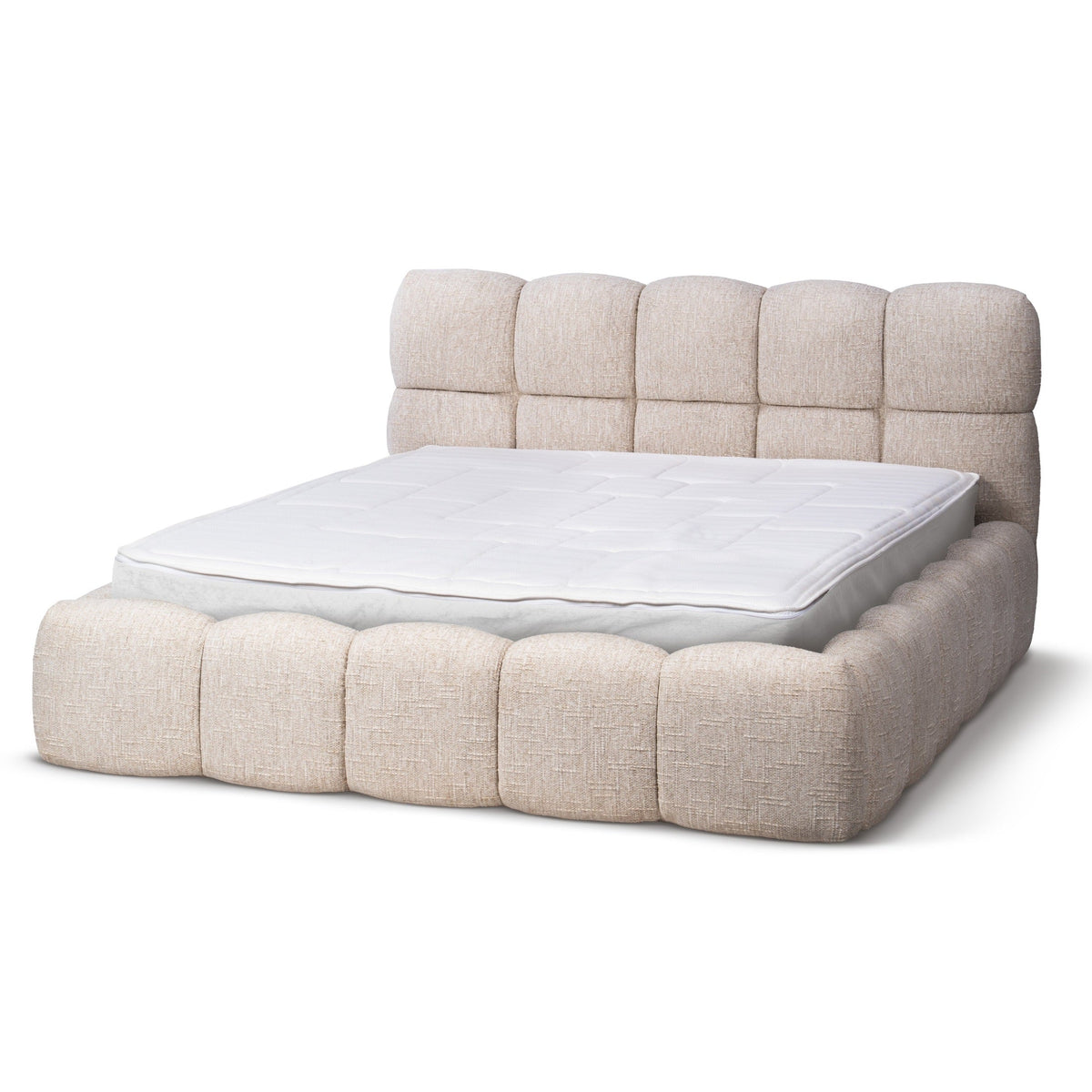
Buying an Upholstered Bed – What is an Upholstered Bed and What Should You Look For When Buying One?
Loveseat - What Is It, Who Is It For and How to Choose the Right One?
A loveseat is one of those pieces of furniture that can completely change how a room works. It is smaller than a classic sofa, more generous than a single armchair and often easier to place in compact interiors. A loveseat can create a cosy sitting area in a small living room, soften a bedroom corner, complete a reading nook or work as an additional seat next to a larger sofa. Its strength lies in proportion: it gives you the feeling of a sofa without taking over the whole room.
Read moreabout Loveseat - What Is It, Who Is It For and How to Choose the Right One?
EU vs UK Bed Sizes – Will UK Bedding Fit a European Bed?
European beds are 200 cm long, UK beds 191 or 198 cm. A simple EU vs UK bed size table in cm – and what it means for your mattress and fitted sheets.
Read moreabout EU vs UK Bed Sizes – Will UK Bedding Fit a European Bed?
Autumn colors at home – shades that bring peace and warmth
Do you remember autumn from your childhood, when the leaves changed color like a kaleidoscope, and your mom would pull out the pumpkin-colored sweater she'd worn since college? Or those evenings in front of the TV while a storm raged outside, and the lamplight in the house gave everything a warm, amber hue? Those were the days when no one talked about "color palettes" or "color stories"—colors simply existed, as natural as breathing. Today, when we can choose from 50 shades of gray (and no, I'm not talking about THAT book), we sometimes lose track of what truly makes a home feel cozy. At Pillovely, we believe that autumn colors aren't a trend—they're a return to what makes us feel safe. Because "You are someone"—someone who deserves a space filled with colors that snuggle like a grandma's blanket.
Read moreabout Autumn colors at home – shades that bring peace and warmth




Share:
Buying an upholstered bed – what is it and what should you consider before purchasing?
Open-plan kitchen and living room - how to furnish the open-plan living area and cleverly separate the zones?