


- by Daniel Pawlik
Spring or Boxspring Sofa – which is better for comfort and durability?
- by Daniel Pawlik
A sofa is more than just a piece of furniture – it's the emotional heart of your home, the place for cozy family evenings, spontaneous parties with friends, or those quiet moments with a book and your favorite record from your youth. Sprung or box spring sofa, which is better? This question concerns many buyers, as it touches on comfort, durability, and the question: What truly suits my daily life? A sprung sofa offers classic, bouncy elasticity with excellent breathability, while a box spring sofa provides hotel-like, luxurious seating comfort through double layers of springs. At Pillovely, we blend the nostalgia of old family sofas – those soft cushions where endless stories unfolded as a child – with modern craftsmanship and the freedom to design your home according to your personal style.
The right decision depends on your room size, body weight, daily usage intensity, and budget. A sprung sofa is ideal for active, busy households with frequent use, while a cold foam sofa convinces with its quiet, form-conscious seating feel in open living areas or minimalist interiors. Our experience as furniture experts shows: Measure the room precisely (depth 90–110 cm recommended), test upholstery for at least 10 minutes, and look for quality certifications such as Oeko-Tex or certiPUR. More on the complete sofa buying guide can be found in our Pillar article on pillovely.de. This special article delves deep into the topic of upholstery – with well-founded comparisons, detailed pros and cons, care tips, and concrete recommendations for your individual living room.
Let's go through the options together, so your next sofa is not only comfortable but becomes a long-term companion – like that one piece of furniture that carries chapters of your life within it.
Sprung or cold foam sofa – the eternal duel between tradition and modern craftsmanship. A sprung sofa is based on spiral steel springs, often designed as pocket springs, which react individually to body weight and ensure high point elasticity. Each spring moves independently of the others – ideal for couples or families where different weights and sitting habits come together. The advantages are clear: excellent breathability due to freely circulating air, especially pleasant in warm summer months, and a lifespan of up to 15 years with high-quality workmanship. Remember your grandparents' sofa? Springy, robust, made for generations – that's exactly what a well-built sprung sofa describes.
In contrast, a cold foam sofa, made from high-density polyurethane foam (at least 35–50 kg/m³), perfectly conforms to body contours without accumulating heat or producing bothersome noises. It is dust-resistant and hygienic, a clear advantage for allergy sufferers or households with pets. The disadvantage lies in durability: With too low a density (below 30 kg/m³), a cold foam sofa can show sagging after only a few years.
Practical Comparison Checklist:
Seating feel: Sprung feels bouncy and supportive, cold foam gently conforms – test both for 10 minutes.
Motion isolation for couples: Cold foam dampens movements excellently, pocket springs also good.
Temperature regulation: Sprung significantly more breathable, foam warmer.
Noise development: Cold foam completely silent; sprung can show slight creaking in cheaper models.
Maintenance effort: Both with removable covers; sprung needs regular airing.
Cold foam or sprung sofa? For minimalists and allergy sufferers, cold foam scores; for frequent users, families, and warmer climates, sprung wins. Hybrid models – with a cold foam topper on a sprung base – combine the best of both worlds. Browse the sofa collection on pillovely.de for current models in both variants.

The pocket sprung sofa dominates the European market for good reason: Each spring is individually wrapped in a fabric pocket and reacts precisely to local pressure, without the so-called wave effect of older Bonnell springs. The result is a differentiated, body-contouring seating feel, which is particularly convincing with 7-zone systems – the back, hip, and leg areas are individually supported. For couples, this is a real gain: If one partner moves, the other hardly feels anything.
Detailed Advantages of the Pocket Sprung Sofa:
High breathability: Air channels between the springs prevent heat buildup – ideal for intensely used living rooms.
Precise point elasticity: No wave effect, even with several people sitting simultaneously.
Exceptional durability: Up to 12–15 years with high-quality workmanship, even for people over 100 kg.
Versatile comfort: Combined with a cold foam or fleece topper, it creates a luxurious, nostalgically soft seating feel.
Disadvantages: The price is noticeably higher than for pure foam models. Cheaper versions may show slight breaking-in noises in the first few weeks. For care, regular vacuuming of the cover and occasional airing are completely sufficient. Discover the Agi corner sofa with sleeping function on pillovely.de – a modern model with high-quality upholstery that combines nostalgic design with practical sleeping function.
When is the pocket sprung sofa the ideal choice? For large, open-plan living rooms, family households with intensive daily use, and anyone looking for a sofa that still looks shape-retaining and inviting after a decade.
A sagging cold foam sofa is a problem that many only notice after a few years – when the comfortable invitation to relax has suddenly given way to an unpleasant sinking. The cause is usually too low foam density below 35 kg/m³, combined with one-sided load (always the same spot) or lack of care.
Overview of Causes and Effective Countermeasures:
Too low foam density: Cheap foam below 30 kg/m³ loses its shape stability after 2–4 years – when buying, look for at least 40 kg/m³.
One-sided load: Favorite seating spots wear out faster – rotate cushions and seat surfaces 180 degrees every three months.
Moisture and heat: Sweat and room heat decompose foam accelerated – ensure good ventilation.
Overload: Regular jumping or very heavy people over 120 kg significantly accelerate wear.
Repair options for a sagging cold foam sofa: A new topper (approx. 150–250 €) can give the sofa three to four more years of use. Alternatively, specialized upholsterers offer foam core renewals. As a preventive measure, we recommend: invest from the beginning in a foam sofa model with an HR foam core (High Resilience, at least 40 kg/m³) and a quality certificate. The Bamby sofa with sleeping function on pillovely.de impresses with robustly processed upholstery and removable covers for uncomplicated care.
Practical tip: When buying, press firmly on the seat – good foam fully springs back within two seconds.

Foam sofa or sprung sofa – the final question of the perfect match for your daily life. A foam sofa (HR cold foam) is more compact, lighter, and quieter, therefore ideal for smaller apartments under 25 m² or as a second sofa in a home office. A sprung sofa scores with breathability, stability, and durability in large, central living rooms – especially when many hours are spent sitting, lying, or playing daily.
Extended Checklist for the Final Decision:
Room size: Small to medium (under 20 m²) → foam lighter and more compact; Large (over 25 m²) → sprung more durable.
Usage intensity: Many hours daily → sprung; Occasionally → foam cheaper.
Allergies and pets: Foam low in dust and easy to clean; sprung needs more frequent airing.
Budget: Foam models from approx. €500; pocket sprung sofas from approx. €900.
Style: Foam for contemporary minimalist design; sprung for classic and traditional interiors.
Cold foam or sprung sofa? Those seeking maximum flexibility opt for a hybrid model. For a concrete example of elegant craftsmanship with comfortable upholstery: The Klara corner sofa with sleeping function on pillovely.de combines a solid sprung base with a soft topper – nostalgic living room feel with contemporary functionality. Alternatively, the Kamelia sofa on pillovely.de is suitable for modern, minimalist rooms with its lightweight foam core.
Room planning: Leave at least 60 cm of free walking space, test seat depth (90–100 cm optimal), and choose a cover that harmonizes with the room color – earthy tones like beige or sage green are timeless.
Sprung or box spring sofa, which is better for couples?
Pocket springs are the best choice – minimal motion transfer, so neither partner disturbs the other.
Sagging cold foam sofa – how to repair?
Replace topper (HR foam at least 40 kg/m³), rotate and air regularly. Upholsterer for core replacement in case of heavy wear.
Breathable sprung sofa – for whom is it suitable?
Ideal for warm rooms, allergy sufferers, and frequent users – air circulation prevents heat buildup.
Pocket sprung sofa – what to look for when buying?
Number of springs (at least 500 per m²), zone division, warranty period of at least 5 years, removable cover.
Is a foam sofa suitable for children?
Yes – dust-resistant, hygienic, silent, and easy to clean with HR quality.
Sprung or cold foam for small apartments?
Cold foam – lighter, more compact, easier to transport when moving.
Check out the entire sofa collection on pillovely.de – from pocket sprung classics to modern foam designs – and find the model that combines comfort, durability, and your personal story.
If you liked this text, be sure to check out our other inspirations:
Sofa Depth Seat – Which Seat Depth is Ideal for Comfort and Ergonomics?
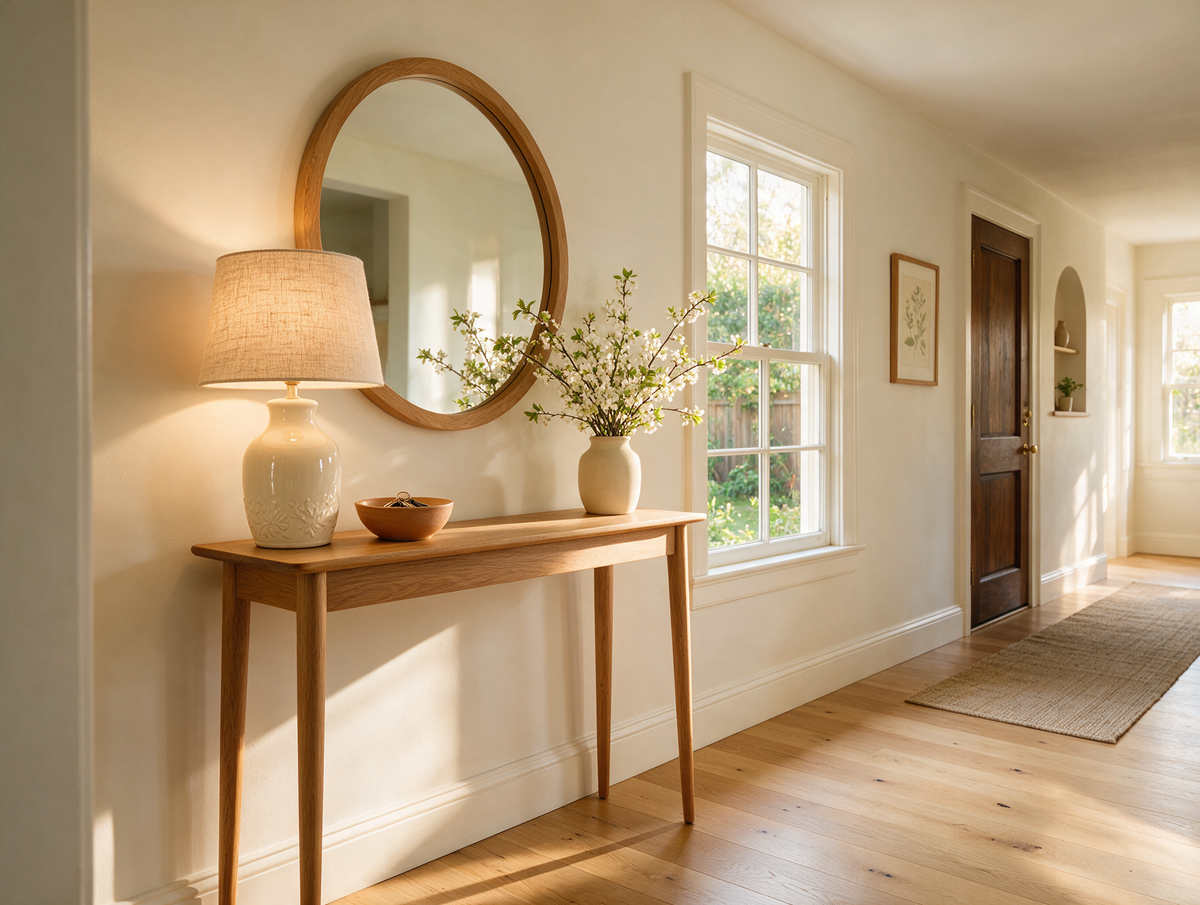
Console Table Ideas – Where to Use One and How to Style It
Do you remember coming home from school and dropping everything on the little table by the front door? Keys in the china dish, letters propped against the lamp, a vase of whatever was flowering in the garden and the old telephone with its curly cord. It was the first thing you saw when you walked in, and somehow it always said: you are home.
Read moreabout Console Table Ideas – Where to Use One and How to Style It
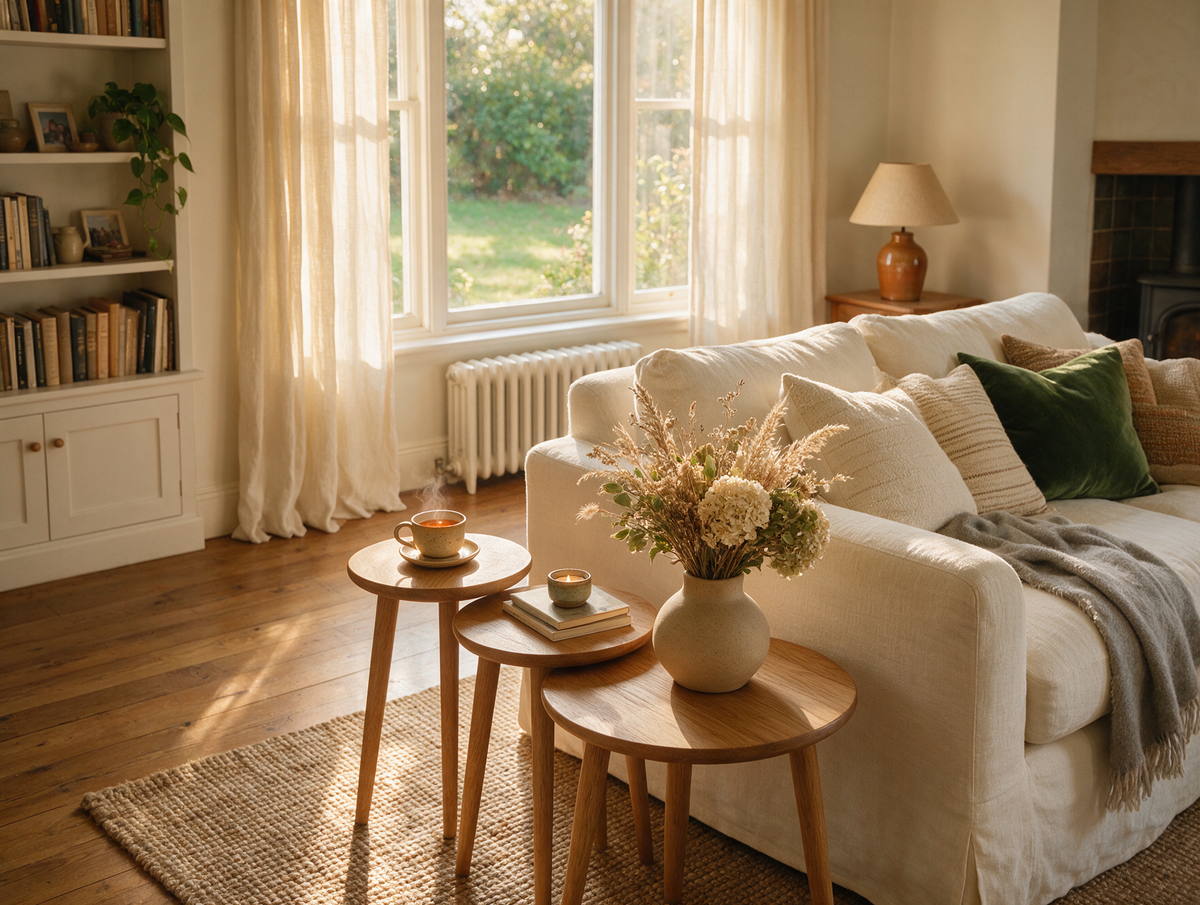
Nest of Tables – What Are They, Who Are They For and How to Style Them
Do you remember Sunday visits to your nan's, when the nest of tables came out from beside the armchair? Three little tables, each tucked neatly under the next, were pulled apart and handed round – one for the teapot, one for the biscuit tin and one for Grandad's crossword – and then slid back together the moment everyone went home.
Read moreabout Nest of Tables – What Are They, Who Are They For and How to Style Them
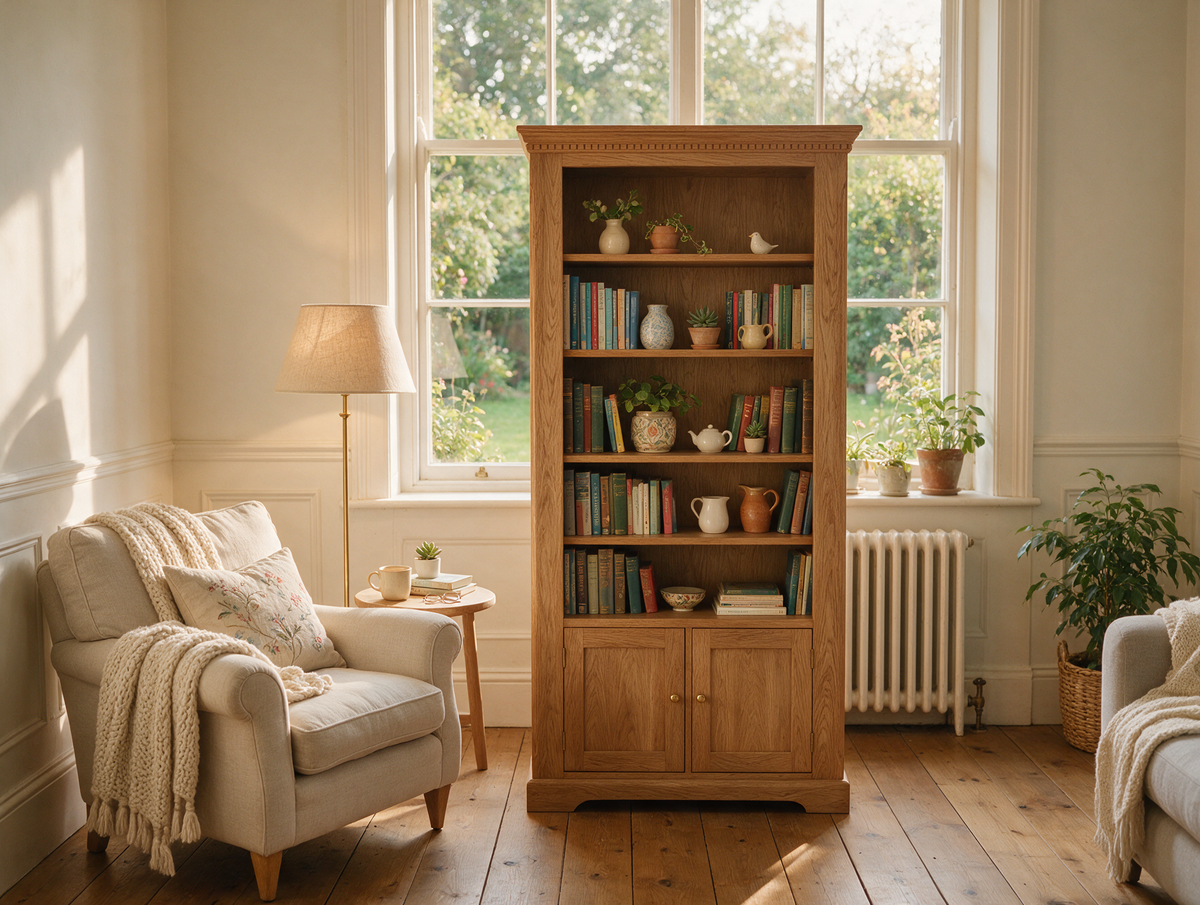
Bookcase Ideas – How to Choose and Style a Bookshelf for Your Living Room
Do you remember the bookcase in your grandparents' front room? Rows of faded paperbacks, a set of encyclopaedias nobody ever finished, holiday souvenirs, a framed school photo and that one heavy atlas you pulled out on rainy afternoons. It was never styled for anyone – and yet it told the whole story of the family.
Read moreabout Bookcase Ideas – How to Choose and Style a Bookshelf for Your Living Room



Share:
Sofa Seat Depth - What Seat Depth Is Ideal for Comfort and Ergonomics?
Bedroom humidity – how high should it be and how do you regulate it properly?