


- by Daniel Pawlik
Kids' Bedroom Colours – How to Choose Calming Colours That Support Development
- by Daniel Pawlik
Remember those bright pink or blue children's bedrooms from the 90s that looked like an explosion of colour? Today we know that kids' bedroom colours affect not only how the room looks, but also how a child feels and develops. Colour psychology in children's rooms is widely discussed, with colours often linked to concentration, creativity and sleep quality. At Pillovely we believe a thoughtful choice of colour is the foundation of a harmonious interior that supports your child at every stage. In this guide you will find out which colours to choose for a kids' bedroom to create a space full of calm and inspiration.
Colour psychology shows that colour is not just a matter of taste – it can influence mood, energy and focus. Each colour carries its own associations and tends to trigger particular emotional reactions.

Blue – calm and focus
Blue is one of the most calming colours for a child's room. Soft blues are widely associated with relaxation, which makes them ideal for the sleep zone and a restful night. Muted blues, blue-greys and pastel azure work in both boys' and girls' rooms. Avoid intense, bright blue – it can feel cold and uninviting.
Green – harmony and nature
Green is the colour of nature, which naturally calms and balances emotions. Many calming colours for kids are based on green – from delicate mint to warm sage. It is also good for concentration, so it works well in a study zone. Green pairs beautifully with wood and the natural materials we love at Pillovely. Wood-look furniture looks lovely against green walls, creating a harmonious, organic space.
Yellow – energy and joy
Yellow stimulates the mind and brings joy – it is the colour of sunshine and optimism. In a child's room use it as an accent rather than the main colour, as too much yellow can overstimulate. A soft, warm yellow in the play zone adds energy and encourages creativity.
Pink – tenderness and calm
Contrary to stereotypes, pink is not just for girls. A dusty, muted pink creates a warm, soothing atmosphere, ideal for children of any age. Avoid intense fuchsia or neon pink, which can overwhelm.

Purple – imagination and creativity
Purple sparks imagination and creativity. Lavender and lilac shades create a sense of mystery and play – like the magical rooms from fairy tales. In a muted form, purple also suits a calm, restful bedroom.
Which colour will be both practical and beautiful? Every parent planning a child's room asks this. These tips will make the decision easier.
Match the colour to your child's age
Kids' bedroom colours should evolve with age. Babies respond best to soft pastel shades – their eyesight is still developing and strong colours can overwhelm. Beiges, light greys and soft blues are a safe choice. Pre-schoolers (ages 3–6) need more colour – it is a time of exploration. Add bright accents with accessories such as cushions, curtains and posters that are easy to swap. School-age children and teenagers usually prefer muted, more grown-up colours. A neutral base they can personalise is key – let your child help choose the wall colour.
Consider how much light the room gets
Wall colours for a children's room should take the room's orientation into account. North-facing rooms feel cooler – warm them up with beiges, peach and warm greys. South-facing rooms can be cooled with blues, mint and light greys. Natural light changes how colour looks, so always test a paint sample on a small patch of wall and check it at different times of day – just like trying on a jacket in different lights.
Use colour to create zones
Colour can divide a child's room into functional zones. Soft, calming shades by the bed help sleep; livelier accents in the play area add energy; neutral, focused colours by the desk support concentration. You can create zones with a single feature wall, wallpaper or wall stickers – a flexible solution that lets you change the look without big costs.
Choosing paint for a child's bedroom is not only about looks – safety matters just as much. Choose paints suitable for children's rooms with low VOC emissions.
On-trend colours for 2026
Kids' bedroom colours in 2026 are all about nature and calm. Earthy tones – terracotta, clay, sand – bring warmth and cosiness. Sage green, powder blue and lavender grey form a palette that combines calm with elegance. At Pillovely we love natural shades that never get boring and suit wood-look furniture. Warm whites and creamy tones are classics that always work – a versatile base your child can personalise with accessories.
Special paints for children's rooms
Look for washable, scuff-resistant paints suitable for children's rooms. Chalkboard paint on one wall is a great idea for older children – a space to draw with chalk encourages creativity. Magnetic paint lets you hang artwork without drilling holes.
Paint finish
A matt finish hides wall imperfections and is easier to touch up. Satin or eggshell is easier to wipe clean – ideal for little artists. Avoid high gloss, which reflects light and can disturb sleep.
Calming colours are key in the sleep zone, where they help create a restful atmosphere for sleep and recovery.
A calm palette
Blues, lavenders, soft greys and gentle greens are colours that feel naturally soothing. Neutral beiges and whites create a clean, simple backdrop that helps relaxation. Avoid red, strong orange and bright yellow in the sleep zone – these colours stimulate and can make falling asleep harder. If your child loves bold colours, bring them in with accessories that can be put away at bedtime.

Pairing colour with natural materials
Kids' bedroom colours work best with natural materials: wood-look furniture, linen bedding, cotton curtains and wool rugs create harmony. Natural wood tones warm up muted wall colours. Sideboards, bookcases and bedside tables in natural finishes go beautifully with a calm palette.
Light as part of the colour scheme
Lighting changes how we see colour and affects mood. Warm light (2700–3000K) warms up colours and helps relaxation in the evening. Cool light (4000K+) makes colours look fresher and supports focus while studying. Dimmers let you adjust the light – bright in the morning and for homework, dimmed in the evening. A simple solution that makes a big difference to your child's comfort.
Final tip – colours tailored to your child's needs
Kids' bedroom colours are not about fashion, but a conscious choice that supports your child's wellbeing. Choose calming colours in the sleep zone, inspiring ones by the desk and cheerful ones in the play area.
Discover Pillovely furniture – sideboards, bookcases and bedside tables designed to harmonise with natural colours and create spaces full of warmth and character.
Pillovely – for those who want more.
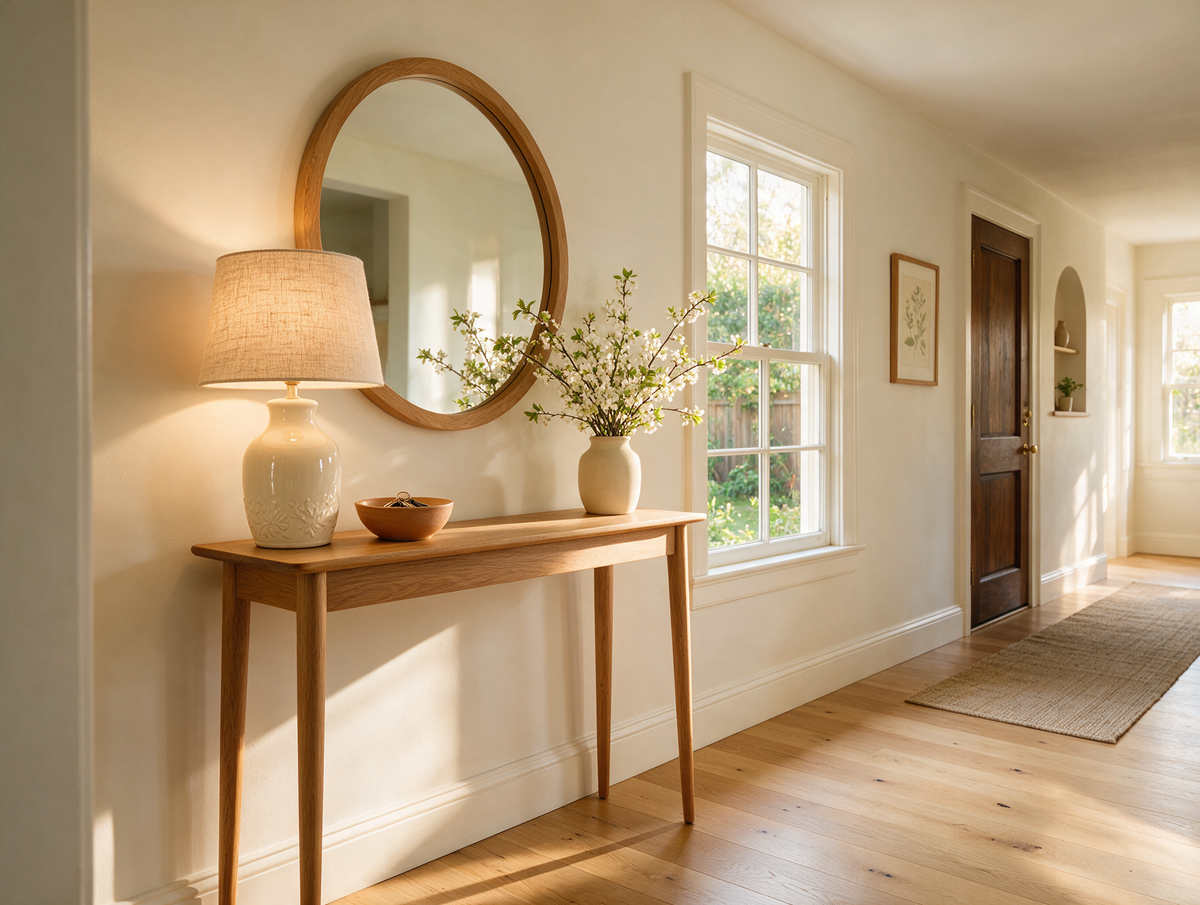
Console Table Ideas – Where to Use One and How to Style It
Do you remember coming home from school and dropping everything on the little table by the front door? Keys in the china dish, letters propped against the lamp, a vase of whatever was flowering in the garden and the old telephone with its curly cord. It was the first thing you saw when you walked in, and somehow it always said: you are home.
Read moreabout Console Table Ideas – Where to Use One and How to Style It
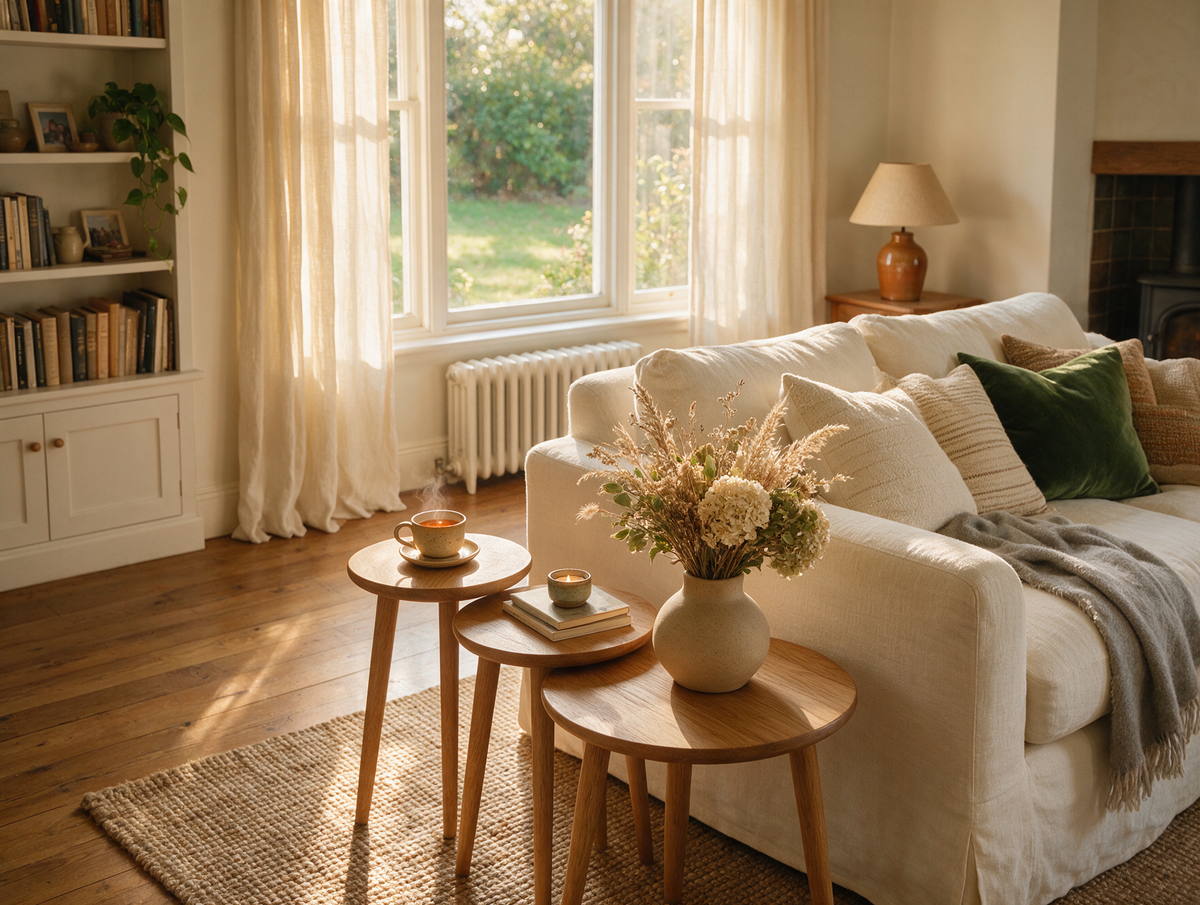
Nest of Tables – What Are They, Who Are They For and How to Style Them
Do you remember Sunday visits to your nan's, when the nest of tables came out from beside the armchair? Three little tables, each tucked neatly under the next, were pulled apart and handed round – one for the teapot, one for the biscuit tin and one for Grandad's crossword – and then slid back together the moment everyone went home.
Read moreabout Nest of Tables – What Are They, Who Are They For and How to Style Them
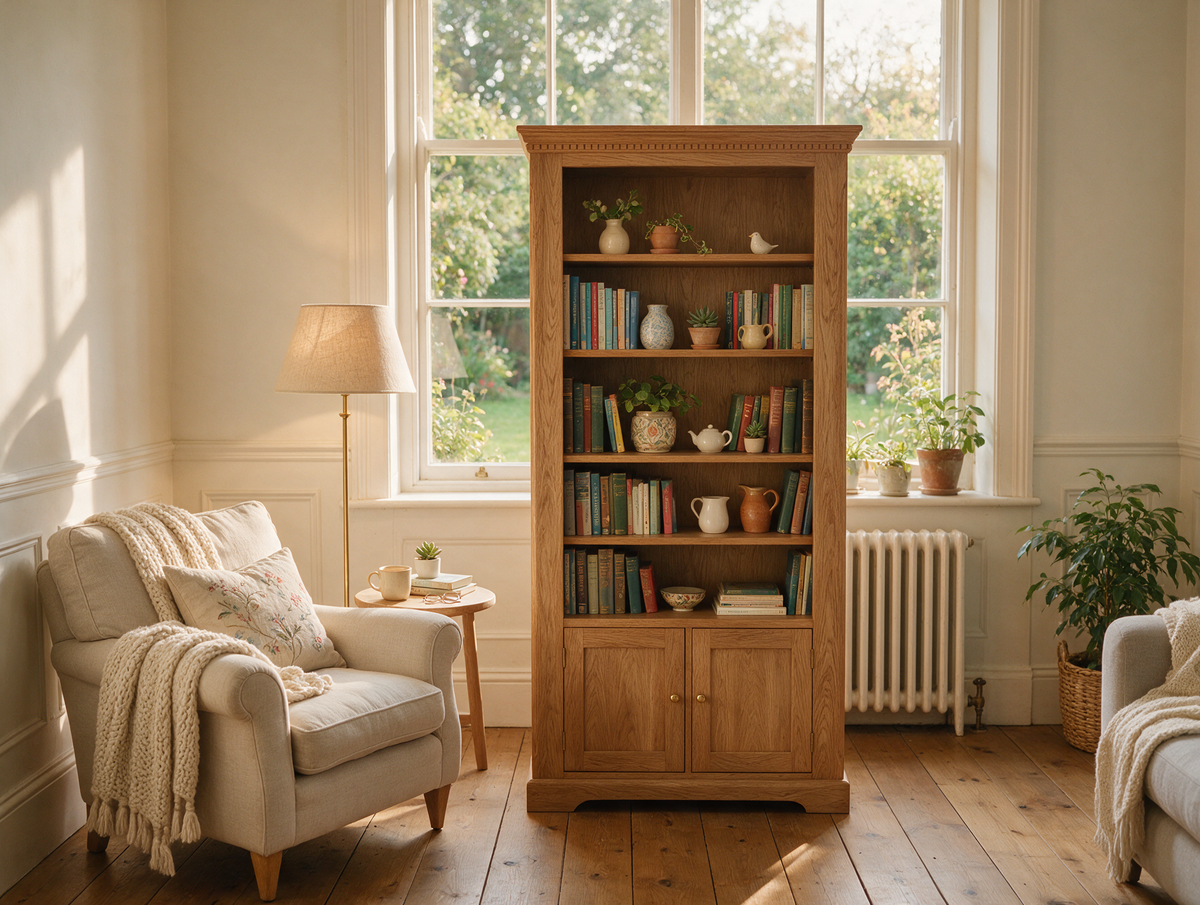
Bookcase Ideas – How to Choose and Style a Bookshelf for Your Living Room
Do you remember the bookcase in your grandparents' front room? Rows of faded paperbacks, a set of encyclopaedias nobody ever finished, holiday souvenirs, a framed school photo and that one heavy atlas you pulled out on rainy afternoons. It was never styled for anyone – and yet it told the whole story of the family.
Read moreabout Bookcase Ideas – How to Choose and Style a Bookshelf for Your Living Room



Share:
Leather and Fabric Sofa – Which Option Is Best for Your Living Room?
Elements of Interior Design – The Key Principles That Shape Every Interior