


- by Daniel Pawlik
How to Choose a Sofa for Your Living Room? A Complete Buying Guide
- by Daniel Pawlik
A sofa is a piece of furniture you'll be looking at every day for the next decade. It will be the backdrop for evening movies, lazy Sunday mornings, conversations with friends over wine, and sleepless nights when nothing else helps but a blanket and a TV series. The decision to buy one deserves more than twenty minutes of browsing offers and clicking on the prettiest picture. The question "how to choose a sofa for the living room" sounds simple, but it hides a dozen smaller questions that are worth answering before 4,000 PLN leaves your account.
At Pillovely, we believe that a good sofa is one you want to return to. This buying guide will show you what to pay attention to – from size and function, to fabric, to practical questions that save you stress and money. No theorizing, just specifics.
Before you answer the question "what sofa will be best for the living room?", it's worth stopping at a few fundamentals. Choosing a sofa doesn't start in the store, but in your head – by defining what this piece of furniture is supposed to be used for.
Four questions to start with:
How many people will sit on the sofa daily? A single person, a couple, a family of four – each of these answers leads to a different size and construction.
Does the sofa also function as a bed? For daily use, this is a different construction than for occasional guests.
Are there children or pets in the house? Determines the choice of fabric and abrasion resistance class.
What is the budget – total and limit? A reasonable range for a good sofa for daily use is 2,500–6,000 PLN. Below that, risk begins; above that, luxury.
A living room sofa that is to last 10+ years must have a solid frame. Ask about the material:
solid wood (pine, beech, oak) – the best option, lasts decades,
laminated wood – a reasonable price-quality compromise,
plywood – acceptable in less stressed elements,
furniture board – only in cheap models, avoid for long-term purchases.
In the seat, it's worth having HR foam with a density of at least 35 kg/m³. Cheaper foams collapse after two years. We write more about how to physically check the quality of a sofa in a separate guide on what to verify in the showroom before buying a sofa.
How to choose a good quality sofa if you are buying online? Read the technical specifications instead of the marketing description. Look for information about foam density, fabric abrasion resistance (Martindale parameter), and frame material. Stores that do not provide this data usually have something to hide.

This question breaks half of all purchasing decisions – and at the same time is most often ignored. "What size sofa to choose for the living room?" has no single answer, because it depends not only on the square footage but also on the room layout.
The simplest rule: the sofa should occupy a maximum of 60–70% of the length of the wall it stands against. This leaves breathing room, space for a lamp, a shelf, an armchair, a plant.
Practical guidelines:
living room 10–14 m² – sofa up to 200 cm wide,
living room 15–20 m² – sofa 200–240 cm,
living room 20–25 m² – sofa 240–280 cm,
living room 25+ m² – you can go for a corner sofa or a two-sofa arrangement.
Many people only look at the width, but the depth of the sofa determines comfort:
52–55 cm – "classic" sofa, for upright sitting,
60–70 cm – for lounging and curling up with a book,
over 75 cm – "island" type sofa, practically a day bed.
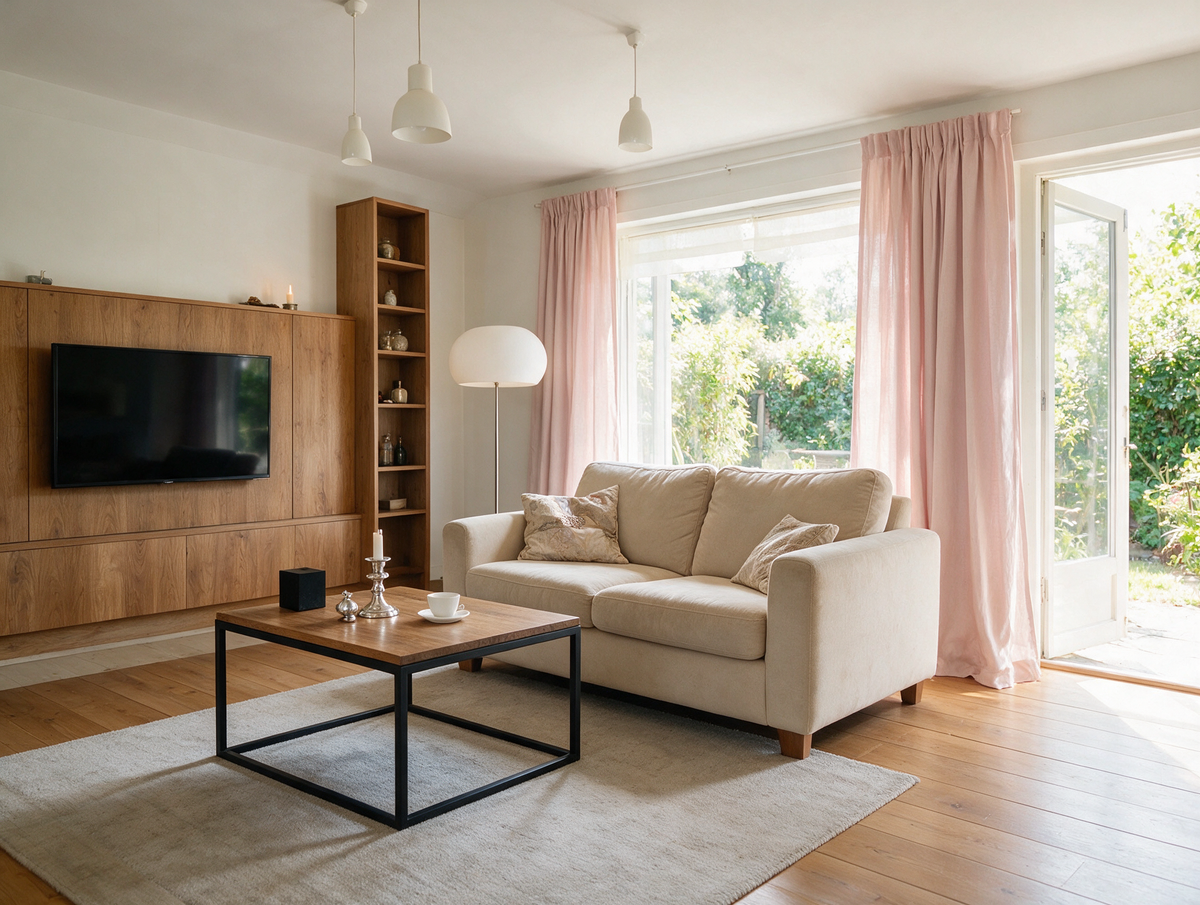
Low sofas (backrest up to 80 cm) visually enlarge the room. High models divide the space – great in large living rooms, not so good in small ones.
Also remember about armrests. Some models have them 25 cm wide on each side, which on a 220 cm sofa leaves only 170 cm for sitting. That's a big difference.
How to choose a sofa for an unusual layout? In a living room with an open kitchen, consider a sofa without a backrest against the wall – it stands "in the middle", separating zones. In a narrow living room, look for shallower models (up to 90 cm deep). Specific mistakes when choosing the size of a sofa for a small living room are discussed in a separate guide.
This is one of the most common questions and at the same time one of the most neglected areas. A sofa with a sleeping function is a great solution, but only if you actually use the function.
you live in a studio apartment or an apartment where the living room = bedroom,
you have regular overnight guests (once a month or more often),
you plan to use the bedding storage under the sofa,
you want to have a reserve sleeping place just in case (illness, bedroom renovation, child with a fever).
guests stay overnight 2–3 times a year,
you have a full-fledged bedroom with a bed,
you want the highest quality seating – a sofa with a sleeping function is firmer and has a different backrest angle,
you care about lightweight construction – the mechanism adds 20–40 kg of weight.
DL (click-clack) – simple, cheap, for occasional sleeping,
bonnell / spring – more durable, but not very comfortable for long sleep,
classic sofa bed with storage – proven design, easy to unfold with one hand,
Italian mechanism (pull-out) – comfortable for everyday sleeping, mattress like in a bed, but needs space in front of the sofa,
DL-tapestry with a full-size mattress – highest sleeping comfort, more expensive.
A sofa with a sleeping function for everyday use should have an Italian mechanism or a full-size pocket spring mattress. A classic "click-clack" for 1,500 PLN after a year of daily unfolding starts to creak and politely refuse to cooperate.
If you live high up without an elevator, check the weight of the sofa with a sleeping function before buying – the mechanism adds weight and carrying it up narrow stairs can be a challenge. We write about this in a separate article on sofas easy to carry upstairs.
Fabric is something you touch every day. It determines how the sofa ages, how it looks after a year of use, and how easy it is to clean. The question "what fabric for a sofa will be best" has no universal answer – it all depends on your lifestyle.
A classic that returns with force. Velvet is soft, warm to the touch, easy to clean (dust can be wiped off with a damp cloth). It looks great in strong colors: bottle green, navy blue, terracotta, dark pink. It weakens in contact with animals (claws leave marks) and grease (stains must be removed quickly).
For whom: people who appreciate elegance, singles and couples without pets, nostalgics of the 70s.
Modern classic – curly, soft, textured. Adds character to the interior without screaming color. However, it requires attention: cat claws get caught in it, and stains are harder to remove.
For whom: people who love minimalist, Japandi, Scandinavian interiors, without pets.
A comeback from the 70s – warm, textured, very textile. Ages well, collects dust (requires regular vacuuming). Looks great in shades of mustard, terracotta, bottle green.
For whom: lovers of vintage, retro-modern, PRL-era vibes with soul.
Easy to clean, stain-resistant, good for families with children and pets. The disadvantage is its plastic feel and susceptibility to cracking after years (especially in cheap quality).
For whom: families with small children, allergy sufferers, people who value functionality over texture.
The most practical for everyday life – stain-resistant, easy to clean, often with a hydrophobic additive. Choose if you have children, pets, and eat in the living room.
Parameter not to omit: Martindale abrasion cycles. 25,000–40,000 is for a private home, above 40,000 – for families with intensive use. Below 25,000, leave for decorative fabrics.

1. How to choose a good sofa for the living room?
Pay attention to size, construction, fabric, sleeping function, and actual usage.
2. What sofa size will be best?
The sofa should occupy a maximum of 60-70% of the length of the wall it stands against.
3. Is it worth choosing a sofa with a sleeping function?
Yes, if you often have overnight guests or if the living room also serves as a bedroom.
4. What fabric is most practical for a sofa?
Technical fabrics are the most practical - easy to clean and resistant to daily use.
5. What indicates good sofa quality?
A solid frame, HR foam of appropriate density, and fabric with high abrasion resistance.
6. Is it worth buying a sofa online?
Yes, if the store provides exact dimensions, frame material, foam density, and fabric parameters.
Choosing a sofa is not an extreme sport. It's a process where it's worth slowing down, measuring, asking a few questions, and making a decision consistent with your real life – not with the prettiest photo on Instagram.
Three things to take away from this guide:
Measure the room and doors before buying – a 240 cm sofa looks different in a 14 m² living room than in a 22 m².
Choose functions based on your life – a sofa with a sleeping function only makes sense if you actually use it.
Fabric based on lifestyle – velvet for aesthetes, bouclé for minimalists, eco-leather and technical fabrics for families.
At Pillovely, we believe that a sofa should be your domestic ally – comfortable, well-made, one you want to return to. Pillovely – for those who want more. More consciously. More comfortably. More at home.
If you want to go further, in our other guides you will find topics such as: how to check a sofa live in a showroom, the most common mistakes when choosing a sofa for a small living room, how to choose a sofa that is easy to carry up stairs, and a guide to interior styles. Together, they form a complete set of knowledge for the conscious buyer.
If you liked this text, be sure to check out our other inspirations:
Japandi style – what is it and how to decorate an interior in the spirit of Japandi?
Loveseat - What Is It, Who Is It For and How to Choose the Right One?
A loveseat is one of those pieces of furniture that can completely change how a room works. It is smaller than a classic sofa, more generous than a single armchair and often easier to place in compact interiors. A loveseat can create a cosy sitting area in a small living room, soften a bedroom corner, complete a reading nook or work as an additional seat next to a larger sofa. Its strength lies in proportion: it gives you the feeling of a sofa without taking over the whole room.
Read moreabout Loveseat - What Is It, Who Is It For and How to Choose the Right One?
EU vs UK Bed Sizes – Will UK Bedding Fit a European Bed?
European beds are 200 cm long, UK beds 191 or 198 cm. A simple EU vs UK bed size table in cm – and what it means for your mattress and fitted sheets.
Read moreabout EU vs UK Bed Sizes – Will UK Bedding Fit a European Bed?
Autumn colors at home – shades that bring peace and warmth
Do you remember autumn from your childhood, when the leaves changed color like a kaleidoscope, and your mom would pull out the pumpkin-colored sweater she'd worn since college? Or those evenings in front of the TV while a storm raged outside, and the lamplight in the house gave everything a warm, amber hue? Those were the days when no one talked about "color palettes" or "color stories"—colors simply existed, as natural as breathing. Today, when we can choose from 50 shades of gray (and no, I'm not talking about THAT book), we sometimes lose track of what truly makes a home feel cozy. At Pillovely, we believe that autumn colors aren't a trend—they're a return to what makes us feel safe. Because "You are someone"—someone who deserves a space filled with colors that snuggle like a grandma's blanket.
Read moreabout Autumn colors at home – shades that bring peace and warmth




Share:
Japandi style – what is it and how to design an interior in the spirit of Japandi?
Pilla's Reading Corner: Steve Epting, Ed Brubaker, Michael Lark, John Paul Leon, Mike Perkins, Frank D'Armata - "Captain America: Winter Soldier"