


- by Daniel Pawlik
Which mattress to choose? A complete guide to types, firmness, and properties
- by Daniel Pawlik
There's a moment in the evening when you lie down in bed, and for the first few seconds, you know if it's going to be a good night. Your body just feels it—even before you fall asleep. That's why the question "which mattress to choose" isn't really about a product. It's about how you'll feel tomorrow morning: rested and ready for the day, or with a stiff neck and the feeling that the night was wasted.
A mattress is the only element of your bedroom that you interact with for one-third of your life. It's worth taking a moment to choose it consciously—and not just by the price tag or what was on display. In this guide, we break down the topic into its primary factors: mattress types, choosing firmness, differences between technologies, and dimensions that will work in your bedroom.
Before you start analyzing firmness or size, it's worth understanding what a mattress is made of—because its interior is what determines how you sleep.
Foam mattresses are the most popular choice on the market. Inside, they contain polyurethane foam or viscoelastic foam (memory foam), which reacts to body temperature and weight, conforming to the sleeper's silhouette. This relieves pressure points—shoulders, hips, lower back—and works well for people who wake up with muscle pain.
Spring mattresses are based on a system of springs that provide good ventilation and elasticity. Within this category, you'll find two main variants: Bonnell springs, connected in a single system (cheaper, but less precise in adapting to the body), and pocket springs, where each spring works independently, enclosed in a separate fabric "pocket." This second solution works particularly well when you share a bed with another person—your partner's movement doesn't transfer to your side of the mattress.
Latex mattresses are made from natural or synthetic latex, which is characterized by exceptional elasticity and quick return to its original shape. It's a material naturally resistant to dust mites and mold, well-ventilated, and often chosen by people with allergies.
Hybrid mattresses combine the best features of the above solutions—most often pocket springs with a layer of foam or latex. This is a compromise for people who don't want to choose between support and softness, but want both. The top layer conforms to the body, while the bottom spring layer provides stability and proper ventilation for the entire structure.
It's also worth paying attention to the top layer of the mattress, known as the cover. Manufacturers are increasingly using anti-allergic fabrics, breathable 3D materials, or antibacterial coatings—this is a detail that genuinely affects sleep comfort, especially in warmer months of the year. If you prioritize easy care, look for models with removable and washable covers.
The height of the mattress is also significant. Thinner models (up to 18 cm) are usually budget solutions or intended for occasional use—for example, for sofa beds or pull-out beds. Mattresses 20–26 cm high are standard in everyday bedrooms, and those above 26 cm are usually multi-layered models, combining several technologies in one construction.

This question comes up in every conversation about buying a mattress—and rightly so, because poorly chosen firmness can negate even the best internal technology. Mattress firmness is usually indicated on a scale from H1 (very soft) to H5 (very firm), although in practice, you'll most often find mattresses in the H2–H4 range.
Two factors are key here: your weight and the position you usually sleep in.
People with lower body weight (up to approx. 60 kg) usually feel best on soft or medium-soft mattresses (H2), because a firmer mattress won't yield to their body shape and won't provide adequate support.
People of average weight (60–90 kg) most often do well on medium-firm mattresses (H3), which offer a balance between comfort and stability.
People with higher body weight (above 90 kg) usually need firmer mattresses (H4–H5), which won't "sink in" under their weight and will maintain proper spinal alignment throughout the night.
Sleeping position is equally important. If you sleep on your side, you need a mattress that will relieve pressure on your shoulder and hip—a slightly softer version usually works best here. Back sleepers feel most comfortable on medium-firm mattresses that support the lumbar region without excessive sinking. Stomach sleepers, on the other hand, need firmer support so that their hips don't sink deeper than their chest, which puts a strain on the spine.
It's also worth remembering that a couple sleeping in one bed doesn't always have the same needs—that's why when buying a mattress for a double bed, models with a double-sided or zoned construction, adapted to different body parts, can be a good solution.
There's another factor that's often overlooked—age and physical activity. Older people usually feel better on a slightly firmer surface, which makes getting out of bed easier and relieves pressure on joints. In contrast, very physically active people, regenerating muscles after training, more often choose foam mattresses with orthopedic properties that precisely contour the body. If you're unsure which firmness will work best for you, a good practice is to choose a medium-firm (H3) model—this is a universal option that works for most adults, regardless of their sleeping position.
Now that you know the basic types and how to choose firmness, it's time for the most common dilemma: spring or foam mattress, or perhaps latex?
A spring mattress will be suitable if you primarily value good ventilation and natural "bounce"—such a mattress does not accumulate heat as much as some foams, so it works well in summer and for people who tend to overheat at night. It's also a solid choice for a child's or teenager's bedroom, where durability is important on a reasonable budget.
A foam mattress wins where the priority is body pressure relief and pain reduction—it works great for people who do physical work, athletes, or anyone who wakes up stiff in the morning. A drawback can be the poorer ventilation of some foams, although modern materials with an open-cell structure largely solve this problem.
A latex mattress is an option for those who value natural materials and care about a healthy bedroom microclimate—especially allergy sufferers. It has high durability (even 10–15 years with good care), but also a higher initial price.
There is no single universal answer to the question of which mattress is "best"—but there is an answer to which one will be best for you, considering your weight, body temperature at night, any spinal ailments, and budget. If you are still hesitant, it's worth browsing through selected mattresses in our offer and comparing the parameters of individual models—from firmness, through height, to the composition of the layers.
A good way to make a decision is also to answer a few simple questions: Do you wake up drenched in sweat at night? This is a sign that it's worth considering a spring or hybrid mattress with better ventilation. Do you have a tendency for allergies or asthma? Opt for latex or anti-allergic certified foams. Do you share a bed with a partner of a different body weight? Pocket springs or zoned foam solutions will help avoid situations where one person "sinks in" deeper than the other.
The last, but equally important, element is dimensions. A mattress that's too small means uncomfortable nights and a feeling of confinement; one that's too large means wasted space in a room that could accommodate more.
Standard mattress sizes in the Polish market are most often:
80×200 cm and 90×200 cm — classic dimensions for single beds, suitable for a teenager's room, guest room, or studio apartment.
120×200 cm and 140×200 cm — intermediate sizes, often chosen by individuals who sleep alone but appreciate more space to toss and turn at night.
160×200 cm — one of the most popular choices for marital and partner bedrooms, offering comfortable space for two people without taking up excessive room.
180×200 cm and larger — the best choice if you prioritize maximum space and minimize the risk of "disturbing each other" at night.
When choosing dimensions, it's worth measuring not only the bed itself but also the bedroom's floor area—it's standard to leave at least 60–70 cm of free space on both sides of the bed to move around comfortably. If you're also planning to buy a new bed frame, check out our mattress category, where you'll find models fitted for the most popular bed sizes—including the 160×200 mattress, most often chosen by couples setting up their first shared bedroom.
It's worth remembering that the length of the mattress should be adjusted not only to the standard but also to the height of the household members—if you or someone in your family is taller than average, consider a mattress with a length of 220 cm instead of the standard 200 cm. A few extra centimeters in height genuinely improves sleep comfort and eliminates the feeling that your feet are "hanging off" the edge.
The shape of the bedroom and the placement of the bed relative to the window, door, or radiator are also important. A mattress that's too large in a small room will make the space feel overwhelmed with furniture, and free movement around the bed will become impossible. Conversely, in a spacious bedroom, a smaller mattress might look disproportionate and "get lost" in the space. Therefore, before making a decision, draw a simple sketch of the room, including other furniture—a wardrobe, chest of drawers, or armchair—and check if the chosen size will indeed fit well within it.

1. Which mattress is best for everyday sleeping?
The best mattress is one that is tailored to your weight, sleeping position, and individual needs.
2. How to choose mattress firmness?
Primarily consider your body weight and the position in which you most often sleep.
3. What to choose – foam or spring mattress?
Foam mattresses adapt better to the body, while spring mattresses provide better ventilation and elasticity.
4. Is a latex mattress good for allergy sufferers?
Yes. Latex is resistant to dust mites and mold, which is why it is often chosen by people with allergies.
5. What mattress size for two people?
The most commonly chosen size is 160 × 200 cm, which provides comfortable sleep for couples.
6. How long should a good mattress last?
Depending on the type and quality of workmanship, a good mattress can retain its properties for many years.
Choosing a mattress is one of those decisions that aren't visible in interior photos, but which daily affect the quality of life. A good mattress isn't a matter of fashion or trend—it's an investment in regeneration, well-being, and spinal health for years to come.
If you're looking for a mattress tailored to your needs—whether you sleep alone, with a partner, or are furnishing a room for a teenager—visit the Pillovely homepage and check out the full range of mattresses and beds that together create a space designed for rest.
If you liked this text, be sure to check out our other inspirations:
Dining chairs – how to choose comfortable and stylish chairs that match your table?
Console Table Ideas – Where to Use One and How to Style It
Do you remember coming home from school and dropping everything on the little table by the front door? Keys in the china dish, letters propped against the lamp, a vase of whatever was flowering in the garden and the old telephone with its curly cord. It was the first thing you saw when you walked in, and somehow it always said: you are home.
Read moreabout Console Table Ideas – Where to Use One and How to Style It
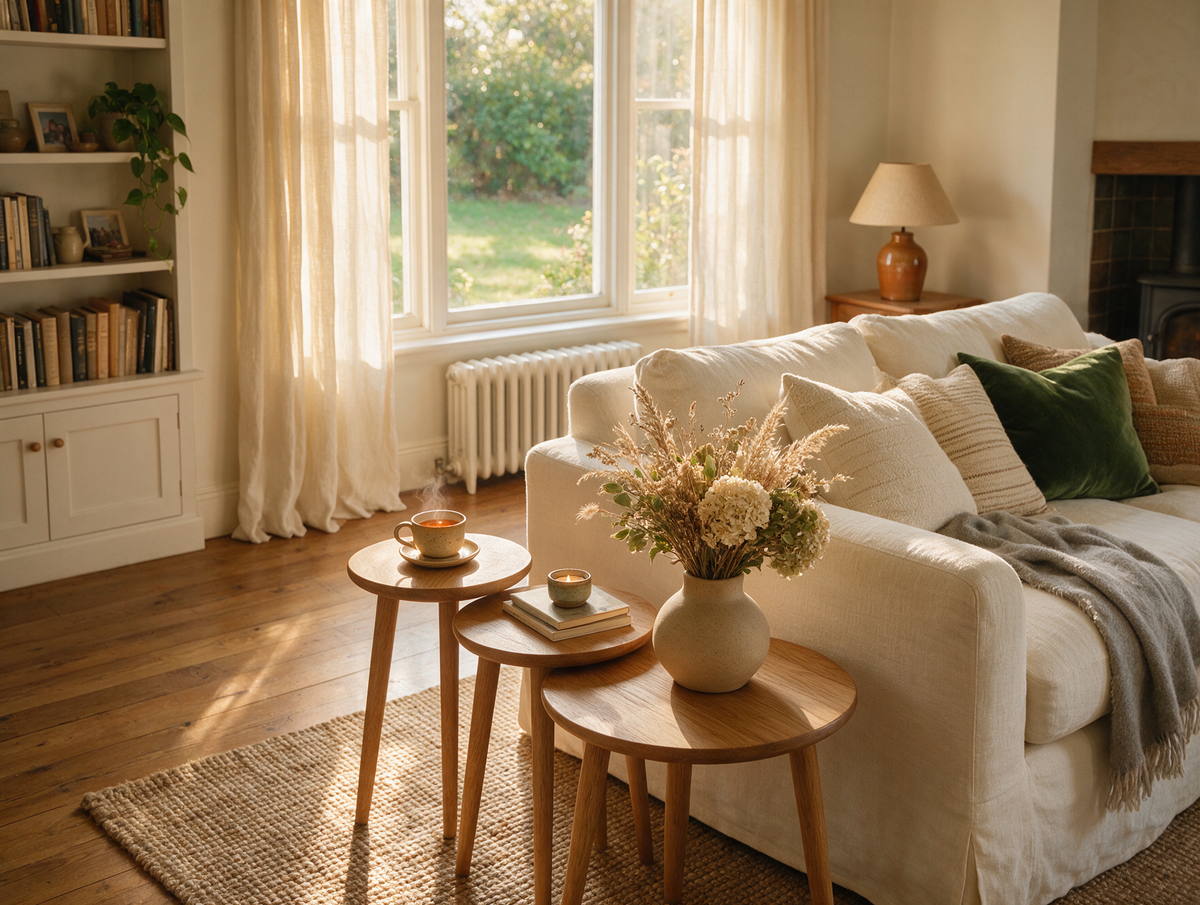
Nest of Tables – What Are They, Who Are They For and How to Style Them
Do you remember Sunday visits to your nan's, when the nest of tables came out from beside the armchair? Three little tables, each tucked neatly under the next, were pulled apart and handed round – one for the teapot, one for the biscuit tin and one for Grandad's crossword – and then slid back together the moment everyone went home.
Read moreabout Nest of Tables – What Are They, Who Are They For and How to Style Them
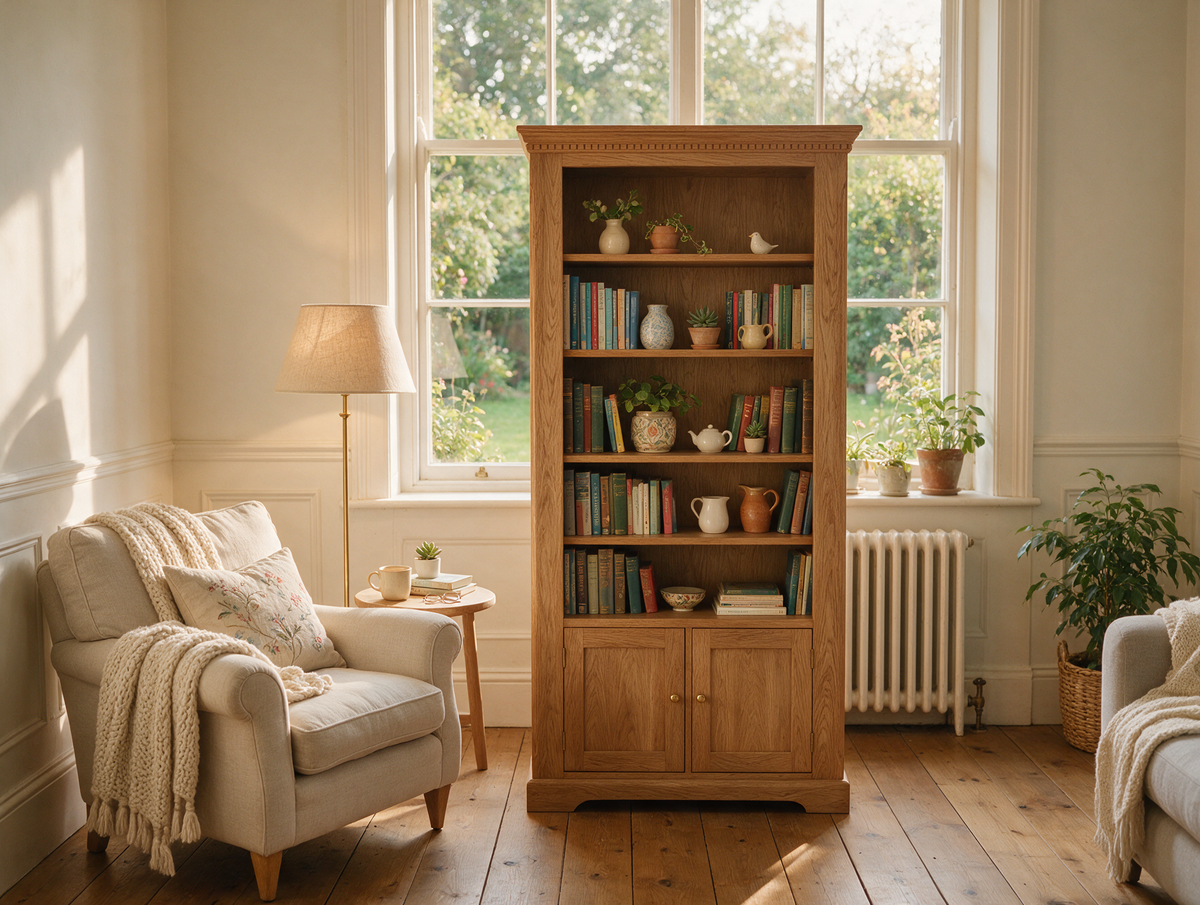
Bookcase Ideas – How to Choose and Style a Bookshelf for Your Living Room
Do you remember the bookcase in your grandparents' front room? Rows of faded paperbacks, a set of encyclopaedias nobody ever finished, holiday souvenirs, a framed school photo and that one heavy atlas you pulled out on rainy afternoons. It was never styled for anyone – and yet it told the whole story of the family.
Read moreabout Bookcase Ideas – How to Choose and Style a Bookshelf for Your Living Room




Share:
Pilla's Reading Corner: Hanna Ożogowska - "A Girl and a Boy, or Mayhem and Mirth Aplenty"
A bed with storage – how to choose one and how much storage space does it offer?